Audi RS 5 Plug-In Hybrid: The Quattro Reinvention

Audi Sport’s first high-performance PHEV is not just about power. It is about control, usability, and a new interpretation of quattro for the electrified era.
I don’t think the most interesting part of the new Audi RS 5 is the headline power figure, even though it’s substantial, 630hp and 608 lb-ft of torque substantial. The interesting part is that Audi Sport is finally treating electrification as a performance tool, not a compliance exercise. That matters because the RS badge has always lived on a specific promise: you can drive it hard, drive it far, and drive it every day without feeling like you bought a race car that hates you back.
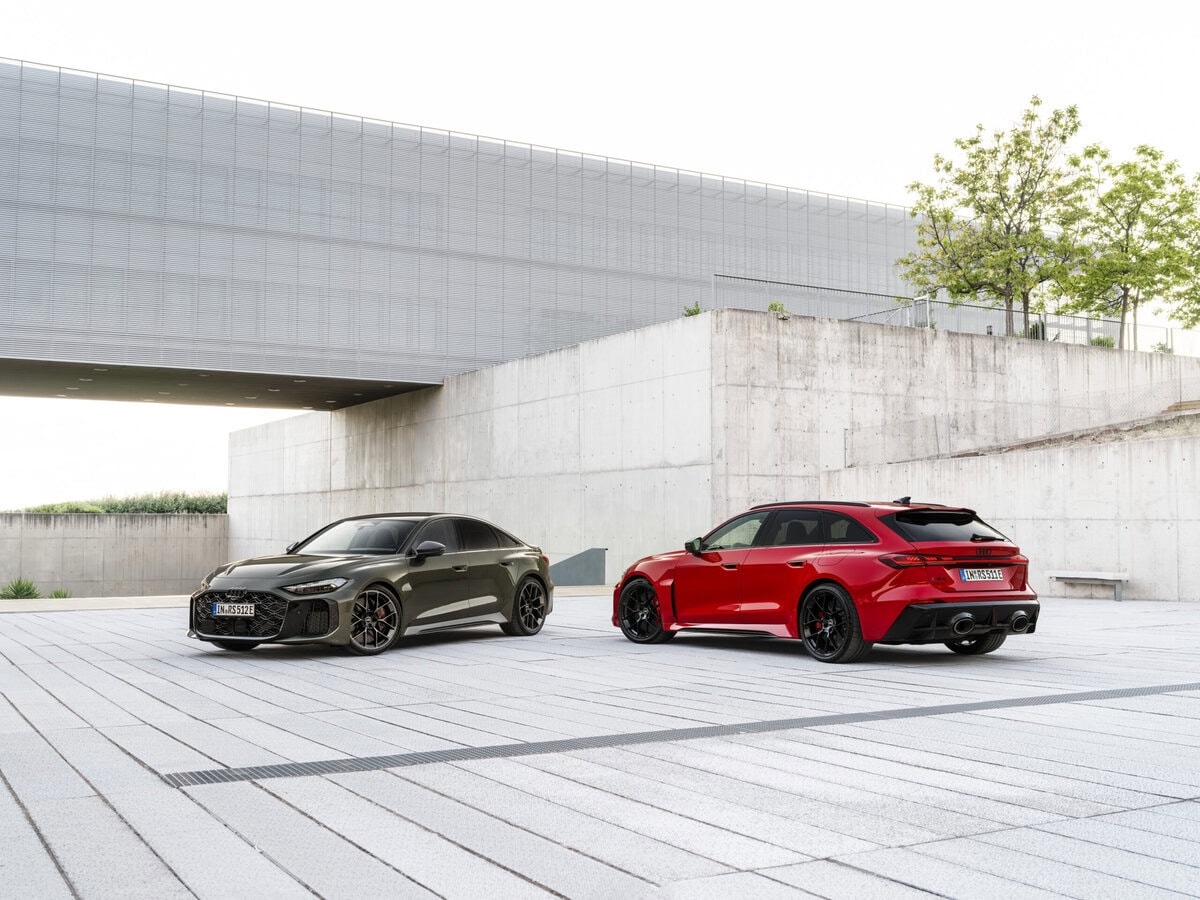
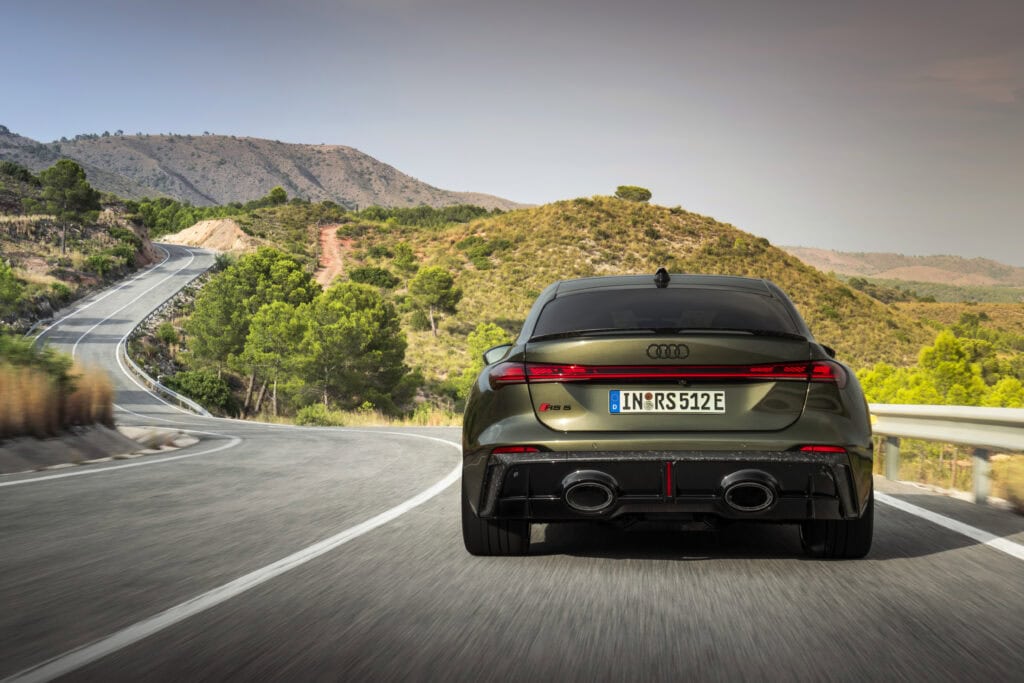
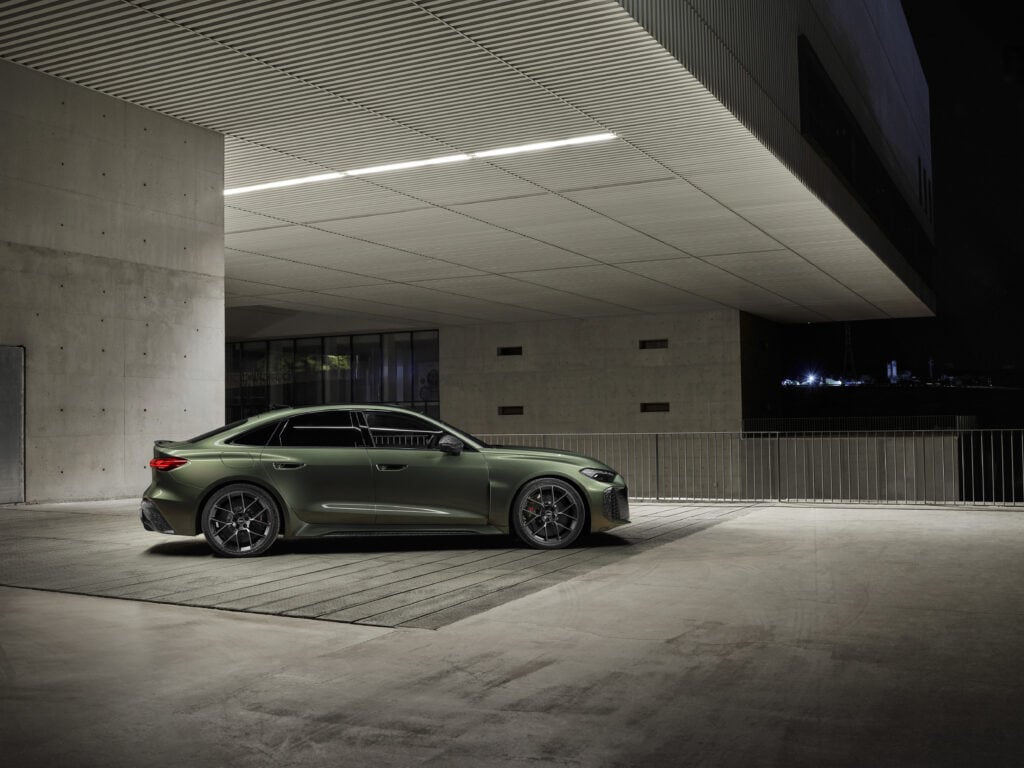
This RS 5 is Audi Sport’s first high-performance plug-in hybrid, and it’s being pitched as a new “pinnacle” for the A5 family. The pitch is confident: a 2.9-liter twin-turbo V6 paired with a meaningful electric motor, plus a brand-new approach to quattro torque distribution that includes electro-mechanical torque vectoring in a production car. Audi lays out the technical package in its official press material, The new Audi RS 5: high performance in a hybrid, and the details are unusually specific for a modern performance launch.
From what Audi is describing, the result should be a car that offers genuine electric driving capability, sharper response under load, and a wider spread between calm daily behavior and full RS intent.
Why does this matter right now?
Because performance cars are being forced to change, and most of them are doing it awkwardly.
Emissions rules and market reality are pushing everyone toward electrified powertrains. The problem is that “electrified” has become a messy umbrella term. Some cars use a small motor to smooth start/stop. Others go full battery-electric. Plug-in hybrids sit in the middle, and they can either be brilliant or deeply irritating depending on how well the systems talk to each other.
Audi is making the case that the RS 5’s plug-in hybrid setup isn’t just about lowering official consumption numbers. They’re framing the battery and electric motor as part of the car’s performance identity. The car uses a 400-volt system, a 25.9 kWh battery (22 kWh net), and an electric motor integrated into the eight-speed gearbox with 174hp and 339 lb-ft available. Audi also claims an all-electric range of up to 52 miles, which is meaningful for daily use if you actually plug the car in.
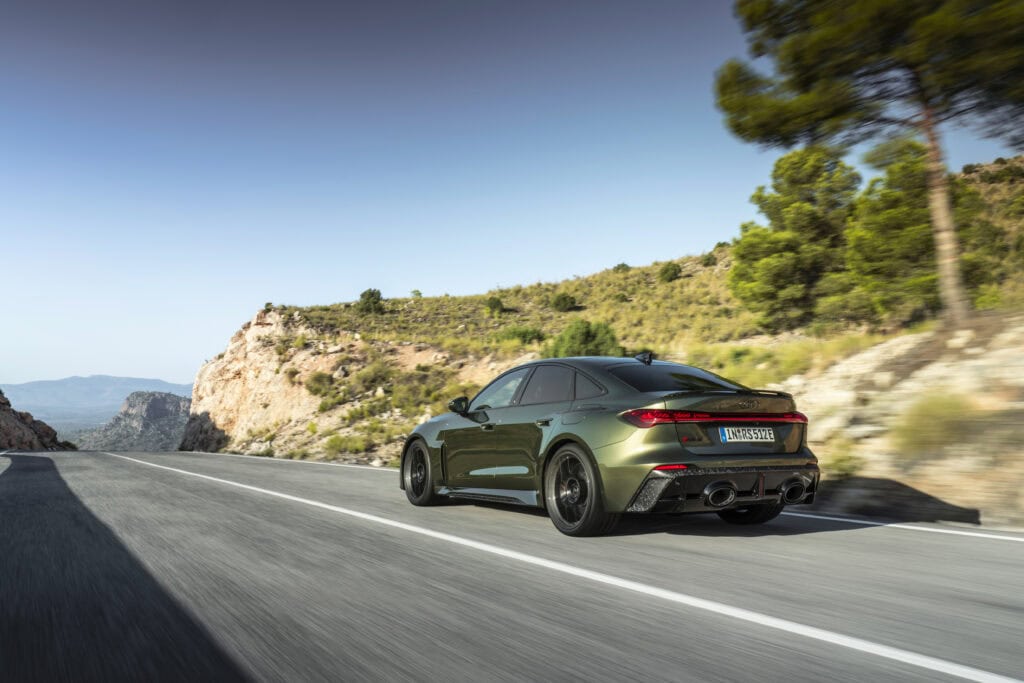
If you’ve been watching the broader market, this is the direction performance is moving: not “quietly slower,” but “faster, more precise, and occasionally silent.” It also lines up with where the industry sees electrification heading overall, including the long-term trends detailed in the International Energy Agency’s Global EV Outlook.
For a sense of how everyday buyers are thinking about electrification right now, it is worth comparing this RS launch to what people are researching and hesitating over. Test Miles recently explored that gap in The Most Googled EVs in America, And What That Really Means.
How does it compare to rivals or alternatives?
Fairly well on concept. The real question is execution.
The RS 5 is entering a world where it is no longer unusual to see electrification in performance sedans and wagons. Some rivals lean into plug-in hybrid torque and complexity. Others aim for a simpler character, even if that means leaving efficiency on the table. Buyers should be honest about which camp they fall into.
Audi’s differentiator here is that it is hanging the whole story on torque management: how power is distributed, and how quickly the car can reshape itself in response to driver inputs and road conditions.
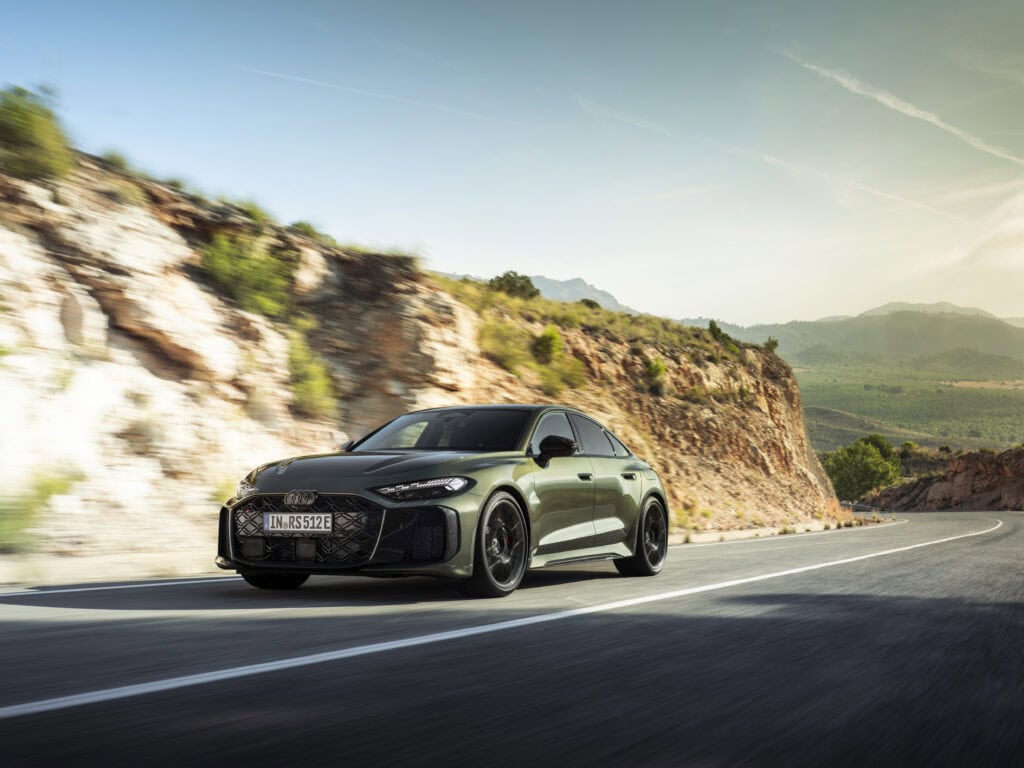
There are two layers to that. First, Audi describes a new center differential with preload that stays at least partially locked even when you lift. That is designed to keep response cleaner in transitions, reduce understeer during turn-in, and improve the car’s immediacy when you go back to throttle.
Second, and more headline-grabbing, is the rear transaxle with electro-mechanical torque vectoring, which Audi brands as quattro with Dynamic Torque Control. The basic promise is simple: faster, more precise left-right torque distribution at the rear wheels, recalculated frequently and applied quickly. In practical terms, this is the kind of system that can make a heavy, powerful car feel smaller, more eager to rotate, and more confident on corner exit.
That matters because the RS 5 is not a lightweight car. Instead of relying only on stiffness and tire width to hide mass, Audi is describing a combined approach: torque shaping plus adaptive damping via twin-valve shock absorbers, RS-tuned steering, and brake-by-wire blending of regeneration and friction braking.
Plug-in hybrids also live or die by driver trust in the braking and stability systems. If you want a neutral reference for how modern stability control works and why it matters, the National Highway Traffic Safety Administration’s overview of Electronic Stability Control is a useful baseline.
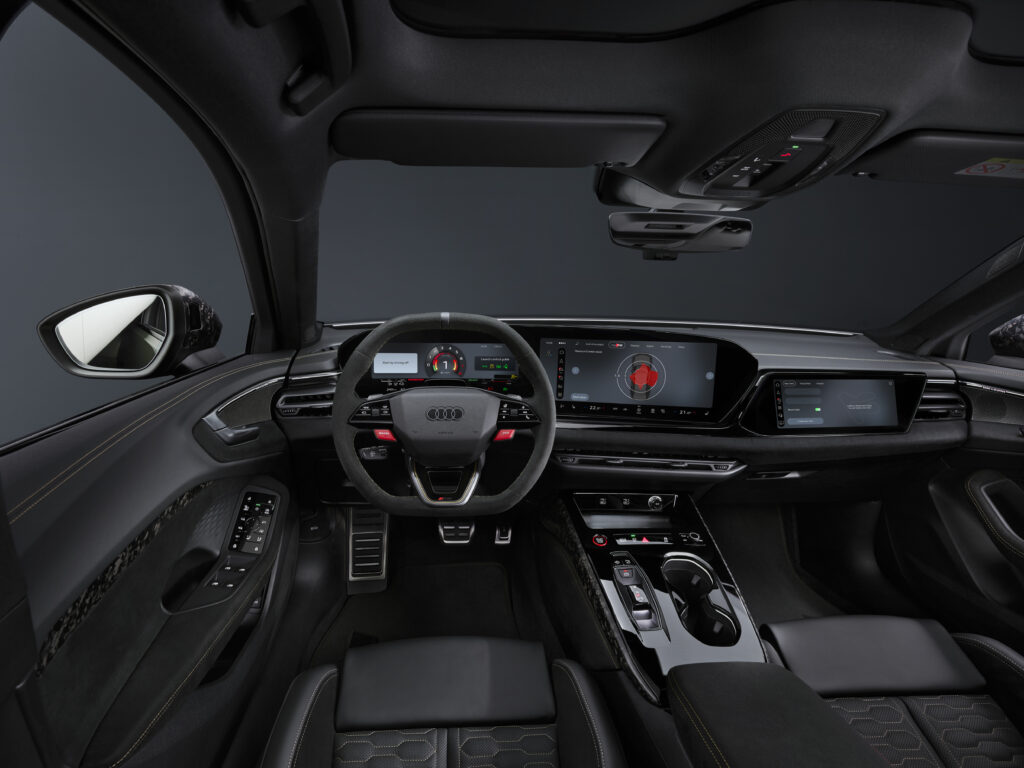
When you compare this RS 5 approach to alternatives, the biggest advantage is breadth. In theory, it can deliver EV-like calm in town and RS pace on demand. The downside is that peak capability depends on battery readiness. Audi tries to address that by describing state-of-charge strategies that keep the battery high in RS-specific modes so electric power is always available for performance functions.
If you want a grounded explanation of what plug-in hybrids are meant to do in everyday life, and how they differ from conventional hybrids, fueleconomy.gov’s hybrid and plug-in hybrid guide is clear and non-hyped.
For a broader picture of how tech is changing what buyers expect from vehicles, and how quickly those expectations are shifting, Test Miles recently looked at human-machine interface design and usability in 2026 Mazda CX-5 Makes Infotainment as Easy as Your Smartphone.
Who is this for and who should skip it?
This is for the buyer who wants one car to do nearly everything, and is willing to plug it in.
If your week includes commuting, short trips, and city driving, the claimed electric range is genuinely interesting. It suggests you can treat the RS 5 like an EV when you want, and like a fast long-distance machine when you don’t. It also means the car can be quieter and less conspicuous in daily life, which is an underrated form of luxury.
It’s also for the driver who values traction and confidence as much as drama. Audi’s whole pitch is precision: torque distribution, stability in transitions, agility at corner exit, and modes that let you go from neutral to playful rear bias. If you live somewhere with mixed weather or you simply like a car that feels planted at speed, the quattro heritage is still the emotional anchor here, just updated with a new toolbox.
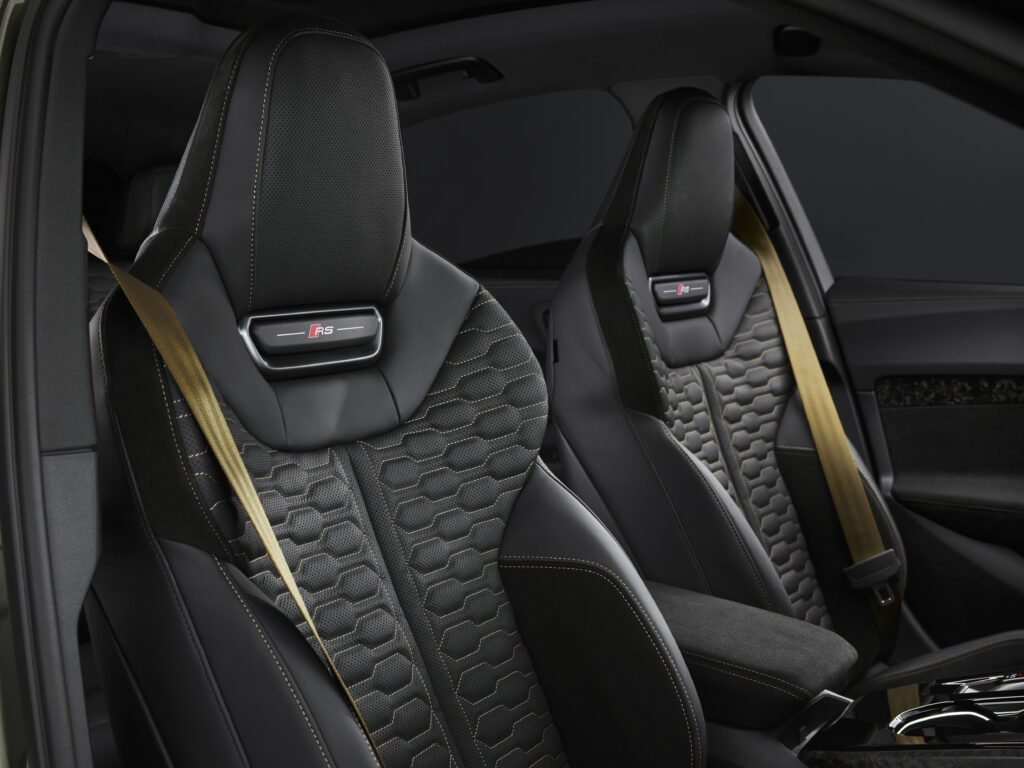
It’s not for the purist who wants minimal mediation. If you want a performance car that is basically engine, chassis, and your right foot, this RS 5 will feel like a rolling control algorithm. A very fast, very clever one, but still an algorithm.
It’s also not for anyone who hates charging. Audi says the car can charge at up to 11 kW AC, which makes home charging practical if you have a reliable setup. If you don’t, you risk living in the frustrating middle ground: carrying battery weight you rarely use while still enjoying some hybrid benefits but not the full experience Audi is describing.
Finally, it’s not for bargain hunters. Audi provides German pricing and timing details in its launch material. That gives a sense of positioning, but buyers should assume options and performance packages will move the real-world price quickly.
For context on how the broader mobility landscape is evolving beyond enthusiast ownership, Test Miles has also been tracking how autonomous systems and new service models are scaling in Waymo’s 2026 Expansion Explained: Where Robotaxis Go Next.
What is the long-term significance?
This looks like a strategic pivot: Audi Sport is defining “RS” for an electrified era.
The RS brand has always been about usable speed. Not just lap times, but the ability to be quick in the real world, poor weather, imperfect roads, long distances, and everyday schedules. Battery-electric performance cars can be brutally fast, but they also introduce new forms of friction: charging planning, range variability at high speeds, and weight distribution challenges.
Plug-in hybrids are one way to bridge that transition, but only if they’re engineered as a cohesive system rather than a compromise. Audi is signaling that it believes the bridge can be exciting, not merely practical.
The torque vectoring story is the clue. Audi could have launched an RS plug-in hybrid and focused the narrative on power and consumption numbers. Instead, it is talking about torque distribution loops, rear axle architecture, and dynamics controllers recalculating targets every five milliseconds. That reads like an engineering-led performance identity, not a marketing-led one.
There’s also a market implication: buyers are increasingly asking performance cars to be socially and practically flexible. Quiet departure in the morning. Electric running in the city. Fewer local emissions in traffic. Then, when the road opens up, the car still needs to feel like it earns its badge. If Audi’s calibration is right, the RS 5 becomes a template for how performance brands keep their identity while the powertrain landscape changes under their feet.
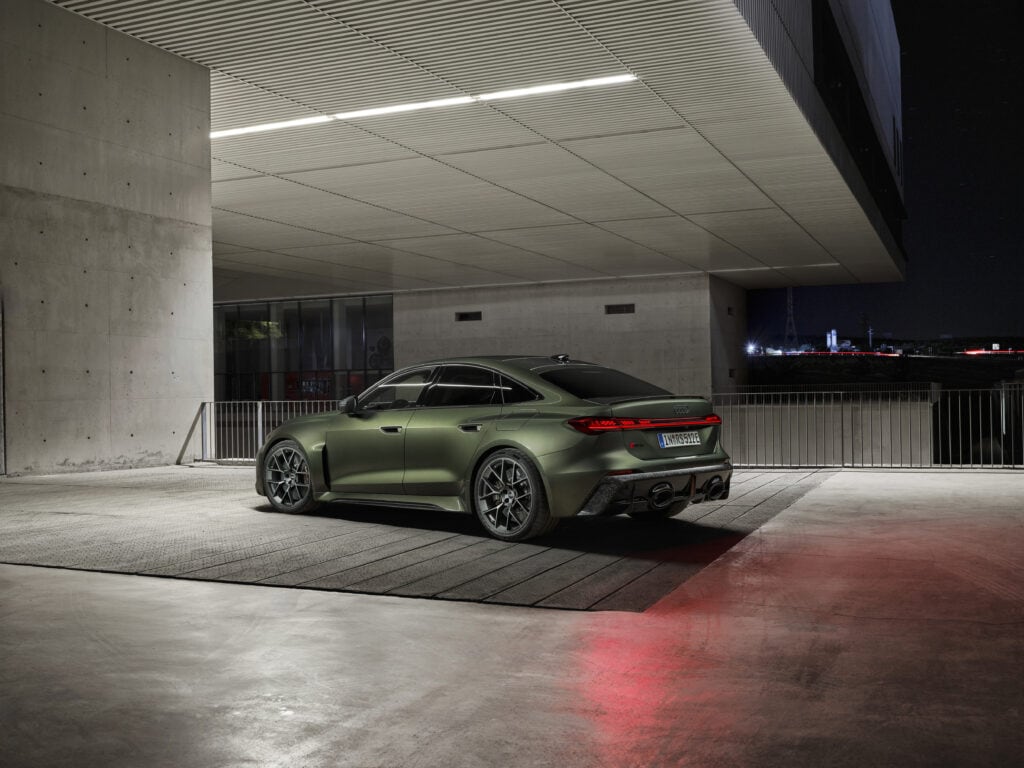
Audi says orders open for Europe in the first quarter of 2026, with deliveries expected in summer 2026, and production in Neckarsulm. That places the RS 5 right in the middle of the industry’s current uncertainty: EV adoption is growing, but uneven. Hybrids are resurging in some markets. Regulations are tightening, but customer patience for inconvenience is not infinite.
This RS 5 feels like Audi Sport saying, calmly, “We can do both.”
And if they truly can, if the car is as comfortable as it is sharp, as intuitive as it is clever, then the long-term significance is simple: the future of enthusiast cars may not be purely electric or purely combustion. It may be orchestrated. Quiet when you need it, loud when you want it, and smart enough to make heavy hardware feel light on its feet.
That’s not a romantic idea. It’s a practical one. And right now, practicality might be the only way performance survives with its dignity intact.
One final lens that matters here is what “competition for attention” looks like in a fragmented enthusiast world. Even motorsport is being reshaped by choice and identity, as explored in Daytona 500 2026: Reddick Wins as NASCAR Changes. Road cars are going through a similar sorting process: not just which is fastest, but which fits modern life without losing its soul.