Operation Frodo EV Is the Quiet Rescue Story America Needs
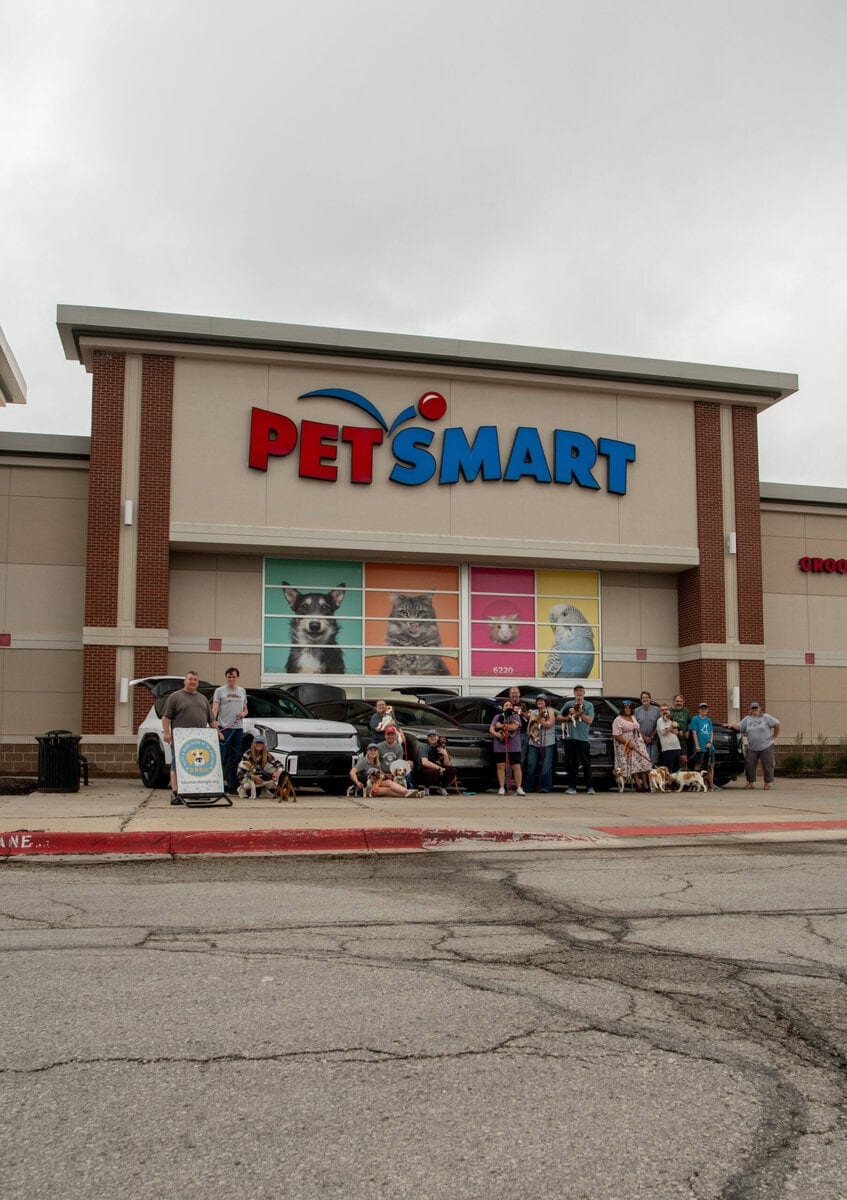
Operation Frodo EV uses quiet electric SUVs to help rescue dogs travel with less stress and shows how vehicle tech can serve compassion.
The Road Trip With A Heartbeat
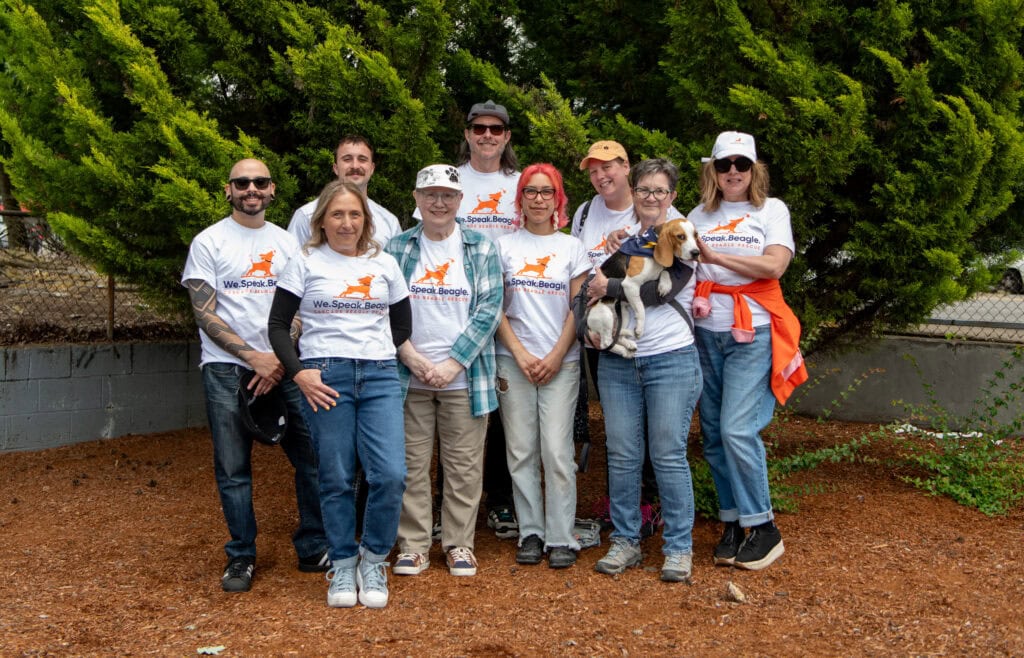
In Nebraska, a small army of volunteers gathered around a mission that looks simple from the outside and feels enormous once you are standing inside it. Dogs needed to move. Rescues needed help. People showed up with vehicles, crates, supplies, schedules, snacks, water bowls, chargers, patience, and the kind of optimism that usually arrives wearing dog hair.
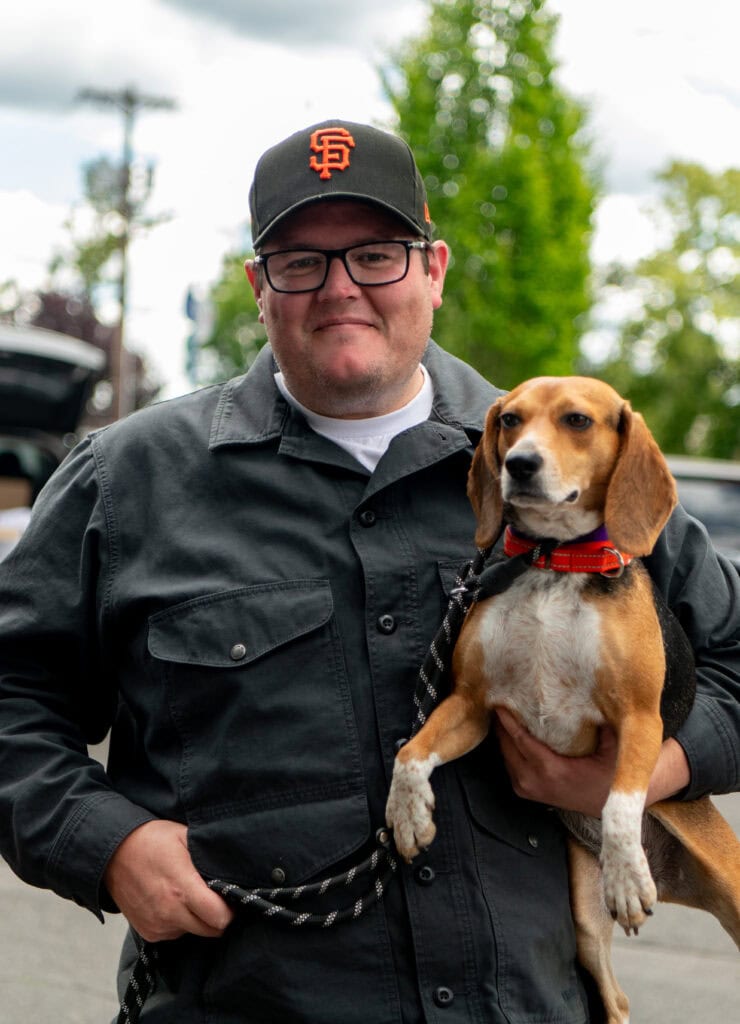
They call it Operation Frodo, and it began with one beagle. Not a program. Not a media event. Not a polished nonprofit campaign with a logo and a five-year strategic plan. One beagle. One rescue. One decision to open a door for a dog that might otherwise have been missed. The remarkable part is not that the mission grew. Rescue has a habit of doing that. The remarkable part is that it kept its center.
Every big operation has a danger point. The bigger it becomes, the easier it is to talk about numbers instead of lives. Miles covered. Dogs transported. Vehicles used. Volunteers assigned. Views generated. Awareness raised. All of that matters, but it is not the reason anyone gets up early, loads a vehicle, crosses states, and eats dinner after making sure the dogs have been fed, walked, watered, settled, and loved. The reason is smaller and far more powerful. One dog gets another chance.
This Is Not A Car Story First
Operation Frodo did not begin with cars. It began with dogs. Frodo was supposed to be one rescue, one Christmas act of kindness, one beagle coming home. Then came Gala, who made it perfectly clear she was not interested in being a temporary passenger in someone else’s story. She would not stop crying unless she was sitting on Lowell’s lap. Not near him. Not beside him. On him.
That is the inconvenient truth of rescue. People like to believe they choose dogs, but the dogs frequently have a far more efficient process. They look at the available humans, identify the softest target, and begin negotiations immediately. Gala did not need a contract. She needed a lap and a strategy. She had both.
From that beginning, Operation Frodo became something larger than one family and one beagle. It became a network of volunteers, rescue partners, automakers, journalists, and supporters willing to turn road miles into second chances. The purpose has stayed consistent: move dogs from overcrowded shelters and strained rescue systems toward fosters, adopters, and partner organizations with room, resources, and readiness.
The broader context matters because electric vehicles are no longer only commuter cars or early-adopter toys. They are becoming family haulers, luxury SUVs, road-trip machines, and, in this case, rescue transport tools.
You may also enjoy: 2026 Hyundai IONIQ 9 Review: The Three-Row Electric SUV That’s Quietly Redefining Family Hauling

Why Add An EV Run?
The summer EV run is not a declaration that Operation Frodo is going all-electric. This is an additional summer mission, using electric vehicles to explore how quiet cabins, steady climate control, smooth power delivery, and modern route planning can help rescue dogs travel with less stress.
Four electric vehicles formed the core of this convoy: the Cadillac Escalade IQ, Kia EV9, Hyundai IONIQ 9, and Lucid Gravity. Each brings a different answer to the same question: what happens when advanced vehicle technology is used for something more useful than impressing people at a valet stand?
That is where this story becomes interesting. Electric vehicles are often discussed through the same familiar arguments: range, charging speed, price, battery size, public infrastructure, and whether someone’s uncle still thinks a diesel pickup is the answer to every human problem. Those debates are not going away. But Operation Frodo EV shows another side of the technology. For a nervous rescue dog, a quiet cabin is not a luxury feature. It is a calmer environment. Smooth acceleration is not a party trick. It is less motion drama. Strong climate control is not pampering. It is welfare.
A basic understanding of all-electric vehicle technology helps explain why these vehicles behave differently from gasoline SUVs. Their motors deliver power smoothly, their cabins can be extremely quiet, and their energy use is tied closely to route planning, temperature, load, and charging access.
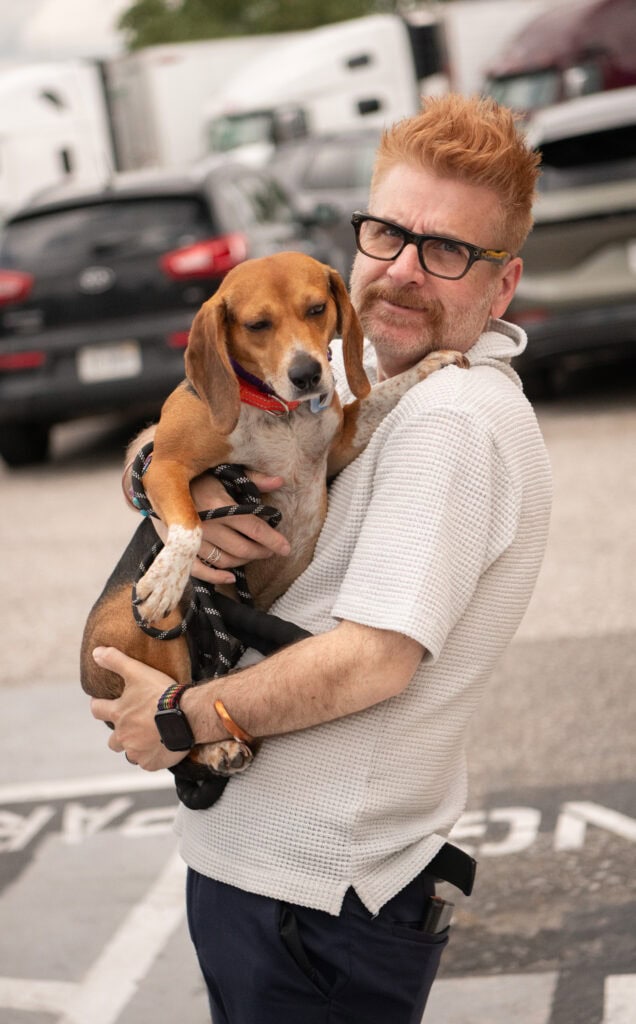
The Cadillac Escalade IQ Brings Big-Space Calm
The Cadillac Escalade IQ is the big, unapologetic luxury entry in the group, and on a rescue run that size has meaning. Cadillac estimates the 2026 Escalade IQ can travel up to 465 miles on a charge. It also offers seating for seven, a front eTrunk, and up to 131.3 cubic feet of maximum cargo space with the eTrunk included. Add the 55-inch Horizon Display across the front row, Air Ride Adaptive Suspension, Magnetic Ride Control, and four-wheel steering, and the result is a luxury SUV that becomes surprisingly useful once the cargo is crates, water bowls, blankets, leashes, and nervous dogs.
On a normal day, those features sound like luxury SUV talking points. On this drive, they become practical tools. Range helps reduce the number of stops. Space helps separate dogs, supplies, bags, crates, water, food, and the mysterious pile of items every road trip creates by hour three. The large display helps with navigation, charging guidance, and coordination. The ride technology helps keep the vehicle settled over long interstate miles.
The Escalade IQ is still a Cadillac, which means it has more presence than a royal wedding and roughly the same level of subtlety. But in this case, that presence works. For anxious dogs, a large quiet cabin can become a rolling decompression room. For volunteers, it provides the confidence to cover distance without turning every stop into a logistical opera.
You may also enjoy: Cadillac Vistiq: The Electric Three-Row That Actually Works
The Kia EV9 Is The Practical Heart
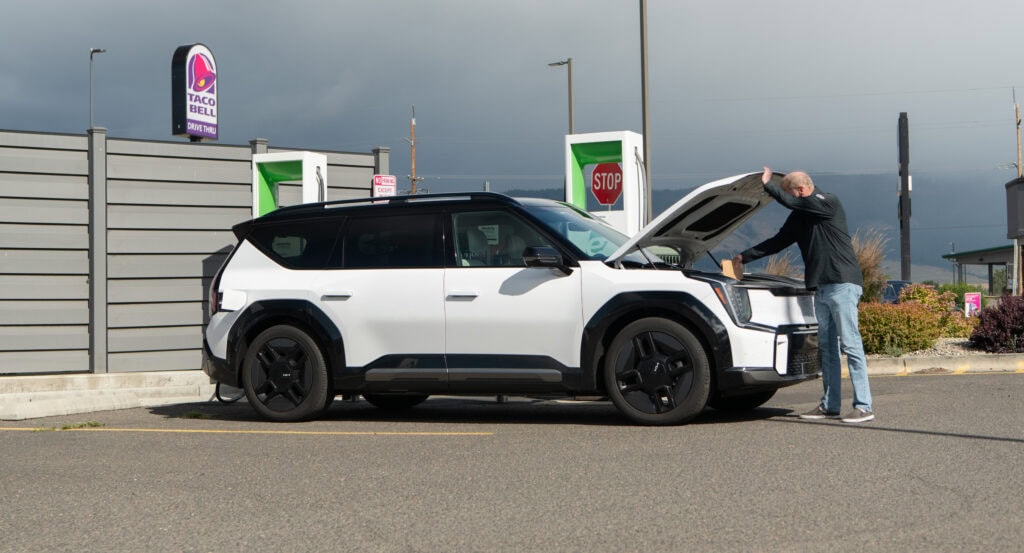
The Kia EV9 feels like the practical heart of the convoy because it is the kind of vehicle families can understand immediately. It is a three-row electric SUV with room for people, dogs, and the real objects that make rescue transport work. Kia lists up to 305 miles of EPA-estimated range with the 99.8-kWh battery. The EV9 also uses an 800-volt architecture and, when connected to a compatible 350-kW DC fast charger, can charge from 10 to 80 percent in as little as 24 minutes.
That matters because time is not abstract on a rescue drive. Less time sitting at chargers means less time managing restless dogs, rotating walks, checking water bowls, keeping the cabin comfortable, and making sure everyone is doing well. The EV9 also offers up to 81.7 cubic feet of cargo room behind the first row, giving volunteers the flexibility to load gear without turning the interior into a mobile game of crate Tetris.
The EV9’s strength is that it feels usefully normal. Not boring. Not plain. Just understandable. In a convoy full of emotional stakes, that kind of normality is valuable. It lets the mission be the story, not the machinery. The vehicle does its job, and the dogs get the attention.
Public charging is part of the planning, and the U.S. Department of Energy’s Alternative Fuels Data Center explains the difference between charging stations, ports, and connectors, which matters when a convoy has to keep moving without turning every stop into an electrical scavenger hunt.
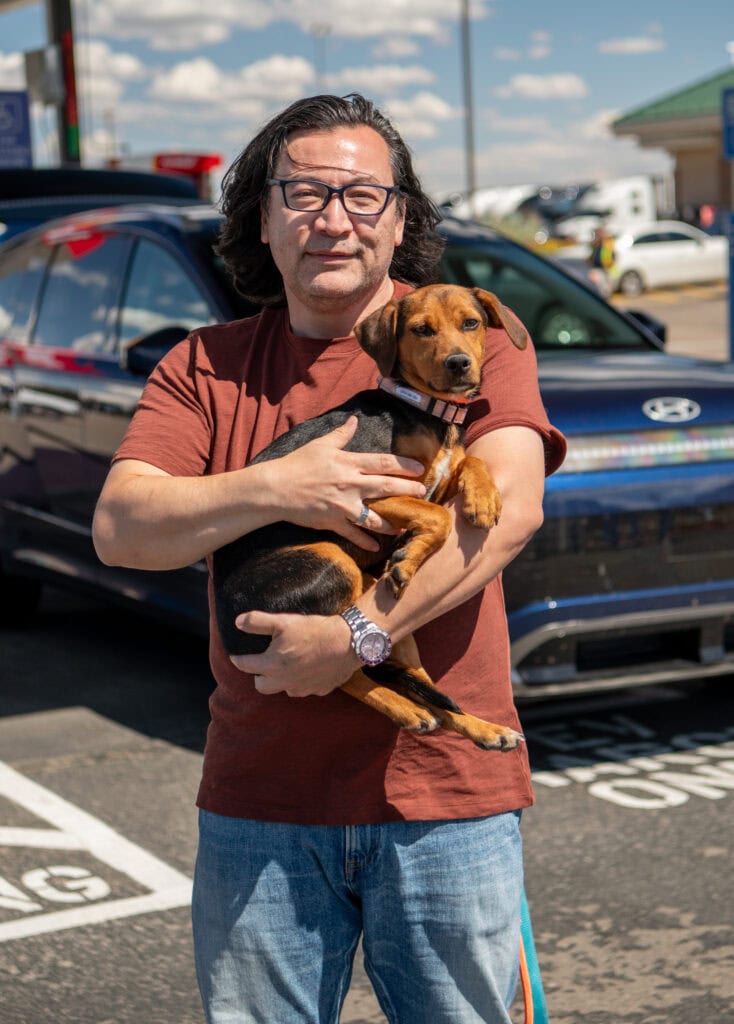
The Hyundai IONIQ 9 Feels Like A Quiet Room
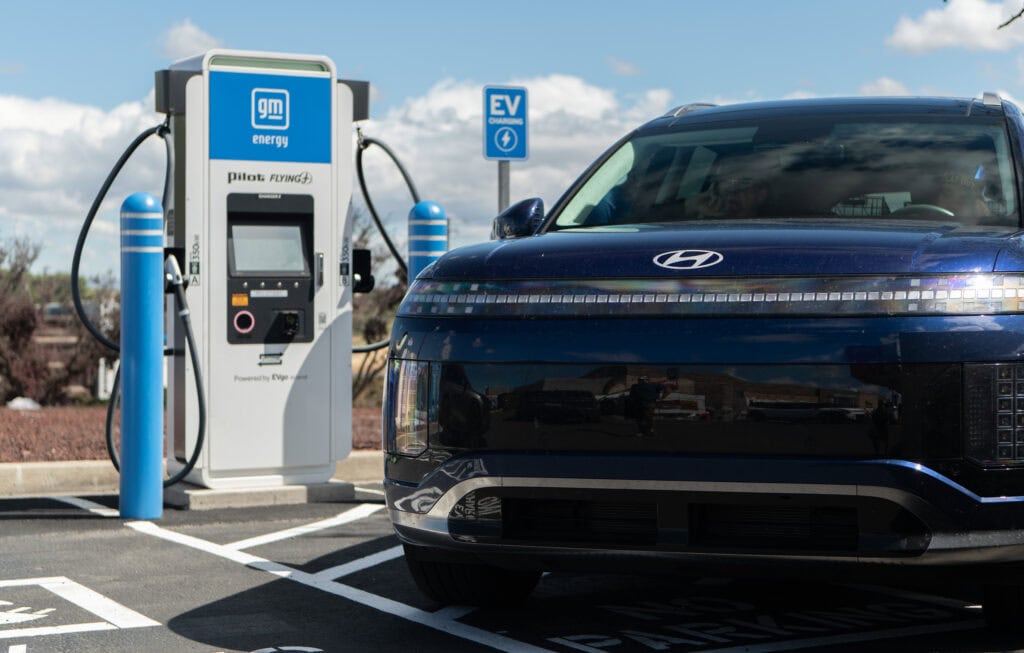
The Hyundai IONIQ 9 brings a different kind of calm. Hyundai built it around a 110.3-kWh battery, and the long-range rear-drive version is rated up to 335 miles of EPA-estimated range. Hyundai says it can charge from 10 to 80 percent in about 24 minutes under optimal conditions using a 350-kW charger. Add the flat floor, generous cabin packaging, available Relaxation Seats, and a slidable console, and the IONIQ 9 starts to feel less like a vehicle and more like a quiet room with wheels.
That is a compliment. Rescue dogs are often processing more than people realize. Some have been in shelters. Some have been abandoned. Some have been injured. Some have been moved from place to place without understanding why. Noise, vibration, unfamiliar smells, sudden movement, and repeated stops can all add stress. A calm cabin does not fix trauma, but it can avoid adding more.
The IONIQ 9’s design plays into that. Long-distance comfort is not just about how humans feel in the front seats. It affects how alert, patient, and capable the volunteers remain after hundreds of miles. Tired humans make sloppy decisions. Comfortable humans are more likely to remember the extra leash, check the water level, secure the crate properly, and notice when a dog needs a break.
You may also enjoy: Hyundai IONIQ 9 Dominates NWAPA Drive Revolution 2025 Awards
The Lucid Gravity Brings Long Legs
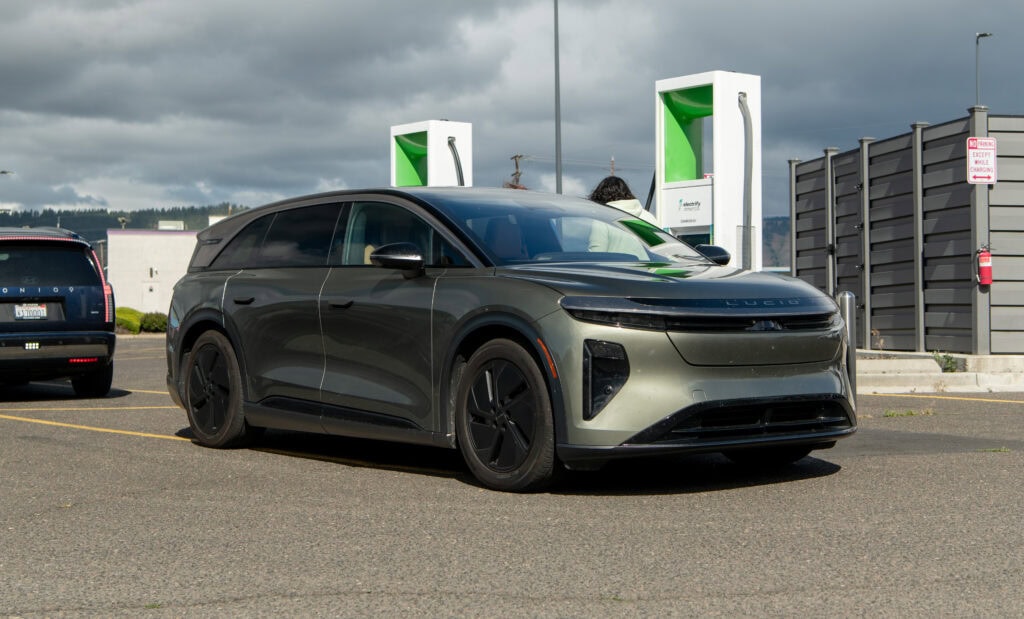
The Lucid Gravity brings the long legs. Lucid lists up to 450 miles of EPA-estimated range, seating for up to seven adults, up to 120 cubic feet of cargo space, and the ability to add up to 200 miles of range in under 11 minutes, depending on trim and equipment. On a rescue mission, that combination matters because range becomes flexibility.
Flexibility is underrated until the plan changes, and rescue transport plans do change. Weather shifts. A dog needs more time. A charging stop is busier than expected. A handoff gets delayed. A volunteer needs to swap roles. The more usable range a vehicle has, the more options the convoy keeps in reserve.
The Gravity’s appeal is not only distance. It is the way distance changes the emotional temperature of the drive. Fewer stops can mean fewer transitions for dogs that are already unsettled. Longer legs can let the convoy choose better stopping points instead of being forced into whatever is available. Fast charging can turn a long pause into a shorter reset. When the dog finally sleeps, the technology has done its best work.
The Department of Energy’s guide to how all-electric cars work explains the core components behind that experience, including the battery pack, electric traction motor, charge port, and power electronics that manage energy flow.
You may also enjoy: Best Family Road Trip Vehicles for 2025
Honey Is The Reason This Matters
For all the talk about battery size and cargo volume, Honey is the reason this summer EV run matters. She was hit by a car and found unable to move. Her injuries included broken ribs, a fractured pelvis, and a badly damaged leg. Surgery was expected. Then she began using the leg again. Now she runs and plays, though she still needs help climbing in and out.
That is the story hiding inside the convoy. Not the charging curve. Not the screen size. Not the clever suspension. Honey riding west is the point. She is the reminder that rescue is never theoretical. It has a face, a name, a limp, a crate, a blanket, and people quietly doing the unglamorous work around her.
Climate control matters in animal transport, especially because vehicle cabins can become dangerous when people become careless or delayed. NHTSA’s heatstroke prevention guidance is written around children, but the core warning applies broadly: never treat a parked vehicle as a safe waiting room for a vulnerable passenger.
You may also enjoy: 2027 Lexus TZ Revealed: Lexus’ Quietest Electric SUV Yet
What The EV Convoy Proves
Operation Frodo EV does not prove that every rescue convoy should be electric. It does not pretend charging infrastructure is perfect, or that every volunteer group can suddenly access four high-end electric SUVs. That would be nonsense, and not even especially entertaining nonsense.
What it proves is more useful. It proves that vehicle technology can be judged by how well it supports real life, especially the messy, emotional, unpredictable kind. A good rescue vehicle needs range, space, comfort, reliability, easy loading, predictable stops, and a cabin that keeps animals safe and calm. Electric SUVs can deliver many of those qualities in ways that matter on long drives.
The environmental discussion also deserves a grown-up view. EVs have no tailpipe emissions, but electricity generation and battery production still matter. The EPA’s overview of electric vehicle emissions and common EV myths is useful because it avoids the lazy extremes. EVs are not magic. They are machines. The question is how well they solve the job in front of them.
The larger mission remains wonderfully human. People still do the work. People load the supplies, clean the vehicles, walk the dogs, coordinate the rescues, handle the delays, and make sure the animals come first. The dogs do their part by being confused, resilient, occasionally loud, and frequently better than all of us.
You may also enjoy: 2027 Toyota Highlander Goes Electric As A Three-Row EV
The Road Home
The genius of Operation Frodo is that it turns a road trip into a promise. Somewhere, a dog leaves a place where the future was uncertain and moves toward a place where someone is waiting. The distance between those two points is measured in miles, but it is also measured in effort, kindness, planning, and the quiet belief that one more life is worth the trouble.
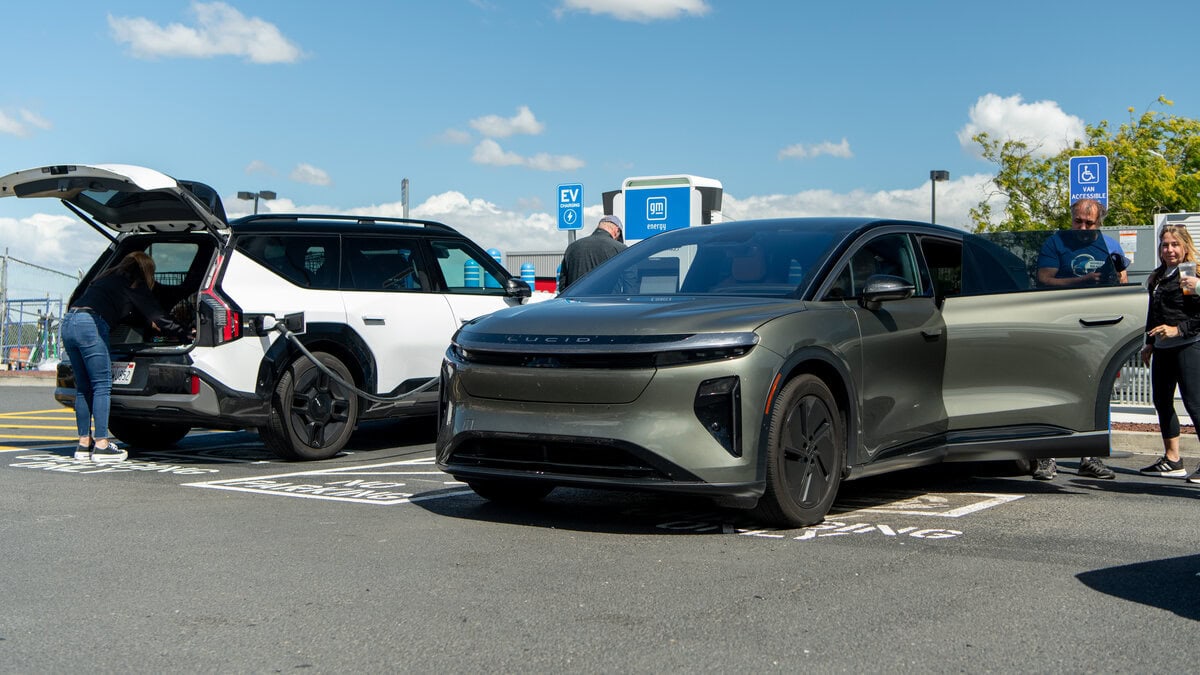
This summer EV run adds a new chapter to that story. The Cadillac Escalade IQ, Kia EV9, Hyundai IONIQ 9, and Lucid Gravity show that modern electric SUVs can be more than symbols of where the auto industry is headed. They can be working vehicles for compassion. They can carry crates, leashes, water bowls, supplies, volunteers, and one very important truth.
The best vehicle tech is the kind that gets someone home.