2026 Honda Pilot review: the calm family SUV

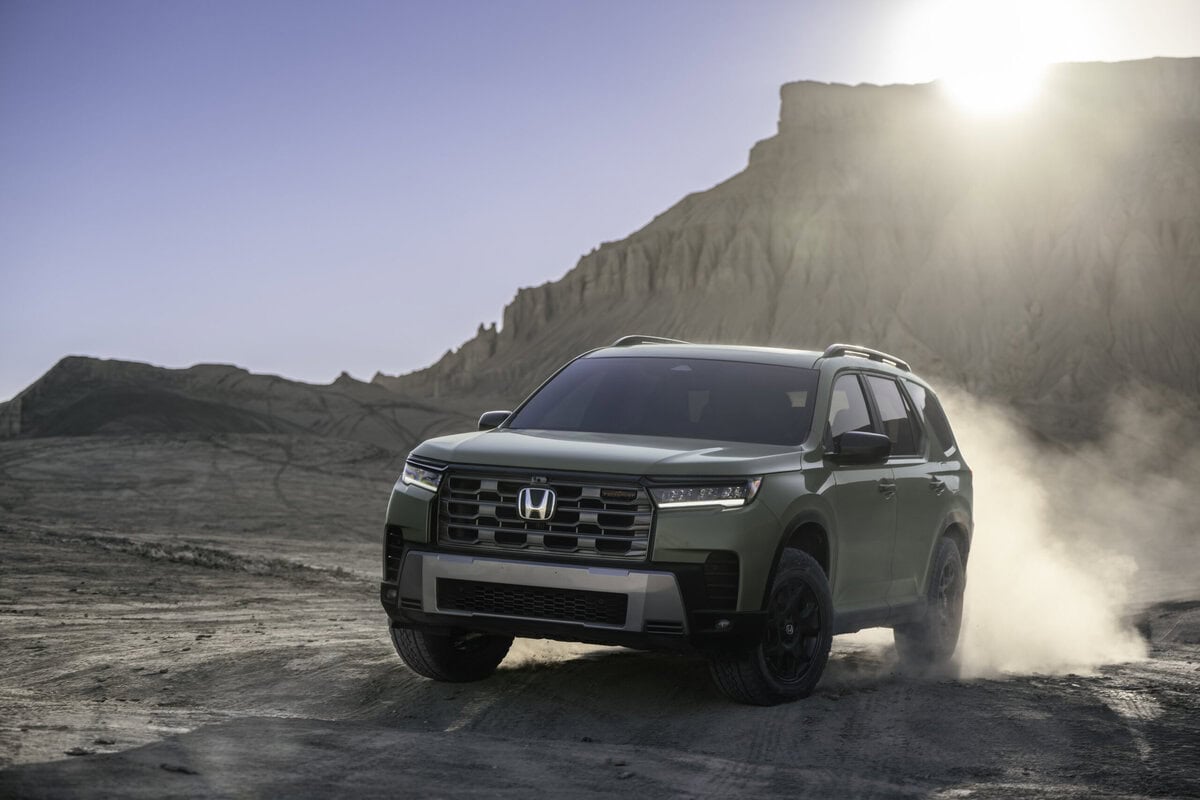
Not every family SUV needs to be a rolling gadget demo. The 2026 Honda Pilot’s quiet competence is the point—and it may be the smarter kind of “premium.”
I don’t think most people need another car that tries to win their attention. Your phone already does that, your calendar does that, and half the tech in modern vehicles is designed to prove it exists. So when a three-row SUV is described in a way that feels almost radical in 2026—calm, predictable, easy to see out of, and strangely free of drama—it’s worth slowing down and asking why.
The 2026 Honda Pilot isn’t chasing desire. It’s chasing trust. That sounds like a small distinction until you’ve lived with a family vehicle. Because trust is what you want when you’re merging in the rain with kids talking over each other, a dog shifting in the back, and a mental checklist that won’t shut up.
What sums up the whole philosophy is blunt and oddly comforting: “This isn’t a car you fall in love with. It’s one you stop worrying about.” That is not poetic marketing. That’s ownership reality.
Before we go further, it helps to name what this kind of SUV actually is: infrastructure. It’s not a status symbol. It’s the thing that quietly holds your routine together. If that idea resonates, you’ll probably also appreciate why certain legacy vehicles still matter when they’re built around quiet competence rather than theater, like this recent Test Miles look at why the Mercedes-Benz S-Class still matters.
And if you want a reality check on how easily “dream car” thinking can drift away from real-world budgets, the cultural side of ownership is evolving too—sometimes in unexpected ways, like the rise of collectible alternatives covered in Mattel Brick Shop redefining dream car ownership.
Why does this matter right now?
Family vehicles have changed jobs. They’re no longer just about aspiration, road-trip fantasies, or the driveway photo. They’re a pressure-release valve for daily life. Prices are up, distractions are up, and expectations are up. A “great” family SUV in 2026 is one that reduces friction, mental load, and regret.
Until you remember how many new cars get it wrong: visibility. “You know what the first safety feature is? Being able to see.” That’s not nostalgia. That’s design. Thin pillars, a low cowl, and honest sightlines reduce stress before cameras, alerts, or lane nudges ever need to intervene.
There’s a reason that matters: when you can place the vehicle confidently in space, you drive with less tension. You brake more smoothly. You make fewer rushed corrections. The best safety systems are the ones you never need because the underlying design prevents the anxiety spiral from starting.
Modern safety is still important, of course—and when you want third-party context, the clean starting points are the independent rating programs that test crash protection and crash-avoidance performance, like IIHS vehicle ratings and NHTSA’s 5-star safety ratings. Those sources won’t tell you whether a car feels calm in a school zone, but they do anchor the conversation in evidence rather than vibes.
The other “right now” point is behavioral: driver assists can either reduce workload or add to it. The central claim is that the Pilot’s assistance is adult in tone—gentle interventions, clear communication, then it steps back. If you’ve driven systems that behave like a probation officer, you understand why that matters. You don’t feel safer when the vehicle nags you constantly. You feel supervised.
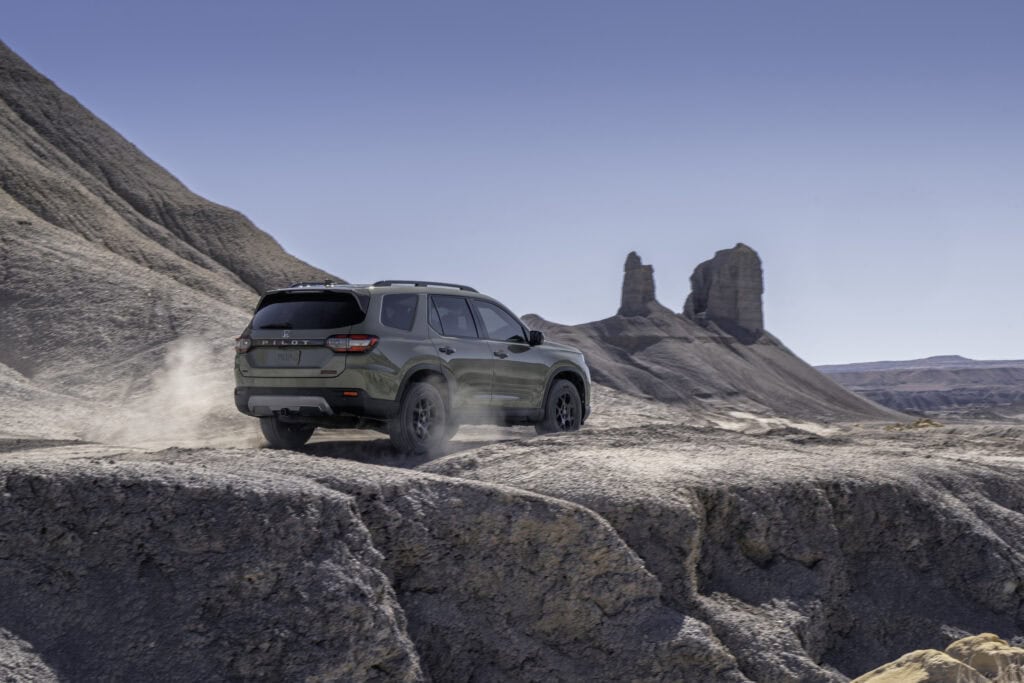
Honda’s broader framing around driver-assist tech has long leaned toward support rather than spectacle, and the best way to understand the language Honda uses for its suite is to read it straight from the source on Honda Sensing. Whether you love these systems or tolerate them, the goal should be the same: reduce workload without turning driving into a negotiation.
Finally, there’s the lifestyle layer: the Pilot is being positioned as a tool. “This isn’t a status symbol. It’s infrastructure.” Tools aren’t exciting, but they’re deeply attractive when your life is busy. A reliable backpack, a good kitchen, a dependable appliance—things you notice only when they fail. In family ownership, “boring” is often another word for “freeing.”
How does it compare to rivals or alternatives?
This is a strong segment with strong choices, and it’s worth being honest: plenty of rivals will feel more exciting in a 20-minute test drive. Some offer bolder styling. Some lean into big-screen theater and feature density. Some deliver a more dramatic powertrain feel or a more aggressive personality.
So what does the Pilot win on? Livability. Visibility. Ease of use. Calmness. That last one sounds subjective until you translate it into daily moments: predictable steering in tight parking structures, smooth braking in stop-and-go traffic, and driver assists that don’t jolt you or scold you.
It’s pretty clear: “No, this isn’t exciting. That’s not a flaw.” It’s a deliberate decision to prioritize composure over drama because families value calm more than theatrics. If you want your SUV to entertain you, you may prefer alternatives that lean into a sharper edge.
Where this becomes tangible is in the parts of ownership that don’t show up in a spec sheet:
- Ride and noise: “This is the sound of nothing happening.” That matters on long drives because a vehicle that stays quiet and settled reduces fatigue.
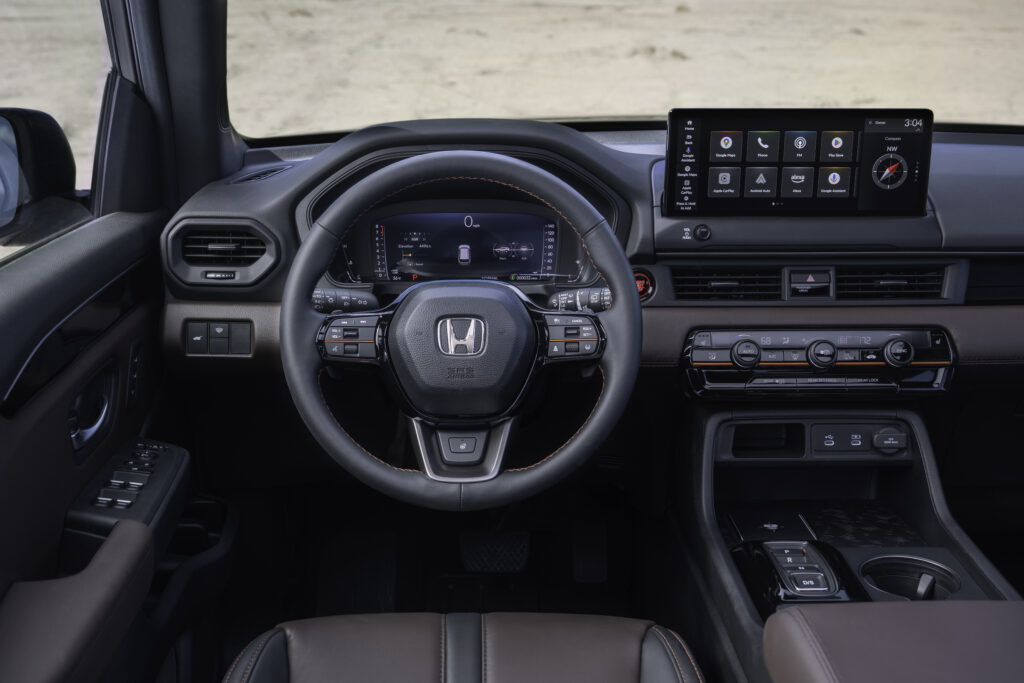
- Controls and layout: “Notice how nothing here needs explaining.” Physical controls and intuitive screens aren’t anti-tech; they’re anti-friction.
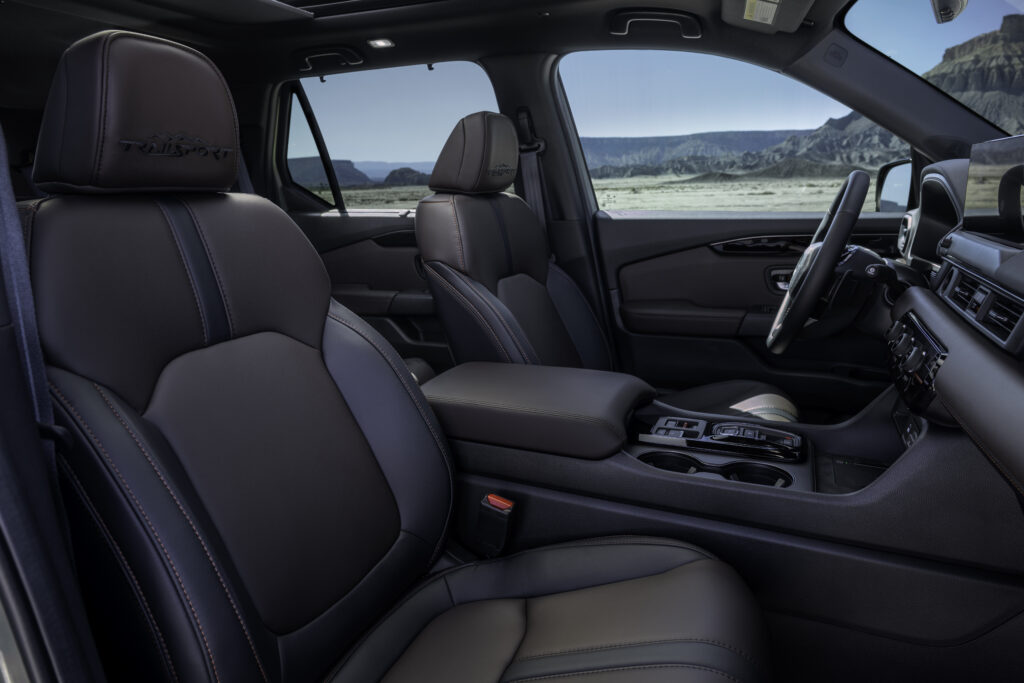
- Third-row reality: “Adults can sit back there… for more than five minutes.” Usability is the separating factor in this class.
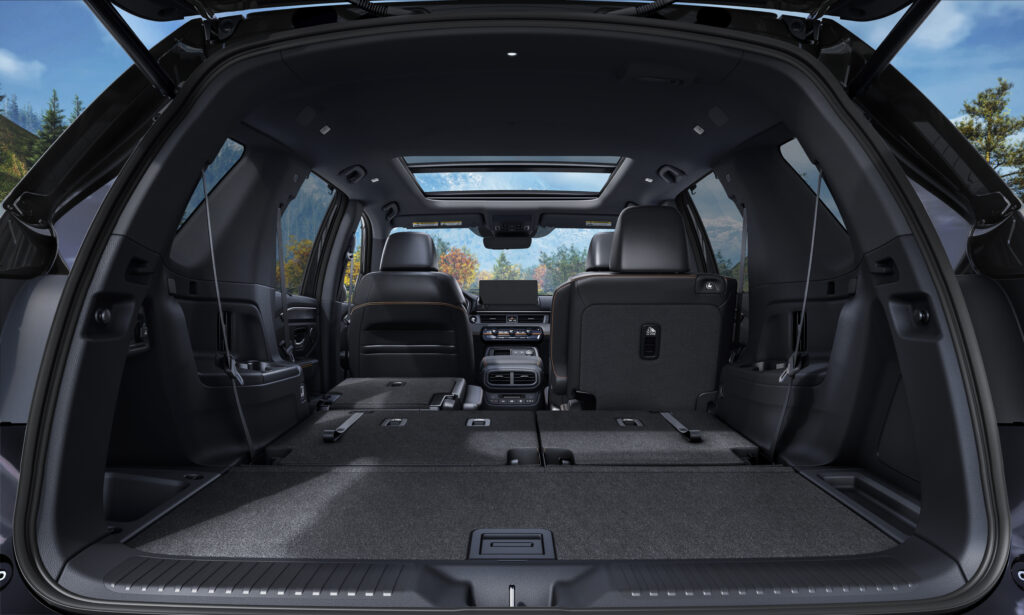
- Cargo practicality: “This is dog math… it checks out.” A wide, low cargo area that doesn’t demand strategic planning is a real feature.
One way to pressure-test any family SUV is to ask a simple question: how does it handle repetition? The Pilot is excellent at the thousandth errand, not the first test drive. That’s where ownership satisfaction actually lives.
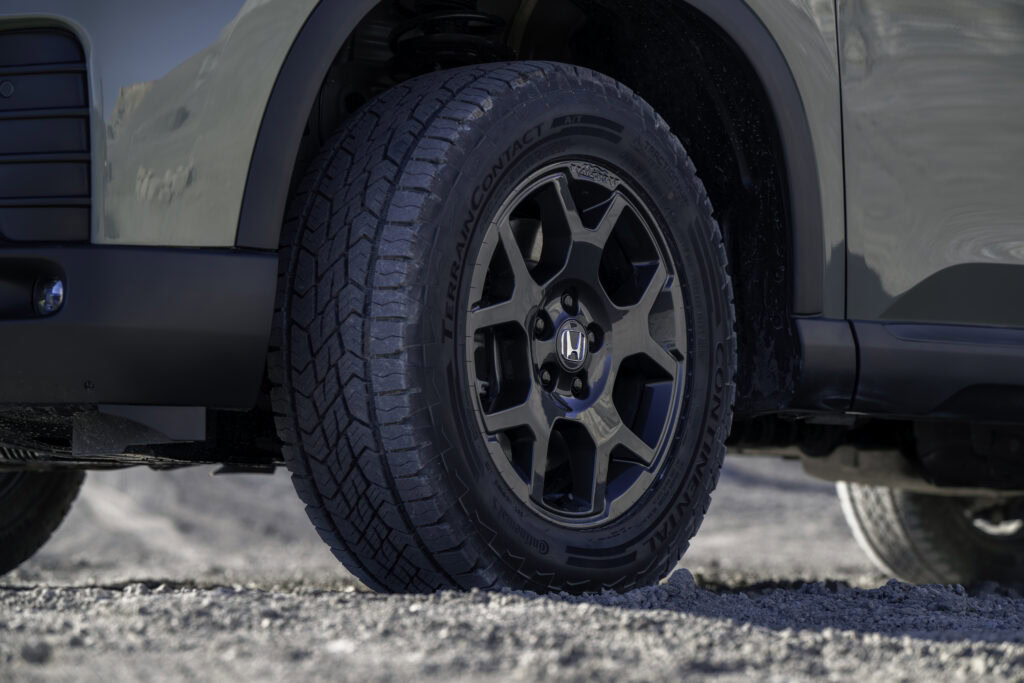
And if you want a different kind of “proof of point” about capability—how cars behave when conditions are absurd rather than ideal—there’s a fun parallel in how manufacturers demonstrate confidence under stress, like Maserati driving $200,000 supercars on St. Moritz ice. Different category, same underlying idea: control matters more than theatrics when physics stops being polite.
Who is this for and who should skip it?
This Pilot story is for people who want a family SUV that behaves like an adult: calm, predictable, easy to see out of, and quietly competent. It’s for the buyer who is less interested in “wow” and more interested in “I don’t want to be annoyed every day.”
It’s also for drivers who value assistance systems that support rather than supervise. If you’ve ever turned off a feature because it stressed you out, you’ll understand the appeal of gentle interventions and clear communication.
It’s for households where the SUV is part of the operating system—school runs, commutes, groceries, sports, dogs, grandparents, weekend drives—and the goal is to reduce friction and regret.
You can probably skip this vibe if you want excitement. “If you want excitement, buy something else.” That’s fair. If you want your family SUV to feel like an event—bold styling, dramatic tuning, lots of novelty—the Pilot’s restraint may feel like it’s missing a spark.
But if you’re the kind of buyer who thinks about the next five to ten years, restraint can be a feature. The car you love in week one isn’t always the car you still love in year five. The vehicle that makes sense repeatedly is the one that tends to win ownership.
And if you’re tracking how automakers sometimes get distracted by shiny new identities—robots, moonshots, and headlines—there’s a very current contrast between “build better cars” and “become something else,” explored in Tesla ditching the Model S and X for robots. Whatever you think of that pivot, it underlines why some buyers crave the calm certainty of a straightforward family SUV.
What is the long-term significance?
The long-term story here isn’t just about the Honda Pilot. It’s about a design philosophy that may become more valuable as vehicles keep getting more complex.
Cars are increasingly device-like: software updates, connected services, layered menus, and driver-assistance systems that vary wildly in how they behave. Some of that complexity is useful. Some of it is exhausting. Especially in a family context, the premium experience is often the absence of friction.
The Pilot argues that the next status symbol might not be flash. It might be calm. It might be a vehicle that disappears into life—supporting routines without demanding praise, patience, or constant learning.
That idea has practical consequences. Vehicles that are intuitive tend to age better because they don’t rely on novelty to feel modern. Physical controls that make sense don’t become obsolete overnight. Clear visibility doesn’t go out of style. A calm ride doesn’t require an app update.
Even costs that owners don’t like thinking about—fuel spend, insurance, and maintenance—are easier to manage when the vehicle is predictable. For buyers who want a neutral place to start with efficiency information, the government’s baseline resource is FuelEconomy.gov. You don’t need to obsess over numbers to appreciate the point: predictability reduces stress, and stress is expensive in ways we rarely quantify.
In the end, the most revealing aspect is “This becomes part of the family. Quietly.” That’s the whole thesis. A great family SUV isn’t something you fall in love with in a romantic sense. It’s something you stop worrying about. It earns trust by disappearing into your life in the best way.
And in a world full of complicated vehicles, that might be the most desirable trait of all.