Why the Rivian R2 Could Be America’s Next Big EV SUV

The Mainstream Moment Rivian Has Been Building Toward
The Rivian R2 may be the most important vehicle Rivian has ever built. That sounds dramatic, but in this case, it is not an exaggeration.
The R1T pickup and R1S SUV proved that Rivian could design desirable electric adventure vehicles with real personality, real capability, and a loyal following. The R2 has a different job. It has to take all of that brand appeal and make it work for far more people.
This is Rivian’s mainstream test. It is smaller than the R1S, easier to place in a driveway, easier to park in a city, and priced to compete in the heart of the electric SUV market. That puts it into a crowded and unforgiving space with the Tesla Model Y, Hyundai Ioniq 5, Kia EV6, Ford Mustang Mach-E, and a growing list of electric crossovers that all want to become the default family EV. The difference is that the Rivian R2 still looks and feels like a proper SUV, not a melted appliance that joined a wellness retreat.
That matters because electric vehicles have moved past the novelty stage. Early adopters are not enough anymore. Rivian now needs families, commuters, dog owners, road-trippers, campers, suburban households, and people who like the idea of adventure even if the most rugged thing they do on a Saturday is park near a farmer’s market. The R2 is aimed directly at that customer.
You may also enjoy: Rivian R2 First Customer Cars Roll Off the Line – Spring Deliveries Start Soon
A Boxy Shape With A Real Purpose
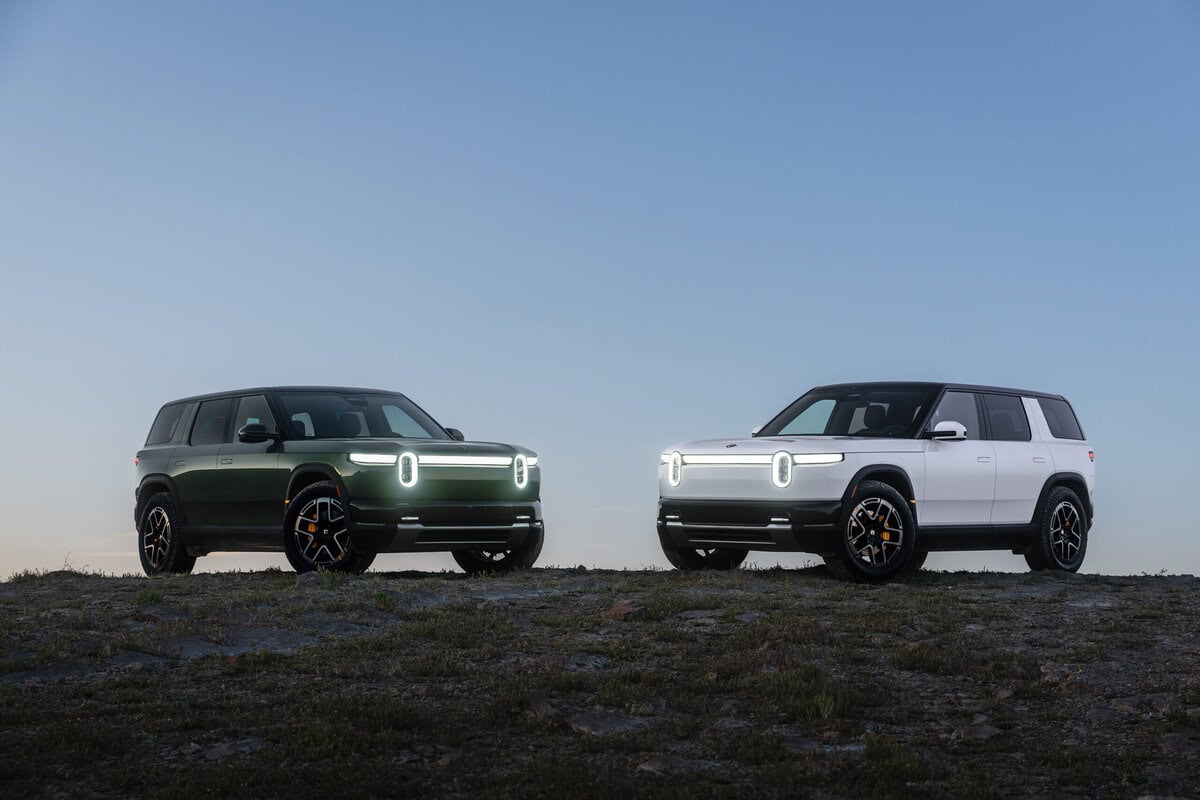
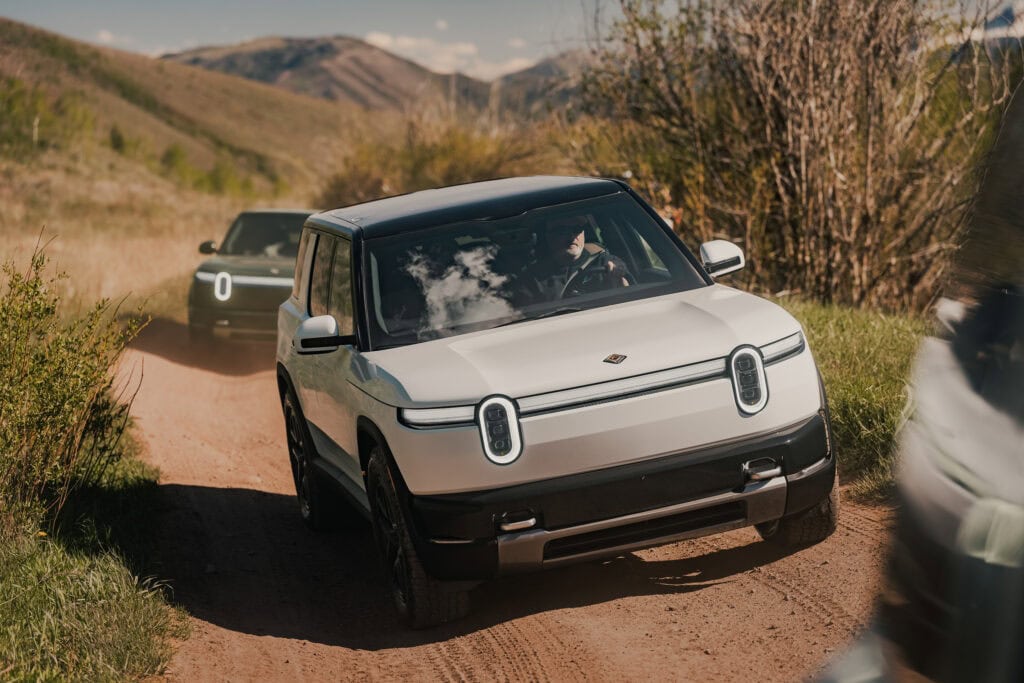
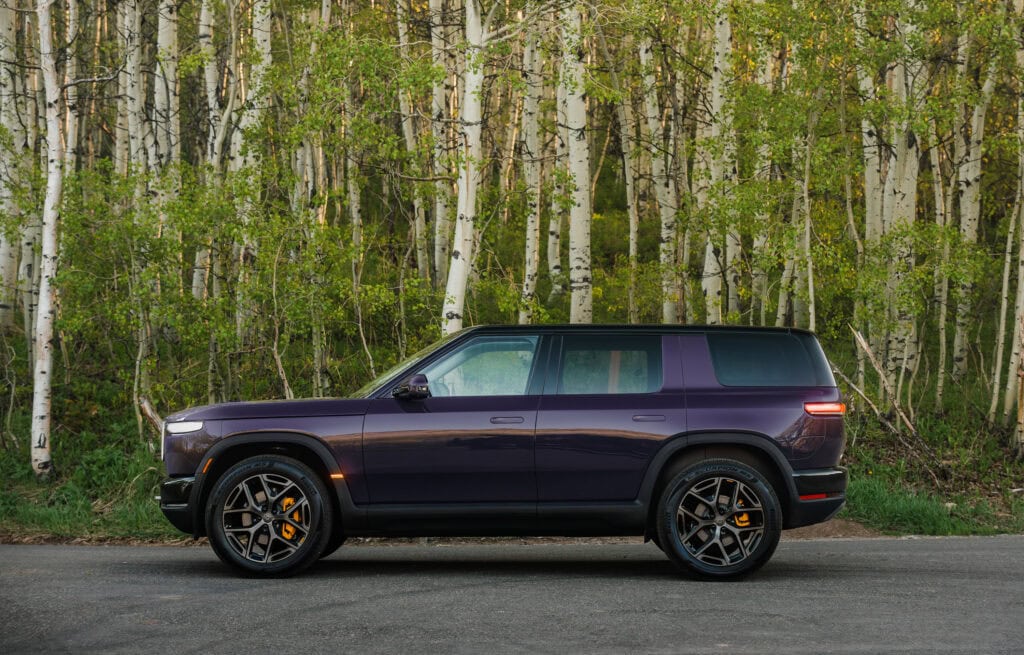
One of the smartest things Rivian did with the R2 is resist the temptation to make it look too soft. Many EVs are shaped primarily by aerodynamics, which can make them efficient but visually anonymous. The R2 keeps Rivian’s upright stance, signature front lighting, short overhangs, squared-off body, and useful proportions. It looks modern without looking fragile, and that is a difficult balance to strike.
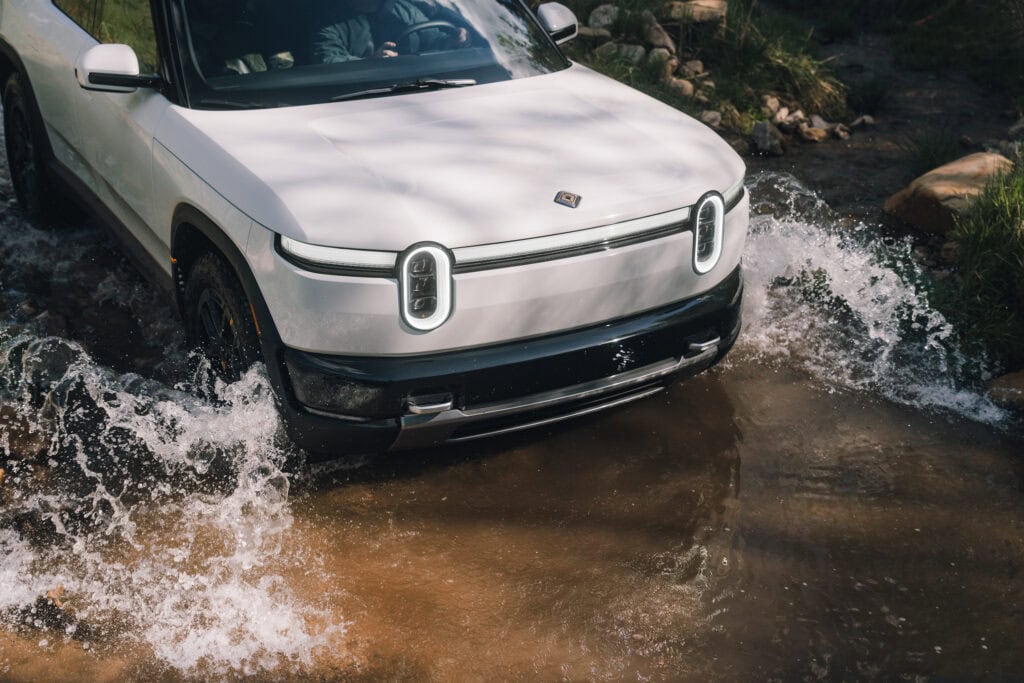
The R2’s 9.6 inches of ground clearance give it the visual and practical confidence that buyers expect from a brand built around adventure. Not every owner will take one deep into the woods, but capability still matters in daily life. Snow, gravel, campsites, rutted driveways, muddy dog parks, and badly designed parking lots all become easier when a vehicle has more clearance and a body shape you can judge from the driver’s seat.
That upright design also helps the R2 feel more honest. It does not pretend to be a sports car wearing hiking boots. It presents itself as a useful, compact electric SUV with a bit of grit. For Rivian, that may be the strongest possible identity. The R2 does not need to be the weirdest EV on the road. It needs to be the one that makes people say, “Yes, I could actually live with that.”
The Rear Glass Is A Small Feature With Big Charm
The drop-down rear glass may not be essential, but it is brilliant. In a market full of huge screens and recycled marketing phrases, a physical feature that changes how people use the vehicle stands out. Rivian says one button can lower all four side windows and the rear glass together, which gives the R2 an open-air feeling without asking buyers to remove roof panels, store parts in the garage, or pretend they enjoy wind noise quite that much.
The rear glass also makes practical sense. It helps with long items, gives dogs and passengers a little more cabin openness when appropriate, and adds a sense of occasion to a vehicle that could otherwise have become too sensible. Good car design is often about these little moments. A feature does not have to be necessary to be valuable. Sometimes the thing you do not technically need becomes the thing that makes you smile every time you use it.
Rivian understands that personality is part of ownership. The R2 has to compete on range, price, charging, and technology, but it also needs emotional pull. The rear glass gives it that. It is a small rebellion against the idea that every EV must feel like software with wheels.
You may also enjoy: Rivian R2 Spring Production Looms – Reserve Now or Wait?
The Cabin Is Built Around Usefulness
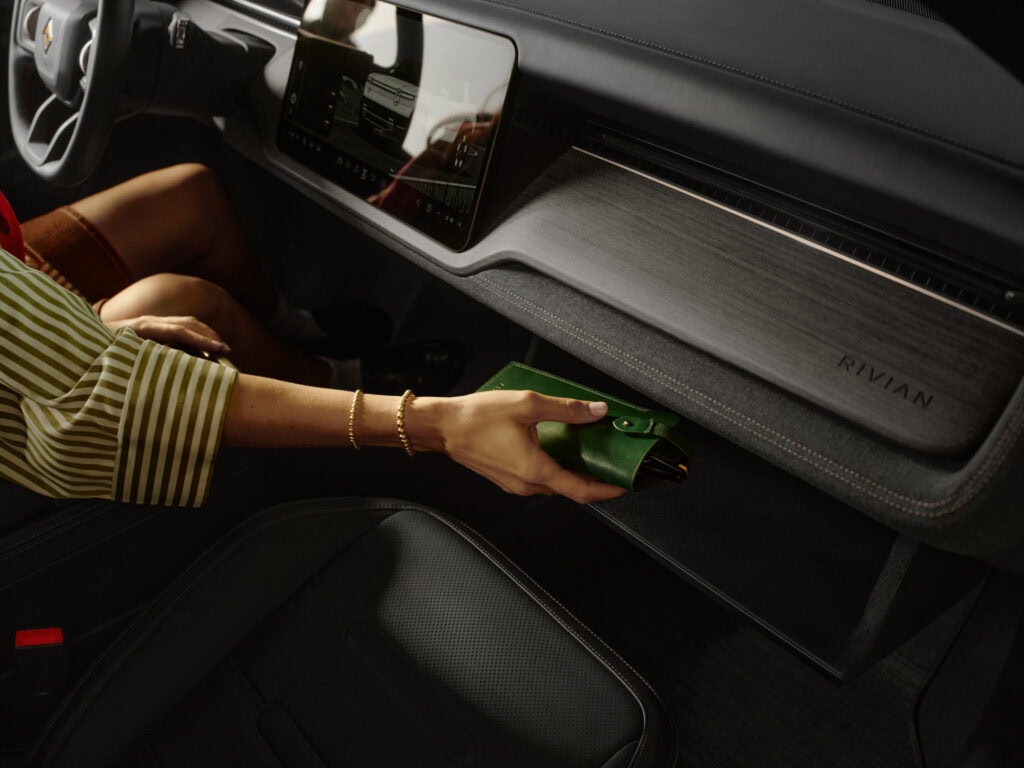
Inside, the R2 seems focused on solving ordinary problems. That is not a glamorous sentence, but it is exactly what a mainstream SUV needs to do. Rivian includes dual glove boxes, a slide-out lower console drawer, useful storage, available wood accents, heated and ventilated front seats, heated rear seats, and a heated steering wheel. These are the kinds of features that make daily ownership easier rather than just impressing people in a showroom.
The two glove boxes are a perfect example. One glove box is where receipts, manuals, old napkins, charging adapters, dog bags, sunglasses, and mysterious cables go to start a new civilization. Two glove boxes are not a luxury gimmick. They are an admission that people bring too much stuff into their cars and then act surprised when they cannot find anything. Rivian is designing for reality, which is far more useful than designing for a fantasy family that owns exactly one tote bag.
The R2’s cabin also avoids leaning too far into delicate luxury. That is important. A Rivian should not feel like a hotel lobby that panics when a Labrador jumps in. It should feel durable, warm, and clever. Premium materials are welcome, but in an SUV like this, flat floors and smart storage beat fancy stitching every time.
Pricing Is The Real Business Story
The performance numbers will get attention, but pricing is the real headline. Rivian currently lists the R2 Performance from $57,990, with dual-motor all-wheel drive, 330 miles of EPA-estimated range, 656 horsepower, and a 3.6-second zero-to-sixty time. That is a very quick family SUV, which is useful if the school run has somehow become a qualifying lap.
The R2 Premium follows with a listed starting price of $53,990, 330 miles of EPA-estimated range, dual-motor all-wheel drive, and 450 horsepower. The Standard version is listed from $44,990 for 2027, with a 275-mile estimated range in its base form and options that can expand the lineup. The big picture is simple: Rivian is trying to give buyers a path into the brand below the cost of its larger R1 models.
That is where the R2 becomes a business story, not just a vehicle story. Rivian needs scale. Building cool trucks and SUVs is one thing. Building enough of them efficiently, at a price that moves mainstream buyers, is another. If the R2 can be manufactured reliably, delivered in meaningful numbers, and supported well after purchase, it could become the product that helps Rivian move from promising startup to durable automaker.
You may also enjoy: Rivian R2 Robotaxis in 2028: What It Means for EV Buyers
Why The R2 Has To Be More Than Fast
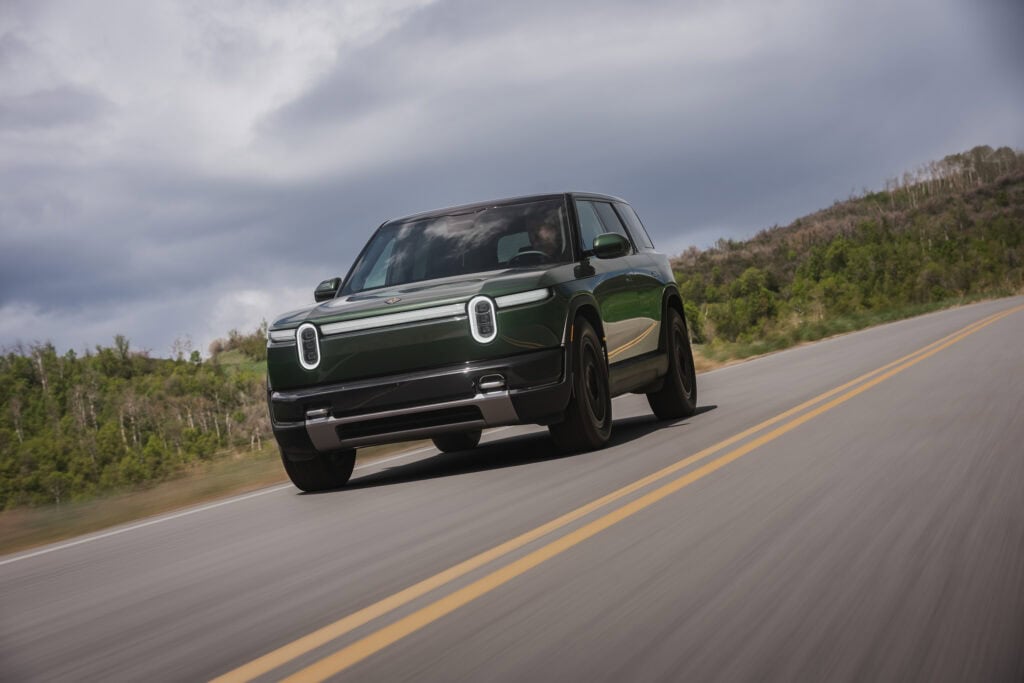
The 656-horsepower Performance version is great for headlines, but mainstream success will depend on calmer qualities. Buyers in this segment need predictable steering, good outward visibility, smooth braking, low road noise, comfortable seats, and a ride that does not make passengers reconsider family vacation. Speed is fun. Ease of ownership sells cars.
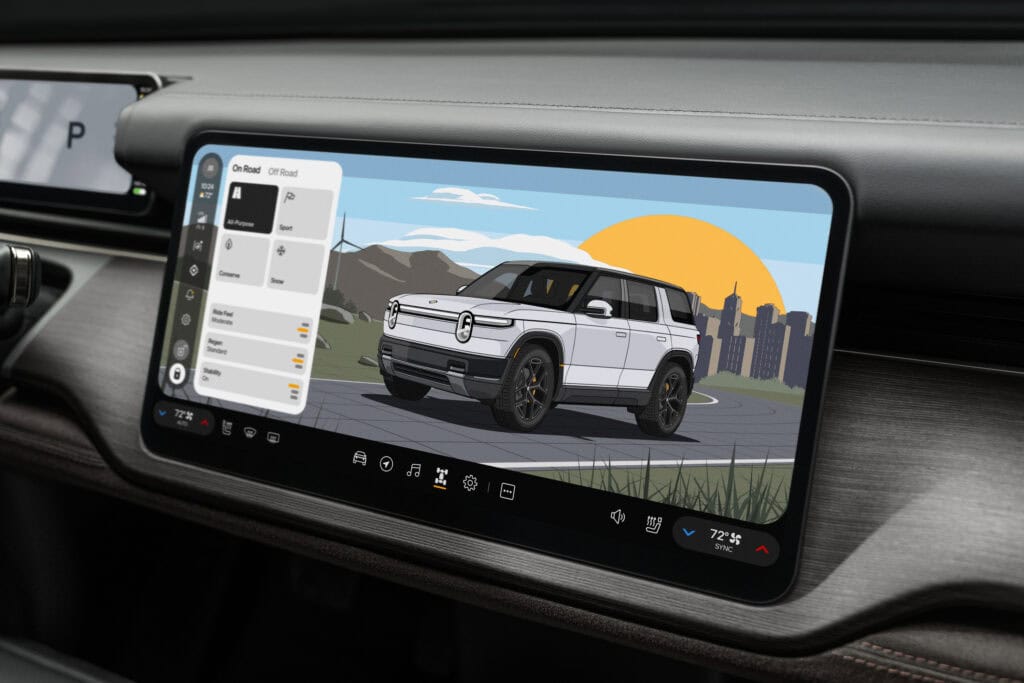
This is especially true because the R2 is not merely chasing EV enthusiasts. It is chasing people who may be buying their first electric vehicle. Those buyers want range that feels usable, charging that feels understandable, and technology that reduces stress rather than adding another system to manage. The R2 needs to feel like a normal SUV that happens to be electric, not an experiment that requires a tutorial before every trip.
The best version of the R2 would be quick when you want it, quiet when you need it, and boring in the best possible way during the daily grind. That is how mainstream vehicles win. They do not ask you to admire them every morning. They just work.
Cargo Space Could Be One Of Its Strongest Arguments
Rivian says the R2 offers up to 90.1 cubic feet of total enclosed storage. That number matters because Americans do not use SUVs gently. They use them for kids, dogs, groceries, coolers, luggage, sports gear, muddy boots, camera equipment, and the twelve extra bags that appear whenever someone says they are “just popping in.”
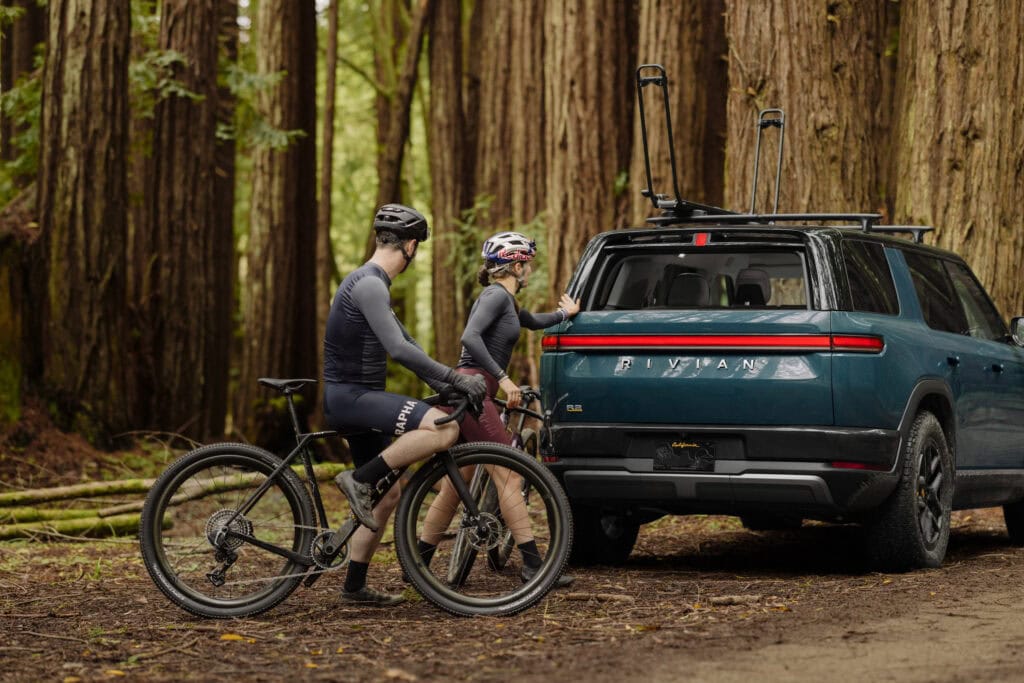
The second row uses a 40/20/40 split-folding layout, which makes it easier to carry longer items while still keeping usable seating. Skis, lumber, tripods, flat-pack furniture, and camping gear are exactly the kinds of things that turn a normal cargo area into a puzzle. A flexible seat layout makes the vehicle feel bigger because it makes the space easier to use.
There is also a front trunk with 5.2 cubic feet of lockable storage. A frunk is not new in the EV world, but it remains genuinely useful. It keeps valuables out of sight, separates dirty gear from the cabin, and gives families another place to put the objects that seem to multiply during every road trip. Part SUV, part gear locker, part mobile dog apartment: that is the R2’s most convincing personality.
You may also enjoy: 2027 Toyota Highlander Goes Electric as a Three-Row EV
Charging And Driver Assistance Matter To Mainstream Buyers
Every R2 gets a NACS charge port, which gives it access to Tesla Superchargers along with other major charging networks. Rivian says the R2 can add about 150 miles of range in 15 minutes under suitable fast-charging conditions, and can go from 10 percent to 80 percent in under 30 minutes on a DC fast charger. As always, the phrase “suitable conditions” is doing important work. Charging speed depends on battery temperature, charger capability, state of charge, weather, and other real-world factors.
Still, the charging story is a major advantage if it works smoothly. For many buyers, charging access is as important as battery size. A vehicle with a sensible range and broad fast-charging access can feel easier to own than a vehicle with a bigger number and a more frustrating charging experience.
Rivian also says the R2 includes a 60-day trial of Autonomy+, with Universal Hands-Free assisted driving available on millions of miles of roads in the United States and Canada where conditions allow. This is an important feature, but it needs to be understood clearly. Driver-assistance technology is not the same thing as a fully self-driving vehicle. The driver still has responsibility. Used properly, systems like this can reduce fatigue. Marketed carelessly, they can create confusion.
You may also enjoy: BMW’s iX Is the Most Misunderstood EV in America — And That’s Why It’s Brilliant
The Long-Term Significance
The R2 is not just another electric SUV. It is Rivian’s attempt to become a brand more Americans can actually consider. That is a much harder challenge than building a halo product. A halo product gets attention. A mainstream product has to survive real life.
The encouraging part is that the R2 appears to understand what real life looks like. It has useful storage, clever cabin details, a recognizable SUV shape, available all-wheel drive, strong range in key trims, fast-charging access, and enough charm to feel different from the usual electric crossover crowd. It has the pieces. Now Rivian has to execute.
If Rivian can build enough R2s, hold the pricing close to the promise, deliver quality, and keep customers happy, this could be the vehicle that puts the company shoulder to shoulder with the mainstream EV leaders. No pressure, then. The Rivian R2 is Rivian’s Model Y moment, and it may be exactly the SUV the company needs.