Why Rivian Believes The R2 Can Finally Challenge Tesla

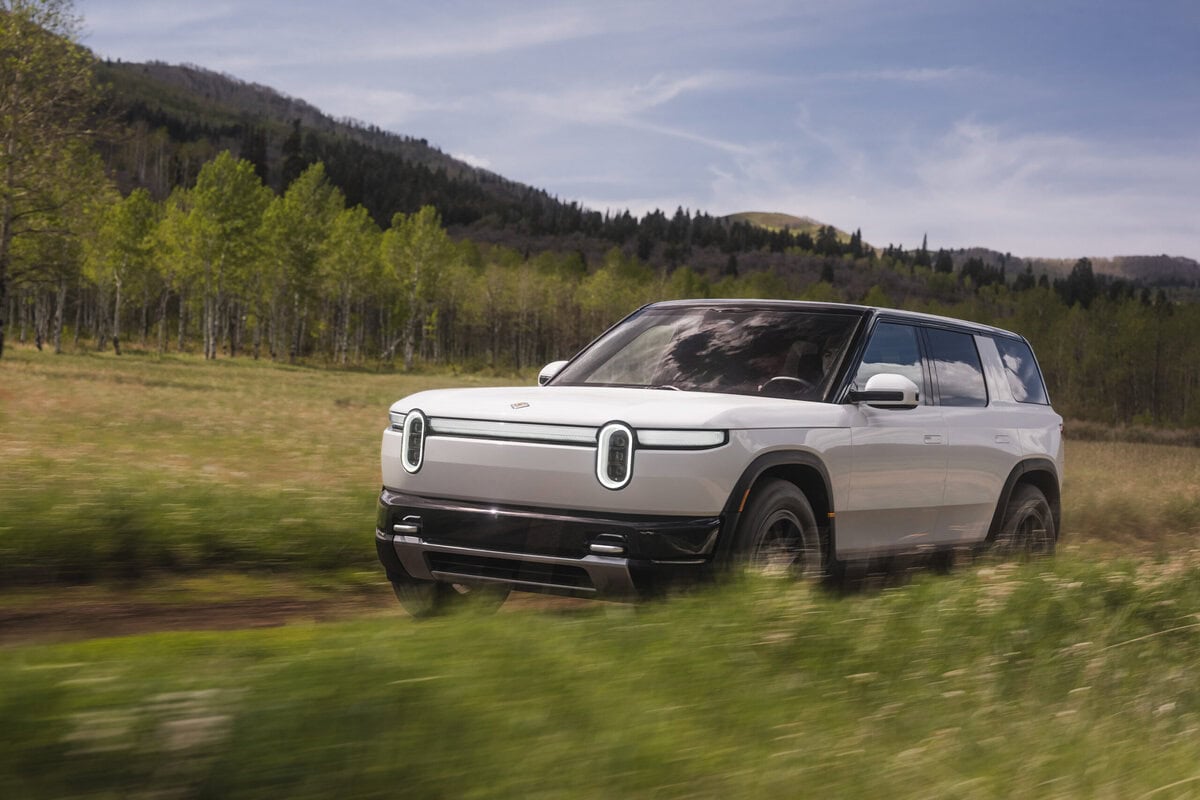
The Rivian R2 isn’t just another new electric SUV. It’s the vehicle Rivian hopes will take it from an enthusiast favorite to a mainstream automaker. When Rivian launched the R1T pickup and R1S SUV, it proved the company could build compelling electric vehicles. What it didn’t prove was whether Rivian could move beyond a niche audience willing to spend luxury-car money on an electric adventure vehicle.
That’s the challenge facing the R2. With a starting price of $45,000, it’s designed to reach buyers who may have admired Rivian from afar but never seriously considered putting one in their driveway. During a roundtable discussion at the first drive of the R2 in Park City, Utah, Rivian CEO RJ Scaringe made it clear that this isn’t simply a smaller, less expensive Rivian. It’s the vehicle the company believes can finally take it mainstream.
Scaringe said Rivian is in an unusual position. Awareness remains relatively low compared to established automakers, but the people who do know the brand tend to be passionate supporters. Rather than chasing attention with splashy marketing campaigns, he said Rivian plans to let the product do the talking as the R2 reaches a broader audience.
You may also like this: Why the Rivian R2 Could Be America’s Next Big EV SUV
The Affordable Rivian Buyers Have Been Waiting For
From the beginning, Rivian has described its vehicles as inviting. The idea wasn’t simply to create electric vehicles capable of handling off-road adventures. The goal was to build products that encouraged people to get outside, explore, and use them without hesitation. The problem was that the R1T and R1S carried price tags that put them out of reach for many shoppers.
“R2 is the culmination of the full brand promise of being inviting.” – RJ Scaringe, CEO, Rivian
Rather than asking buyers to stretch their budgets for a Rivian, the R2 lands close to what Americans are already spending on new vehicles. Scaringe noted that some versions will come in below the average new vehicle transaction price and others above it, but the point is that Rivian is finally competing in the heart of the market rather than on the fringe.
Getting there wasn’t easy. Scaringe said the team had to find ways to cut costs while preserving the features, capability, and personality that define the brand. The challenge wasn’t building a cheaper vehicle. It was building a more attainable vehicle that still felt unmistakably like a Rivian.
You may also like this: Rivian R2 First Customer Cars Roll Off the Line – Spring Deliveries Start Soon
Why Rivian Thinks EV Buyers Need Better Choices
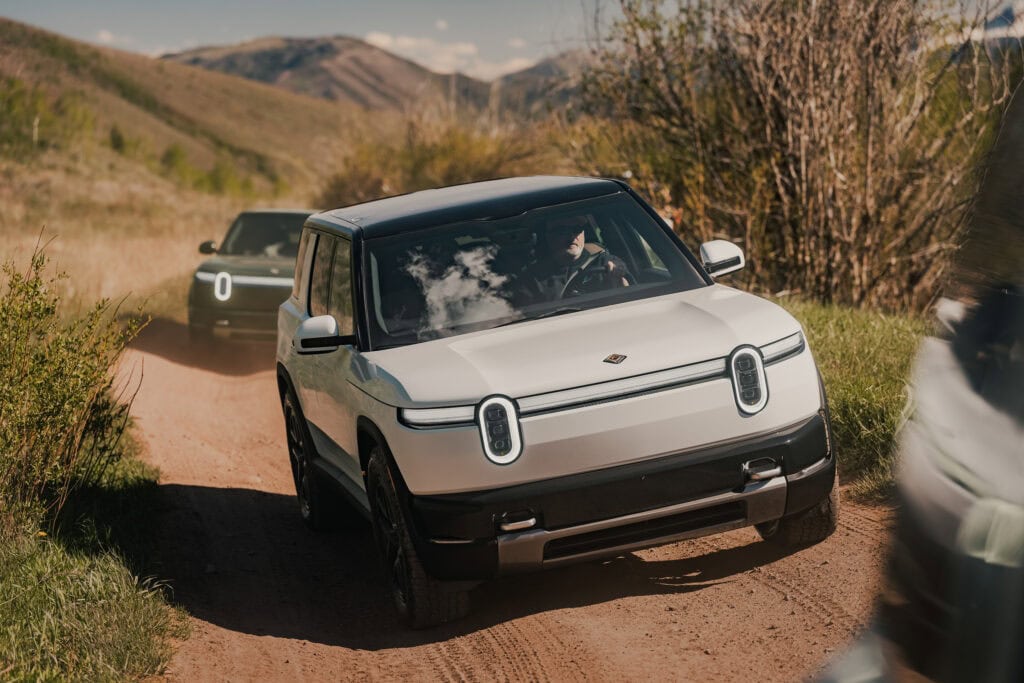
Much of the conversation around electric vehicles focuses on slowing demand. Scaringe sees the situation differently. He doesn’t believe consumers are rejecting EVs. Instead, he argues that shoppers simply don’t have enough compelling alternatives to choose from.
“There’s a vacuum of choice.” – RJ Scaringe, CEO, Rivian
Scaringe pointed to the continued success of the Tesla Model Y and Model 3 as evidence that demand still exists. Those vehicles have been on the market for years, yet they continue to dominate because buyers have relatively few alternatives that offer the same combination of technology, performance, practicality, and value.
He believes that is where the R2 can make a difference. Rather than asking customers to compromise, Rivian’s goal was to create a vehicle that combines efficiency, utility, capability, and performance at a price point that reaches far more buyers than the R1T and R1S.
For Rivian, the R2 isn’t simply another model in the lineup. It’s the vehicle the company believes can bring new buyers into the EV market.
You may also like this: Rivian R2 Spring Production Looms – Reserve Now or Wait?
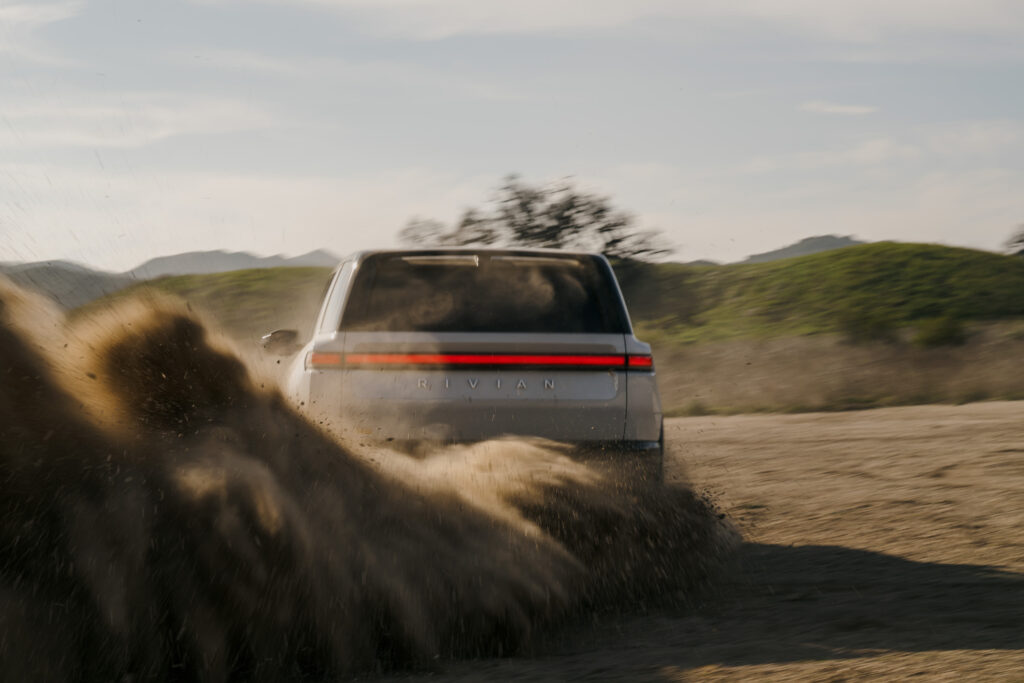
The R2 Was Designed To Eliminate Compromises
Scaringe returned repeatedly to the idea that great vehicles are often defined by tradeoffs. More cargo space can hurt efficiency, better off-road capability can reduce on-road comfort, and improved performance can drive up cost.
“We tried to challenge the idea that a vehicle can be capable on-road and off-road.” – RJ Scaringe, CEO, Rivian
He said Rivian approached the R2 differently, questioning assumptions that have long shaped vehicle development. The company wanted strong on-road performance without sacrificing off-road capability. It wanted impressive efficiency despite the upright shape buyers expect from an SUV. It also wanted to deliver all of that at a price that reaches mainstream shoppers rather than luxury buyers.
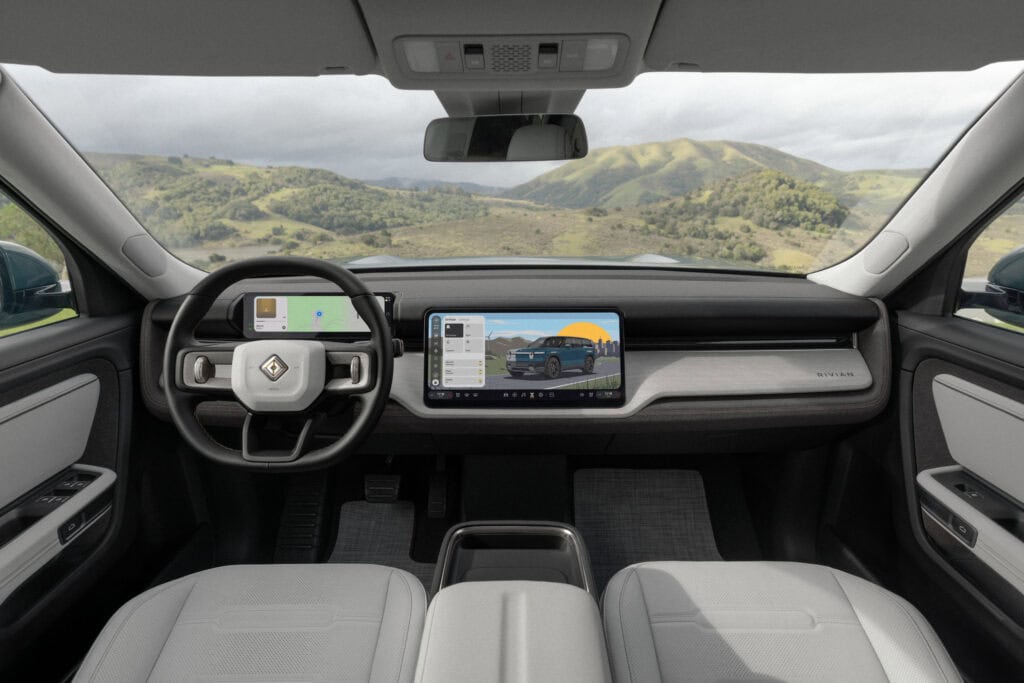
The result is a vehicle packed with the practical details Rivian buyers have come to expect. The R2 offers a large front trunk, dual gloveboxes, clever storage solutions throughout the cabin, and a fully retractable rear side window that lets passengers enjoy fresh air without the complexity of removable roof panels.
Scaringe also highlighted the engineering work that went into maintaining efficiency despite the vehicle’s upright SUV shape. A front motor disconnect system and extensive aerodynamic development help the R2 deliver efficiency numbers that Rivian believes will surprise buyers who expect capability to come at the expense of range.
You may also like this: Rivian R2 Robotaxis in 2028 – What It Means for EV Buyers
Why Rivian’s Future Depends On The R2
Over the past several years, Rivian has invested heavily in service centers, parts distribution, software development, logistics, manufacturing, and customer support. The company now operates more than 100 service locations and plans to roughly double that number by 2027. Scaringe said those investments were made with higher-volume products in mind.
“All that spend and investment starts to come together and should make sense when you start to see it through the lens of high volume with R2.” – RJ Scaringe, CEO, Rivian
Rivian wasn’t building infrastructure for the R1T and R1S alone. It was preparing for a future in which far more customers own Rivian vehicles. The upcoming Georgia manufacturing plant is part of that strategy. Its first phase is expected to support annual production capacity of 300,000 vehicles while providing room for additional products, including the smaller R3 and performance-oriented R3X.
For Rivian, the stakes couldn’t be much higher. The R1T and R1S proved the company could build vehicles people love. The R2 now has to prove those vehicles can appeal to enough buyers to turn Rivian into a sustainable, profitable automaker.