Inside BMW’s Factory and What It Could Mean for America

Walk through BMW’s Munich plant and the first thing you notice is not noise, speed, or even the robots. It is the setting. This is not a giant automotive complex dropped into empty countryside with acres to spare and room for another building whenever the company gets ambitious.
It is right in the middle of Munich, woven into the city beside BMW’s headquarters, with neighborhoods and everyday life pressing in around it. That changes everything. It forces discipline. It forces efficiency. And it turns the plant into something more revealing than a simple production site. It becomes a real-world test of what modern manufacturing looks like when there is nowhere to hide sloppy planning.
Why This Factory Matters
I have seen enough factories to know when a company is giving you a polished tour and when a place is telling a deeper story. Munich tells a deeper story. What struck me most was not some theatrical vision of a sci-fi factory where humans vanish and machines take over. It was the opposite.
The place feels intensely practical. It feels like a plant that has spent decades learning how to make complexity look calm. That is why it matters. This is the company’s home plant and has been producing vehicles since 1922. Its urban footprint alone makes it one of the more interesting manufacturing stories in the business right now.
You May Also Like This: BMW Finally Fixed the Electric Car, The New i3 Proves It
What BMW Is Really Building Here
The easy headline is that BMW is preparing Munich for an electric future. That part is true, but it is also incomplete. The more interesting truth is that BMW is redesigning how a legacy factory works when the old assumptions no longer fit. Munich produced more than 170,000 vehicles in 2025 and employs more than 6,500 people from over 60 nations. That is not a pilot site. That is not a skunkworks lab. It is a serious, high-pressure operation that has to keep producing while it transforms itself.
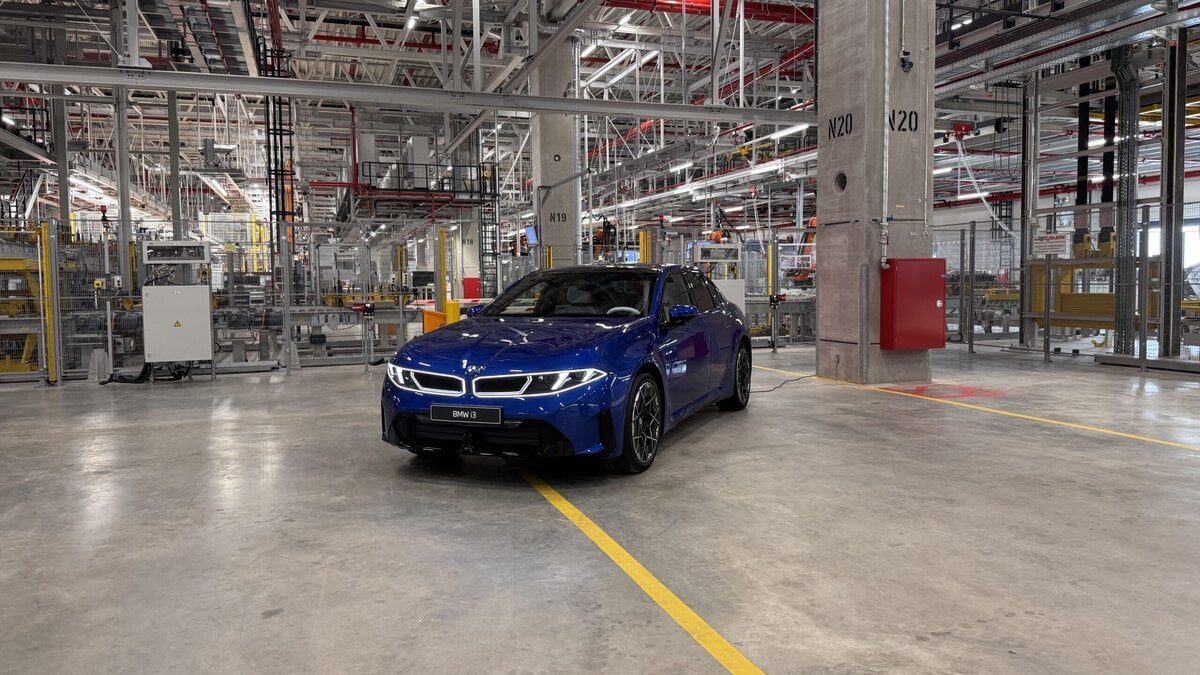
The transition toward Neue Klasse matters because it is not just about putting batteries where engines used to be. It is about simplifying architecture, tightening production logic, and making the plant itself more adaptable. BMW is not treating this as one more model cycle. It is treating it as a reset in philosophy. The car is part of the story. The system behind the car is the bigger one.
That broader manufacturing reset also fits with the company’s long-running sustainability push. BMW is trying to cut emissions and rethink materials, supply chains, and production processes at the same time. In Munich, that ambition feels less like marketing language and more like operational necessity. When you have limited space, legacy infrastructure, and a global brand reputation attached to every output, efficiency stops being a slogan and becomes survival.
You May Also Like This: BMW Bets Big on Sustainable Manufacturing
A Smarter Factory, Not Just a More Automated One
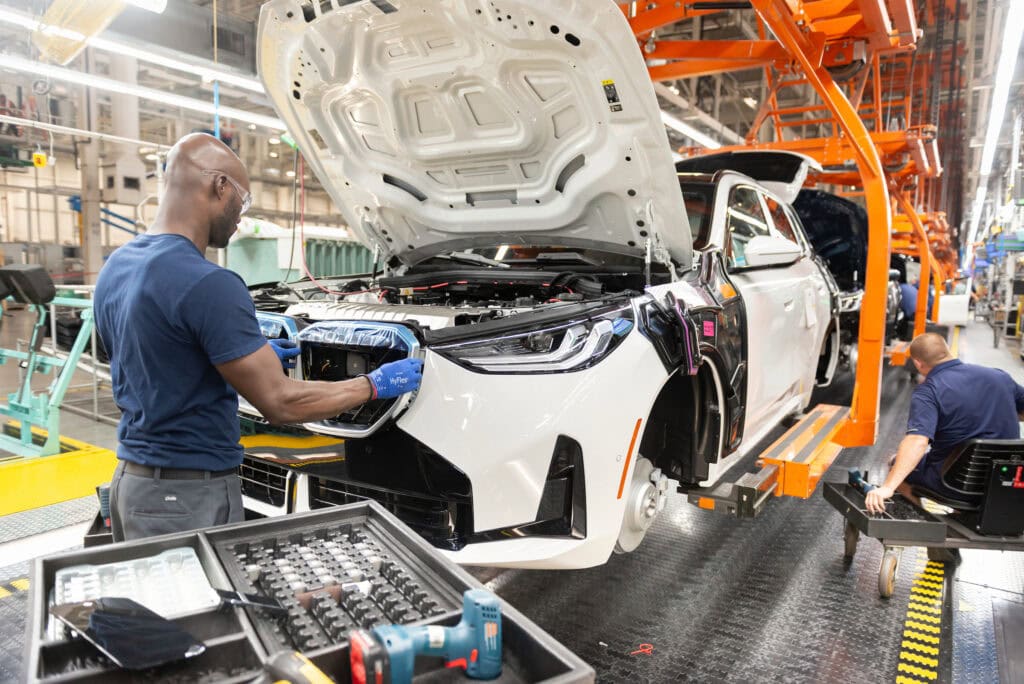
There is a temptation to reduce stories like this to robot counts and software jargon. Yes, automation is everywhere. BMW says the body shop uses more than 1,200 industrial robots and that body shop processes are almost fully automated. But the more useful way to think about Munich is through the lens of smart manufacturing rather than raw automation.
The U.S. National Institute of Standards and Technology’s smart manufacturing program frames the issue well by focusing on how computing and communication technologies change manufacturing performance, trust, and best practices. That is much closer to what Munich feels like in practice. It is not robots for the sake of it. It is robots, sensors, inspection systems, and data all working together to make a constrained plant more agile.
What I found genuinely impressive is how little waste the system seems willing to tolerate. The plant emphasizes material efficiency, recycling, and close monitoring of dimensional accuracy and weld quality. That sounds dry on paper, but on the ground it adds up to something much more interesting. This is a factory trying to catch problems before they become expensive. In the old industrial model, quality control often arrived after the fact. In the modern one, the ambition is to build quality into the process itself.
That also helps explain why these conversations so often drift into the language of Industry 4.0. If you want the plain-English version, the idea is not especially mysterious. It is the merging of automation, data exchange, sensors, and connected systems into a more responsive production environment. Munich does not feel theoretical in that sense. It feels like a legacy factory trying to become a smarter one without pretending it was born yesterday.
The Just-in-Time Discipline Behind the Scenes
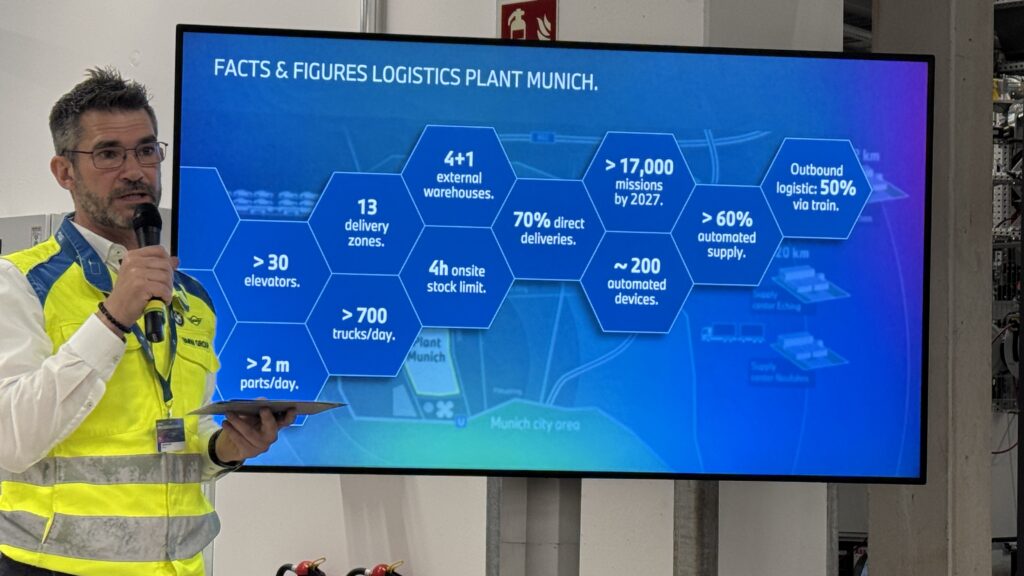
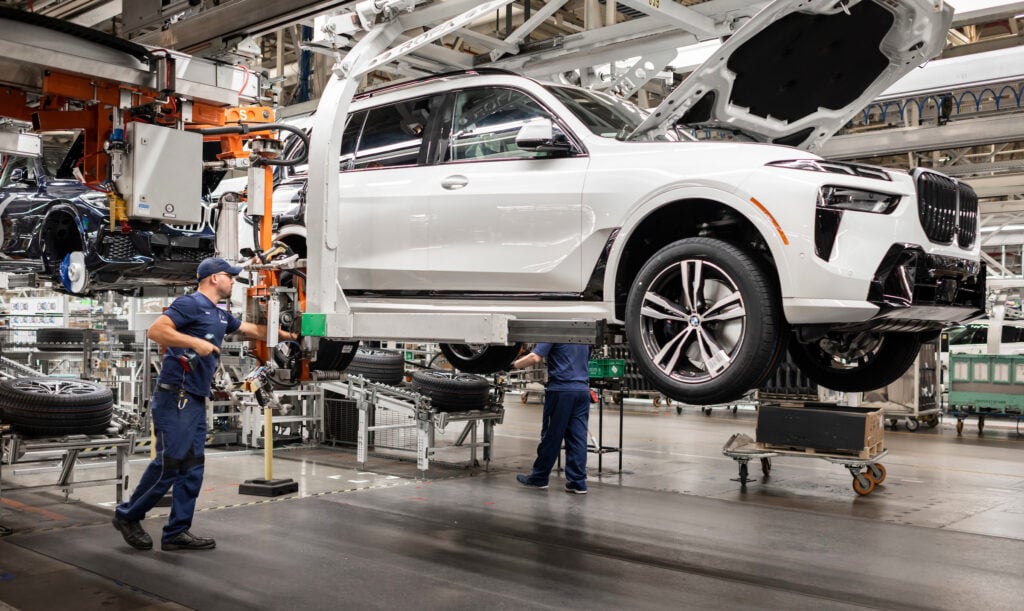
One of the most revealing details is that BMW keeps only a small amount of parts on site. That matters because logistics is where manufacturing stories usually become real. Plants do not stumble because the concept art was weak. They stumble because the timing fails, the suppliers miss, or the complexity outruns the system designed to manage it.
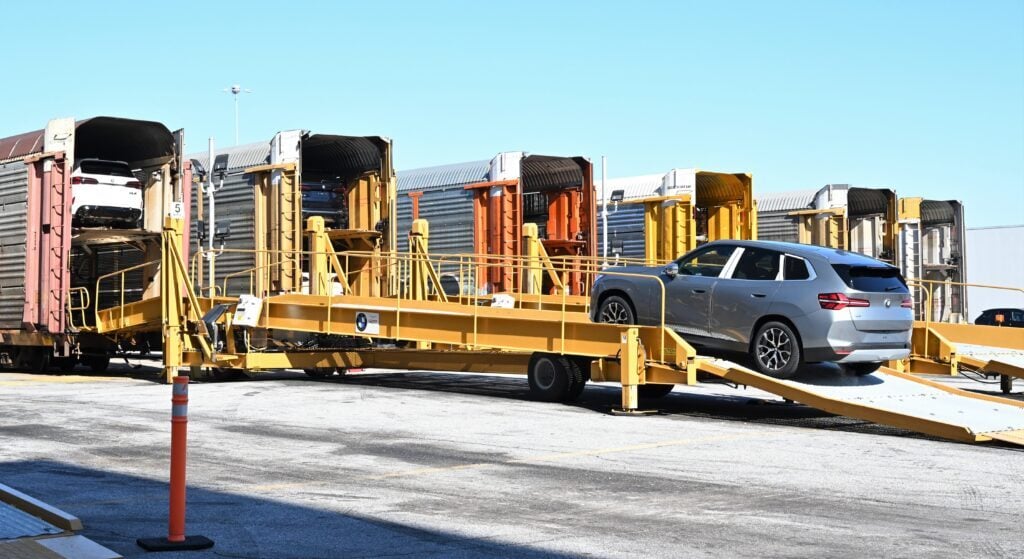
This is classic lean manufacturing, even if the tools are now far more advanced. Just-in-time thinking is about receiving goods only as needed in order to reduce waste and inventory costs. That old principle has not gone away. It has simply been digitized, tightened, and made more visible. In Munich, the challenge is sharper because the plant sits in such a confined urban environment. There is no comfortable sprawl to absorb inefficiency. If parts are going to arrive close to the moment they are needed, everything from scheduling to routing, to quality control has to stay sharp.
That is one reason I came away thinking this story is not really about robots at all. It is about orchestration. Manufacturing has become a giant exercise in timing, traceability, and recovery. The glamour shot is always the finished car. The real trick is making sure the right parts, people, and systems all meet each other at the right second without the whole thing dissolving into expensive chaos.
What This Might Mean for America
This is where the story gets more interesting for U.S. readers, and also where it deserves a little restraint. It would be easy to declare that everything happening in Munich is definitely heading straight to America. I do not think the honest version is that neat. Influence is not the same thing as duplication. Lessons travel more easily than blueprints.
Still, the American connection is real. BMW’s U.S. operation in Spartanburg remains central to the company’s global footprint. BMW says Spartanburg exported nearly 200,000 BMW X models to nearly 120 countries in 2025, with an export value of $9 billion, and that the plant has exported nearly 3 million vehicles since 2014. Whatever BMW learns about production efficiency, data, and EV strategy in Munich is at least relevant to the conversation in South Carolina, even if the final implementation looks different.
That ambiguity is important. America is not Munich. Spartanburg is not an urban plant squeezed into a dense European city. Labor structures differ. Supplier geography differs. Consumer demand differs. Even the model mix differs. But that does not make Munich irrelevant. If anything, it makes it a useful proving ground. When a company can modernize a legacy site under tight constraints, the techniques that survive that test often carry lessons elsewhere.
It’s not just BMW. Other automakers are rethinking flexibility, autonomy, and software-led production. That is why Munich matters beyond BMW fandom. It is part of a wider industrial shift in which factories are becoming more intelligent, more connected, and far less dependent on the old idea of a fixed production line doing one thing forever.
You May Also Like This: Inside Toyota’s $1.8B Factory of the Future
Why the EV Story Is Bigger Than One Car
It helps that BMW’s incoming products are giving the manufacturing story some momentum. The BMW iX3 was just named the 2026 World Car of the Year, which gives BMW a timely bit of external validation as it leans into this next chapter. Awards do not prove manufacturing excellence on their own, of course, but they do matter when a company is trying to convince buyers that a platform change is more than corporate theater.
The EV angle also makes the battery question unavoidable. The U.S. Department of Energy’s battery research overview lays out why improvements in battery cost, weight, durability, range, and charging time remain so central to the future of electric vehicles. That is useful context because it reminds us that factory transformation is not happening in isolation. Plants are changing because the product itself is changing. Software matters more. Batteries matter more. Thermal management matters more. Supply chains matter more. In other words, the modern car is forcing the modern factory to grow up quickly.
You May Also Like This: BMW’s iX Is the Most Misunderstood EV in America
The View From the Floor
Personally, what stayed with me was not some single dramatic reveal. It was the discipline of the place. Munich feels like a factory where every square foot has been forced to justify itself. That tends to produce a different kind of engineering honesty. You cannot just add another warehouse and pretend the problem is solved. You have to simplify, sequence, and think harder. There is something quite refreshing about that in an industry that occasionally mistakes size for intelligence.
That is also why this factory story fits the current mood of the car business so well. The industry is no longer moving with one tidy narrative. Gasoline is not gone. Hybrids are not a sideshow. EVs are not a straight-line revolution. Carmakers are being forced to spread bets, cut waste, and make smarter decisions under pressure. Munich looks like a response to that reality. Less grand prophecy, more disciplined adaptation.
You May Also Like This: New York Auto Show at a Crossroads: The Best Cars Ever Meet an Industry in Flux
The Bottom Line
BMW’s Munich plant is not interesting because it promises a clean, certain future. It is interesting because it shows how a century-old factory adapts when certainty is gone. Walking through it, I did not come away thinking America will copy Munich bolt for bolt. I came away thinking that some of the principles on display here, tighter logistics, deeper data use, more embedded quality control, and EV-ready production logic, are too relevant to ignore.
That is probably the fairest way to read it. What happens in Munich could shape what comes next for America, especially as BMW balances its global production network and prepares for a more electric lineup. But could is the important word. The lesson is not that the future has arrived in finished form. The lesson is that the factory of the future looks a lot less like a fantasy and a lot more like a very disciplined building in the middle of Munich quietly figuring out what still works.