2026 Honda Prelude Hybrid: Type R Parts, Real GT

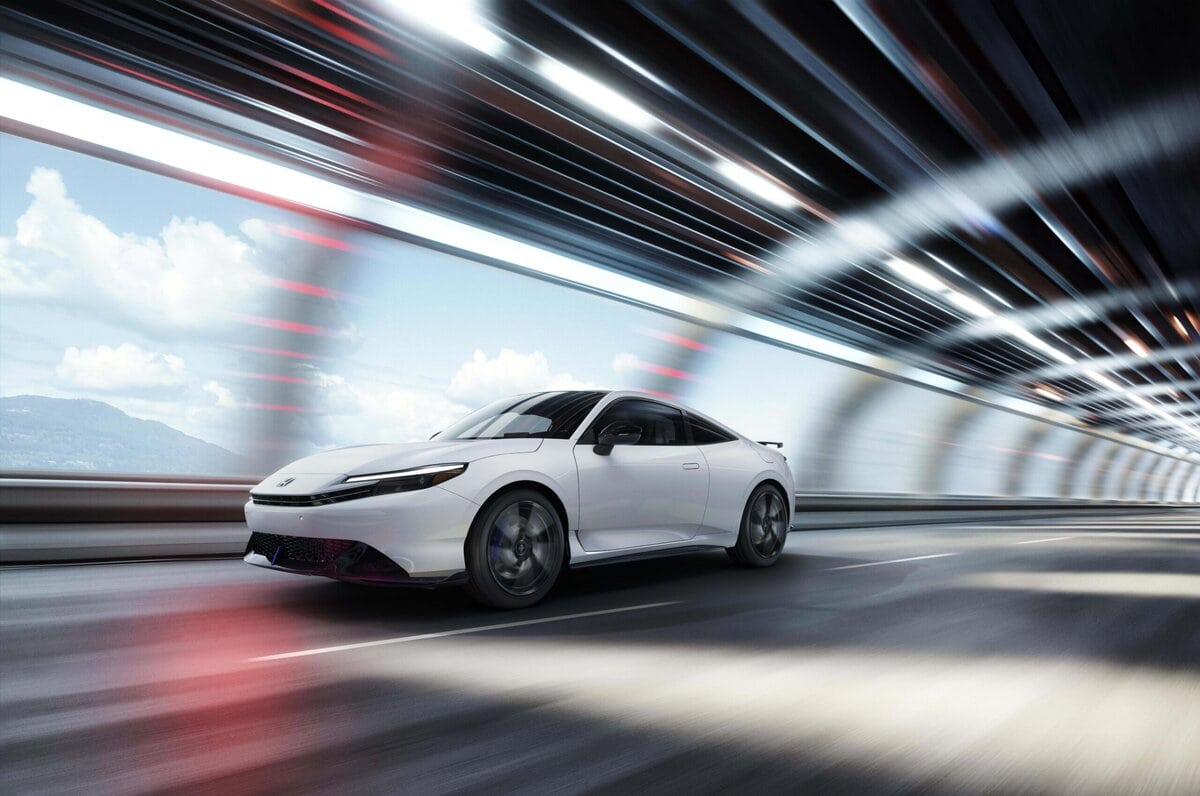
Honda’s Prelude returns as a hybrid liftback coupe that’s trying to make efficiency feel genuinely engaging, without giving up comfort.
I think the 2026 Honda Prelude is worth your time because it’s not just another nostalgia reboot. Honda is using the Prelude name to make a very specific point: hybrids can be the mainstream powertrain and still deliver something drivers recognize as “fun.” The company’s approach isn’t loud about it, either. It’s quietly technical—pairing a proven two-motor hybrid system with Civic Type R chassis hardware, then adding a new driver-engagement mode called S+ Shift to make the whole experience feel more connected.
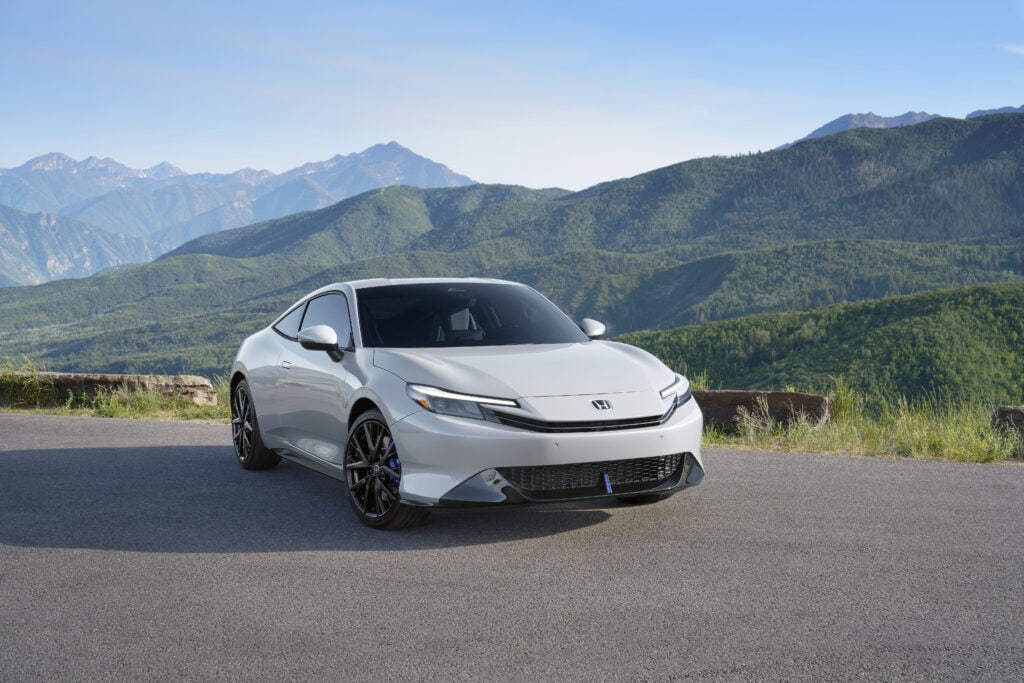
Honda also claims the timing is right. The brand says hybrid-electric models already represent about one-third of Honda sales, and it plans to expand hybrid application to represent over 60% of total auto sales in the coming years. That helps explain why this Prelude returns as hybrid-electric rather than as a pure gas coupe, and why Honda is framing it as a “grand touring sports coupe” that can be comfortable every day and still feel sharp when you want it to.
Why does this matter right now?
The headline feature is the combination Honda hasn’t offered before: the 2026 Prelude is the first model to pair Honda’s two-motor hybrid-electric powertrain with high-performance chassis hardware from the Civic Type R. That’s not just a badge exercise. Honda calls out the exact parts: dual-axis strut front suspension, wide front and rear tracks, large brakes with four-piston Brembo front calipers, and a standard Adaptive Damper System tuned exclusively for Prelude.
On the powertrain side, Prelude uses Honda’s two-motor hybrid system built around a 2.0-liter Atkinson-cycle direct-injection four-cylinder and two electric motors. Honda lists combined system output at 200 horsepower and 232 lb.-ft. of torque, which should translate into quick, responsive acceleration off the line and out of corners. Honda also provides unusual detail: the traction motor produces 181 horsepower and can spin up to 5,000–6,000 rpm, the generator motor produces 143 horsepower, and the gasoline engine itself peaks at 141 hp at 6,000 rpm and 134 lb.-ft. at 4,500 rpm.
Efficiency is part of the point, too. Honda provides EPA mileage ratings for Prelude at 46 city / 41 highway / 44 combined (based on 2026 EPA mileage ratings; use for comparison purposes only; mileage varies). If you want context for how those ratings are defined and why they sometimes differ from real-world experience, the U.S. government’s explainer at FuelEconomy.gov is the best baseline reference.
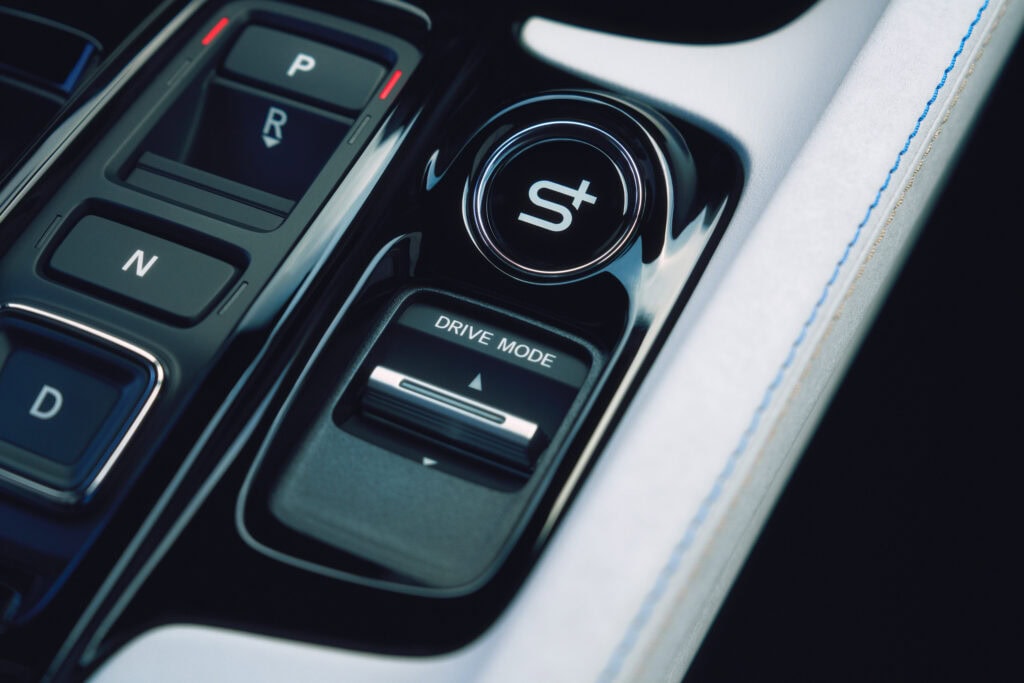
The more interesting move, though, is how Honda is trying to make a hybrid feel engaging. Prelude debuts Honda S+ Shift, a new drive mode that simulates an eight-speed performance transmission experience. That matters because Honda’s two-motor hybrid system is not equipped with a traditional transmission or CVT; drive force from the traction motor is sent to the wheels through a fixed ratio, while engine power blends in through a lock-up clutch. S+ Shift uses precise engine rpm management and coordination between the engine and drive motor to simulate quick gearshift responses, including downshift blips, rev matching, and gear holding—controlled via steering-wheel paddles.
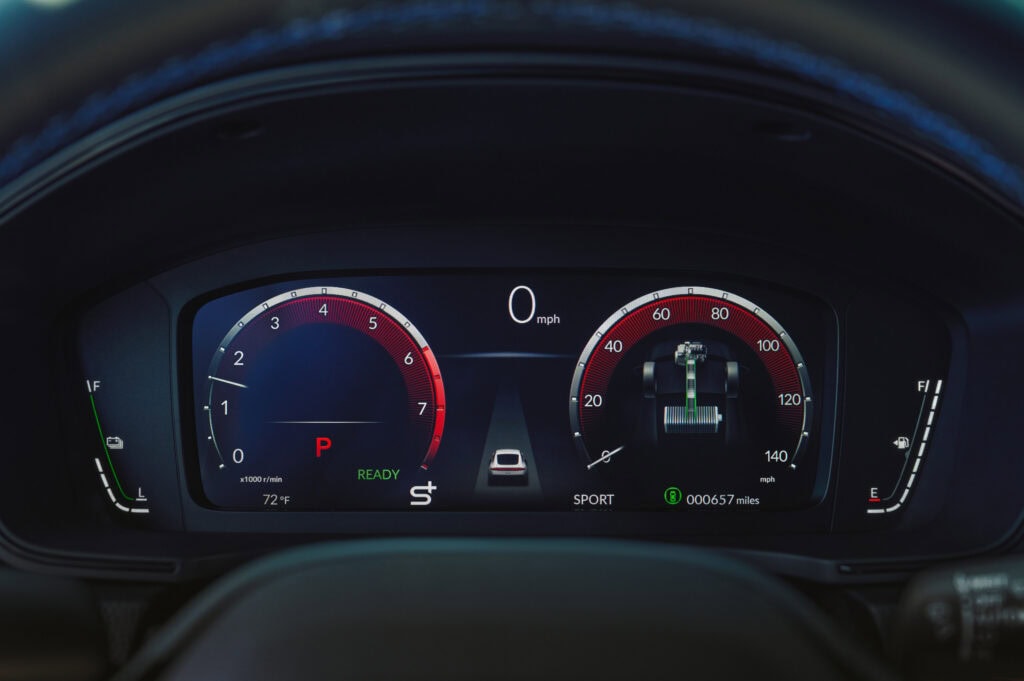
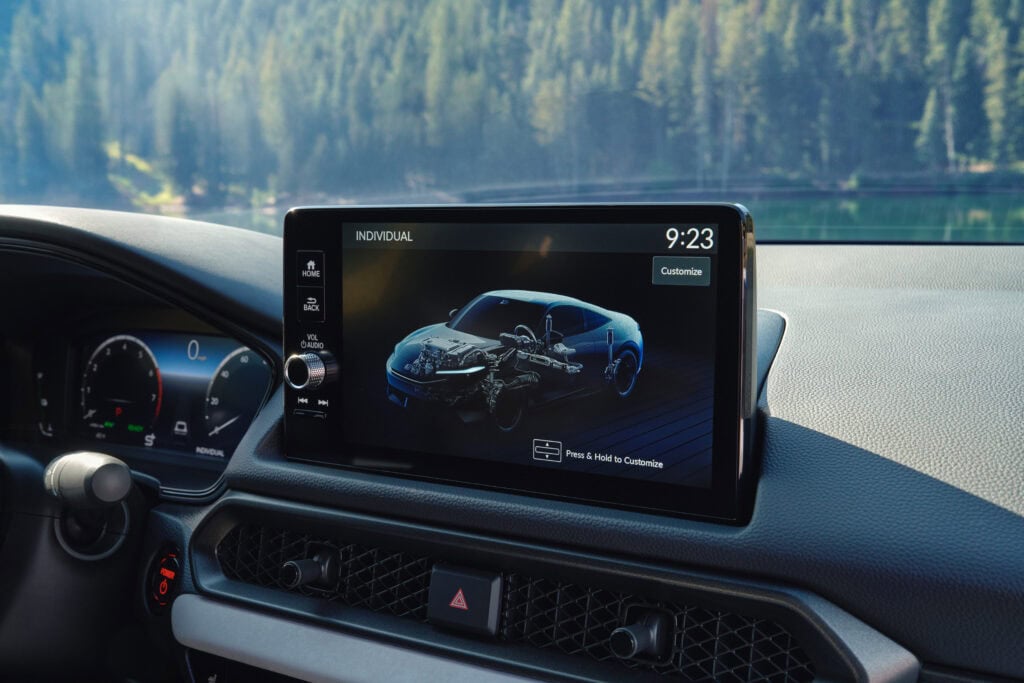
Honda goes deeper into the control logic than most press releases do. Sports Adaptive Control evaluates driving conditions using driver inputs, longitudinal/lateral G forces, and road gradient to determine optimum virtual gear selection. Early Downshift Control initiates an early virtual downshift in response to braking action on winding roads. Cornering Hold Control adjusts upshift timing under cornering load to maintain higher rpm for sharper response when exiting curves. Step Shift Control varies engine speed and drive force in steps during acceleration and deceleration to reproduce the crisp feel of a stepped transmission. When S+ Shift is active, the 10.2-inch digital instrument cluster reconfigures to a large tachometer with a 6,000 rpm redline.
There’s also a detail that feels like it came from real driving feedback: the Prelude has seven levels of deceleration available through selector paddles on the steering wheel—more than any other Honda hybrid model—plus a first-ever Honda feature called Coasting Control. At level 1 (normal engine braking), a tap of the “+” paddle enables a neutral-like coast without regenerative braking as you roll toward a stop. That’s the kind of “small control, big calm” feature that can make daily driving feel smoother, not just more efficient.
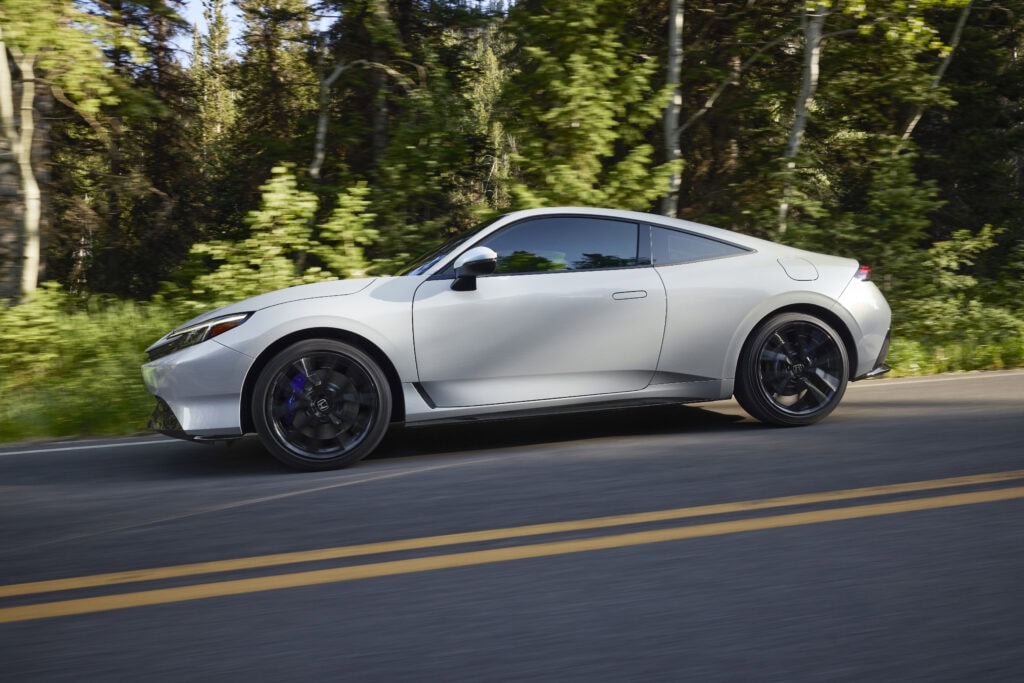
Beyond the drivetrain, Prelude’s body and packaging are part of why it matters now. This is the first Honda Prelude liftback, with a large hatch opening and 15.1 cu. ft. of cargo capacity with the rear seats up. It’s a 2+2, with 60/40 split fold-down rear seats, and Honda lists 32.0 inches of rear-seat legroom. In a market where coupes often force you into “toy” compromises, Prelude is at least trying to argue for coupe style without ditching usefulness.
Honda also positions the car as a serious engineering project by noting it will be built at the Yorii Plant in Japan on the same production line as the Civic Type R, and that the two-motor hybrid powertrain is also produced in Japan. For buyers who care about consistency and build discipline, that’s a reassuring signal—even if it’s not a guarantee of perfection.
If you’ve been following performance and mobility trends, you’ll recognize a broader theme that Test Miles has been exploring lately: the industry is testing multiple paths to “fun” and “future-proof.” As Test Miles recently covered in BMW Hydrogen Vehicles: History and What Comes Next, electrification isn’t one single road; hybrids, hydrogen, and full EVs are all competing to define what comes next.
How does it compare to rivals or alternatives?
The Prelude is carving out a lane that’s gotten thin: a compact coupe that aims to be both engaging and genuinely livable. Most alternatives today lean hard in one direction. Traditional gas coupes can deliver a simple, purist driving feel, but typically trade away fuel economy and day-to-day versatility. Full EV performance models can deliver big speed and strong torque control, but often bring their own compromises in weight, charging lifestyle, and sometimes a more software-mediated feel than some drivers want.
Honda’s bet is that there’s a meaningful group of buyers who want “driver’s car” character without the usual penalties. The Prelude’s 200-horsepower, 232-lb.-ft. hybrid system output is paired with hardware that suggests Honda expects drivers to notice the difference. The dual-axis strut front suspension is described as virtually eliminating torque steer, aided by a 0.75-inch reduction in steering axis offset and equal-rigidity drive shafts. Honda also fits the dual-pinion variable ratio electric power steering system from the Civic Type R, tuned specifically for Prelude. It’s quick—2.1 turns lock-to-lock—with a variable ratio (14.9:1 on-center and 11.3:1 off-center), intended to feel calm near center and sharper as you add steering angle.
Brakes are another place where Honda didn’t “economy-car” the spec. Prelude uses Civic Type R brake hardware, including 13.8-inch lightweight two-piece front rotors clamped by Brembo monobloc four-piston aluminum calipers, finished in Prelude Blue and carrying both Prelude and Brembo branding. If you want a straightforward reference point on why brake design and caliper stiffness matter for repeatable performance, Brembo’s own engineering-oriented explanations are a credible place to start: Brembo.
Within Honda’s own lineup, Prelude sits apart from the Civic Hybrid, Accord Hybrid, and CR-V Hybrid that Honda cites as proof of hybrid momentum. Those models are efficiency and utility first. Prelude is a “grand touring sports coupe” with four drive modes (Comfort, GT, Sport, Individual), an Adaptive Damper System tuned for distinct damping curves in each mode, and performance-focused cabin details like a flat-bottom steering wheel with blue stitching and paddle shifters integrated into the driving experience.
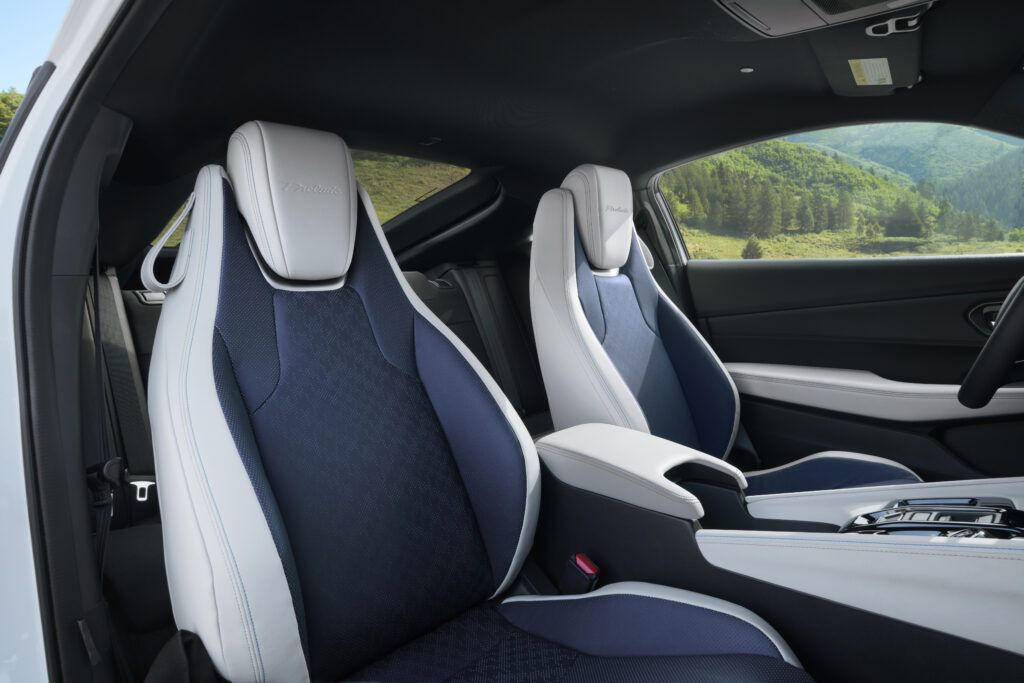
There are also practical considerations that may shape comparisons once pricing becomes public. Honda is offering one well-equipped trim, with major features standard: S+ Shift, leather-trimmed heated sport seats, 19-inch Berlina Black wheels with 235/40R19 tires, Adaptive Dampers, dual-axis strut front suspension, and a full suite of tech (10.2-inch digital cluster, 9-inch HD touchscreen, wireless smartphone integration, Google built-in, wireless charger, Wi-Fi hotspot capability, and an 8-speaker Bose system). That makes the buying process simple, but it also means you won’t be able to shop down to a lower-entry version if the final MSRP lands higher than expected.
For a reminder that performance “credibility” often comes from systems thinking—chassis, brakes, driver workload, and consistency—endurance racing is still one of the best analogies. Test Miles recently covered that reality in 2026 Rolex 24 at Daytona: How the Penske Porsche #7 Won, and the same discipline that wins long races is what makes road cars feel predictable and confidence-inspiring over time.
Who is this for and who should skip it?
This Prelude is for someone who wants a daily driver that still feels like a deliberate choice. If you like the idea of a coupe but refuse to give up practicality, the liftback layout and 15.1 cu. ft. of cargo space (rear seats up) are the key. Honda is also clearly designing for visibility and long-drive comfort: a low cowl, thin A-pillars, and a driver-focused cockpit intended to reduce fatigue and keep information in your natural eye line.
It’s also for drivers who want tech integrated in a clean way. Honda makes the 10.2-inch digital instrument cluster and 9-inch HD touchscreen standard, along with wireless Apple CarPlay and Android Auto compatibility, Google built-in, a wireless phone charger, and an 8-speaker Bose premium sound system. The cluster even includes a “surprise-and-delight” element where the Prelude icon’s lights mirror real light and signal use—small, but thoughtful.
Comfort is more intentional than it looks at first glance. Honda describes the front sport seats as asymmetrical by design—firmer support, support wires, and firmer urethane for the driver to stabilize legs under higher lateral forces, and a wider, more relaxed setup for the passenger. Both seats are heated, leather-trimmed, and use a perforated “heritage houndstooth” pattern. This isn’t a race seat approach; it’s a long-distance, do-real-miles approach.
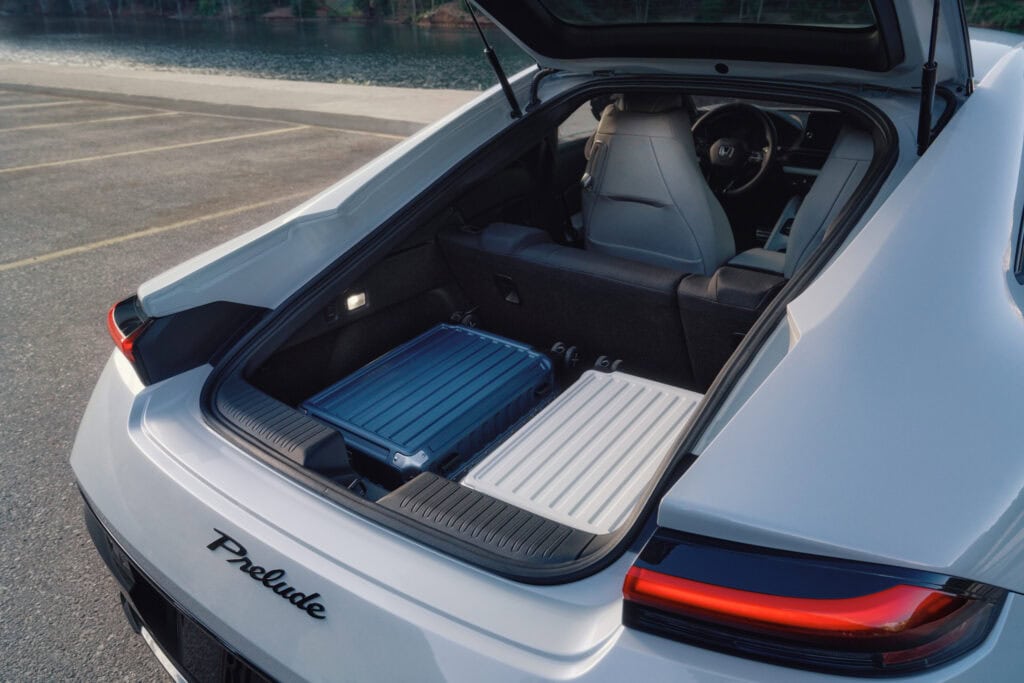
You should skip it if you need true rear-seat practicality. Honda calls it a 2+2 and lists 32.0 inches of rear legroom, which is generous on paper, but it’s still a coupe. If you routinely carry adults in the back, a sedan or crossover will make your life easier.
You should also skip it if your idea of engagement depends on a purely mechanical transmission experience. S+ Shift is a simulation designed to increase driver engagement, and it might be convincing. But it’s still a software-driven interpretation of shifting layered onto a hybrid system that fundamentally doesn’t operate like a traditional stepped transmission. If your happiness is a clutch pedal and physical gearsets, you’ll likely prefer a different kind of car.
Another reason to skip: if you hate the “one trim only” strategy. Honda is making this easy—one well-equipped trim, minimal decision fatigue. But some buyers want to tailor a car heavily, either down-market to reduce cost or up-market to chase specific features. Prelude’s approach limits that.
Safety-conscious buyers, on the other hand, have reasons to lean in. Honda includes the Honda Sensing suite of safety and driver-assistive technologies as standard, along with the latest version of Honda’s ACE body structure and next-generation airbags designed to cradle the head and reduce rotation in a collision. For a neutral baseline on how U.S. regulators frame crashworthiness and safety evaluation topics (even when specific ratings aren’t yet available), the National Highway Traffic Safety Administration is the authoritative reference point: NHTSA.
If you’ve been paying attention to ownership risk and “small surprises that become big headaches,” you’ll also appreciate that modern safety and post-collision systems matter beyond crash scores. Test Miles recently dug into real-world implications of engineering decisions and quality control in Ford recalls 2021–2024 Bronco and Ranger over fire risk, and it’s a reminder that the boring details often shape the ownership experience more than headline horsepower.
What is the long-term significance?
The Prelude is a signal flare for where Honda thinks “fun” is headed: not away from driver engagement, but toward a new kind of engagement that blends software, chassis tuning, and efficiency. S+ Shift is a clear example of that trend. It exists because electrification smooths out many of the cues drivers associate with performance. Honda’s solution is to add a mode that restores some of those cues—rev matching, downshift blips, and a more involved paddle-shift experience—without changing the underlying hybrid architecture.
Whether you love or hate the idea of simulated shifting, it’s hard to deny it’s becoming a common industry tool: using control strategies and sound management to preserve the sensory connection drivers want. In Prelude’s case, that strategy is paired with genuine physical hardware—Type R suspension, steering, and brakes—which suggests Honda is not relying on software alone to create the experience.
The liftback body style also hints at where sporty cars may go: toward “multi-role” designs that don’t require a second vehicle to cover life’s practical needs. A coupe that can handle weekend gear, commute comfortably, and still feel engaging on a back road is a compelling middle path—especially as buyers become more value-conscious and less willing to keep a dedicated toy car.
There’s also a brand-history layer Honda is using carefully. Honda notes that in the 1970s its passenger-car lineup was defined by Civic, Accord, and Prelude—and now all three are together again as hybrids. That’s not just nostalgia; it’s Honda saying hybrids are not a temporary bridge for them. They’re the mainstream strategy, and Honda intends to make them desirable.
Even the manufacturing note matters: Prelude is built at Japan’s Yorii Plant on the same production line as Civic Type R, with its hybrid powertrain also produced in Japan. That’s Honda treating the car like a high-standards product, not an afterthought.
And if you want a reminder that performance credibility is often built through real competition and iterative engineering—not marketing—this is the kind of mindset you see in modern motorsport programs. Test Miles touched that in Cadillac V-Series.R opens IMSA 2026 Rolex 24 campaign, and it’s the same discipline Honda is hinting at here: small gains, better coordination, and systems that hold up under stress.
Finally, the Prelude’s cabin tech points to the broader shift in what “modern” means. Google built-in is included with a 3-year unlimited data plan, supporting voice control, navigation, and app access through Google Assistant, Maps, and Play. If you want a neutral explainer for how “Google built-in” differs from basic phone mirroring, Google’s own overview is the cleanest reference: Google built-in.
If Honda executes as well as the spec sheet suggests, the 2026 Prelude could become a useful template: an electrified driver’s car that doesn’t ask you to reorganize your life, and doesn’t punish you for wanting something stylish and engaging in a practical package. That’s not hype. It’s a quiet, pragmatic version of optimism—built into a liftback coupe with real brakes, real chassis intent, and a hybrid system tuned to feel like more than just efficiency.
For official manufacturer context on the model and its stated engineering goals, Honda’s own newsroom is the best primary source: Honda Newsroom.
And if the idea of performance in unusual environments makes you smile—because driving joy doesn’t only live on perfect asphalt—Test Miles also recently explored that broader point in Maserati Drives $200,000 Supercars on St. Moritz Ice to Prove a Point. The Prelude isn’t that kind of spectacle, but it’s built on the same underlying belief: capability and control are what make cars interesting, not just numbers. ::contentReference[oaicite:0]{index=0}