The 2026 Mazda CX-50 Delivers Luxury for Family Money

Mazda CX-50: Ventilated seats, a head-up display, and a 551-mile hybrid range, wrapped in a compact SUV that still starts under $30,000.
Most families are not shopping for a prestige badge. They are shopping for relief. Less fatigue in traffic. Less stress on long drives. Less feeling like you overpaid just to get the features that make daily life easier.
That is what makes the 2026 Mazda CX-50 worth your time. It is a compact SUV priced like a family car, but packed with the kind of comfort and convenience equipment that used to require a luxury logo and a longer loan term. Mazda keeps the choices clear, the trim walk sensible, and the experience surprisingly premium when you climb past the entry models.
Mazda positions the CX-50 as a vehicle for people who actually drive, not just people who commute. You can start with the basics on Mazda, but the real story is how much luxury-adjacent hardware shows up without luxury-brand pricing.
Pricing begins at $29,900 before destination. Standard all-wheel drive is included from the start. The base powertrain is a 2.5-liter engine with 187 horsepower, paired with a six-speed automatic and running on regular fuel. Sport and Off-Road drive modes are available across the lineup. That is not flashy. It is functional, and for families it matters, because you are not forced into a higher trim just to get traction confidence in winter or on wet roads.
Even the entry trim includes a 10.25-inch screen, wireless Apple CarPlay and Android Auto, Alexa Built-In, and four USB-C ports. That mix hits the sweet spot for family use, because passengers stay connected and the driver is not trapped in app menus for basic tasks. Mazda also makes blind spot monitoring, automatic emergency braking, and lane keep assist standard, which aligns with the broader safety expectations tracked by the IIHS.
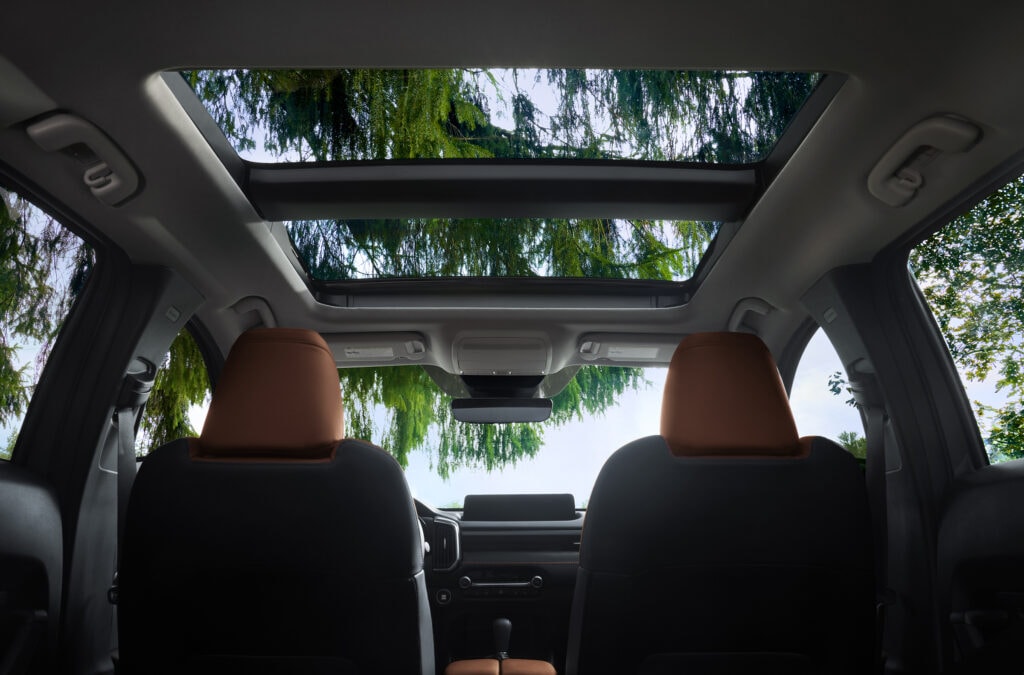
Now, the luxury shift starts when you move beyond the base model. The Preferred trim adds heated seats, a power liftgate, parking sensors, and a panoramic moonroof. Those are not vanity features. Heated seats matter when the school run starts before sunrise. Parking sensors matter when your driveway is full and the street is tight. A power liftgate matters when you have groceries in one hand and a sports bag in the other.
Mazda also offers a white interior option for $200. In many brands, a light interior is either unavailable, locked behind a top trim, or bundled into a pricey package. Here it is a small, specific choice. That is the theme of the CX-50 done well: choices that feel like they were made for owners, not for a pricing algorithm.
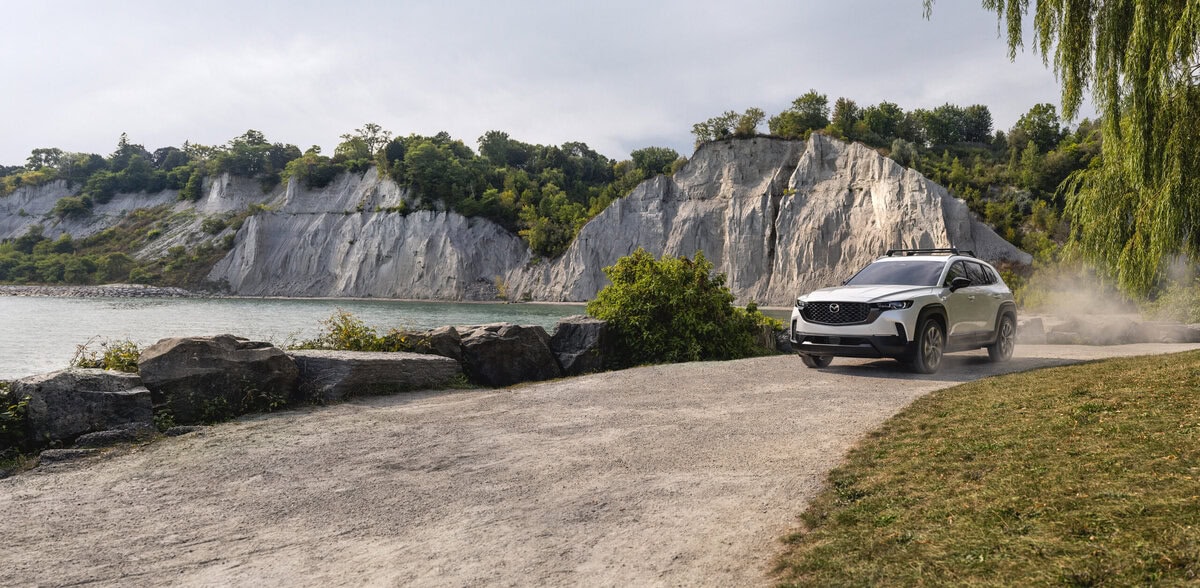
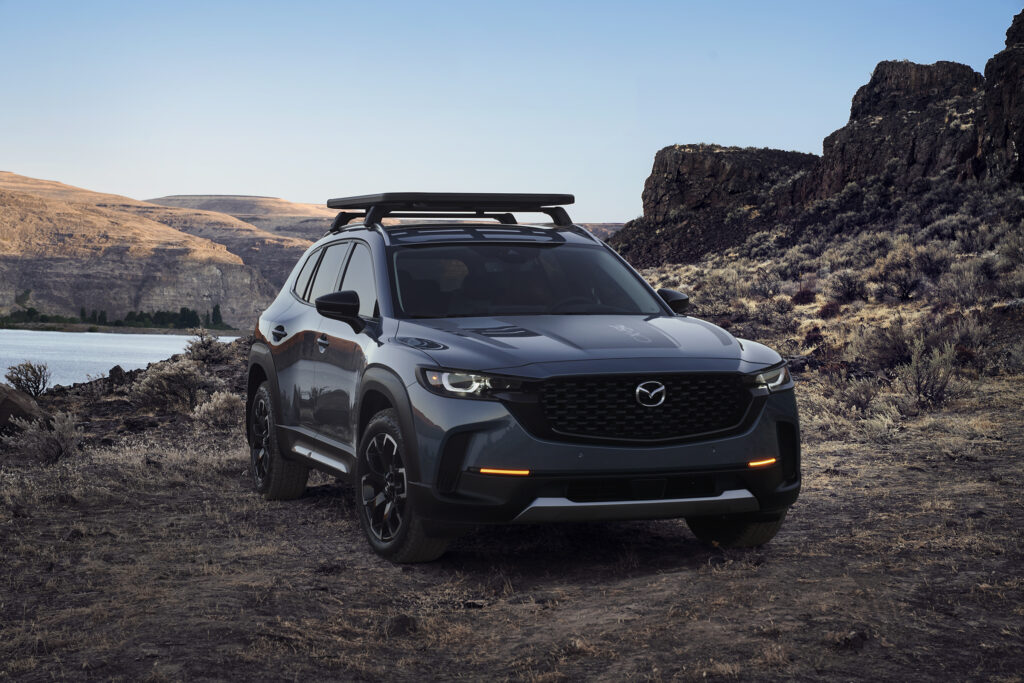
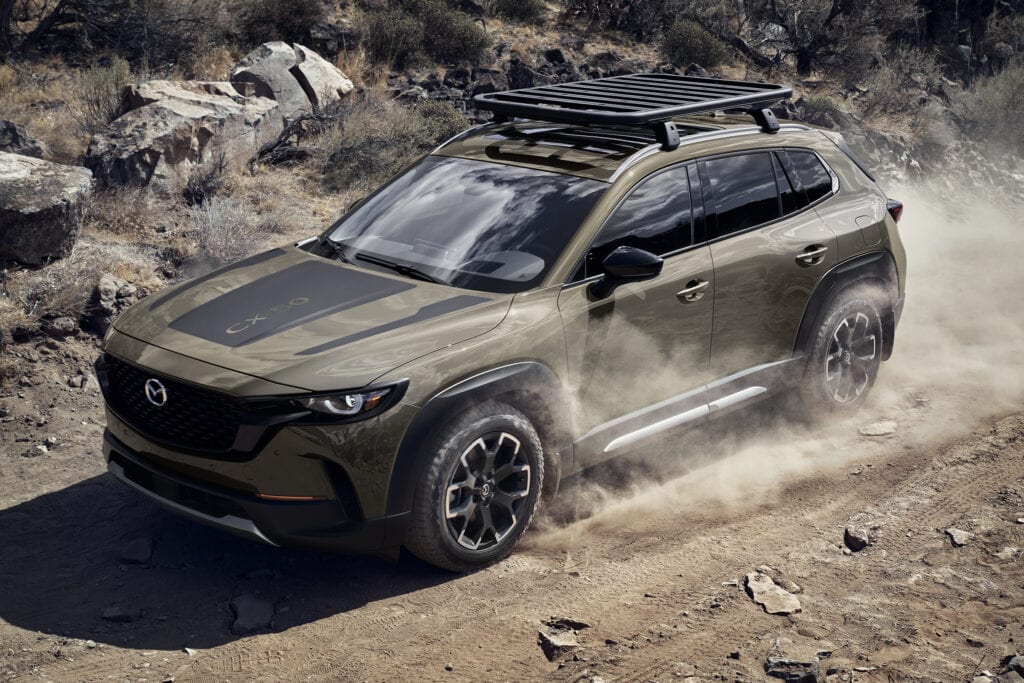
The Meridian Edition leans into the outdoors look with all-terrain tires, black wheels, black roof rails, and trail-ready hardware straight from the factory. It also introduces gloss-black Mazda badges, subtle enough to annoy traditionalists, which is usually a sign the design team is having some fun without turning the SUV into a costume.
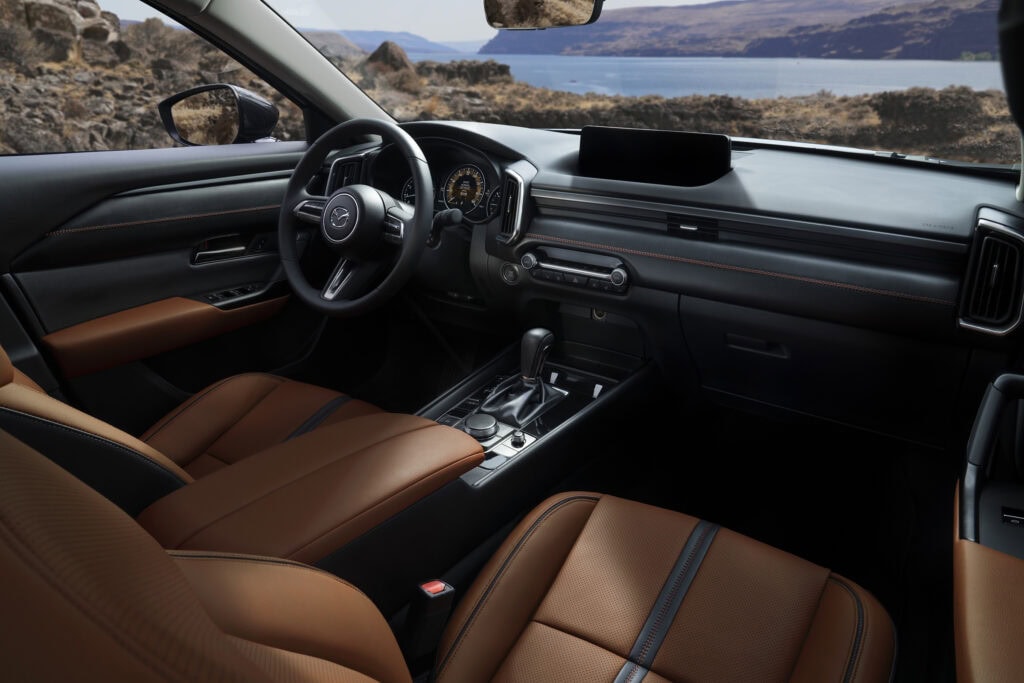
Step into the Premium trim and the CX-50 begins to feel like the brand is quietly giving you luxury features without asking you to admit you want them. Ventilated seats arrive. Memory functions show up. Bose audio becomes part of the deal. You also get a head-up display that projects speed and navigation onto the windshield, so your eyes stay up and your stress stays down. Twenty-inch wheels come standard here, which looks sharp, but it also means potholes will become a more personal relationship.
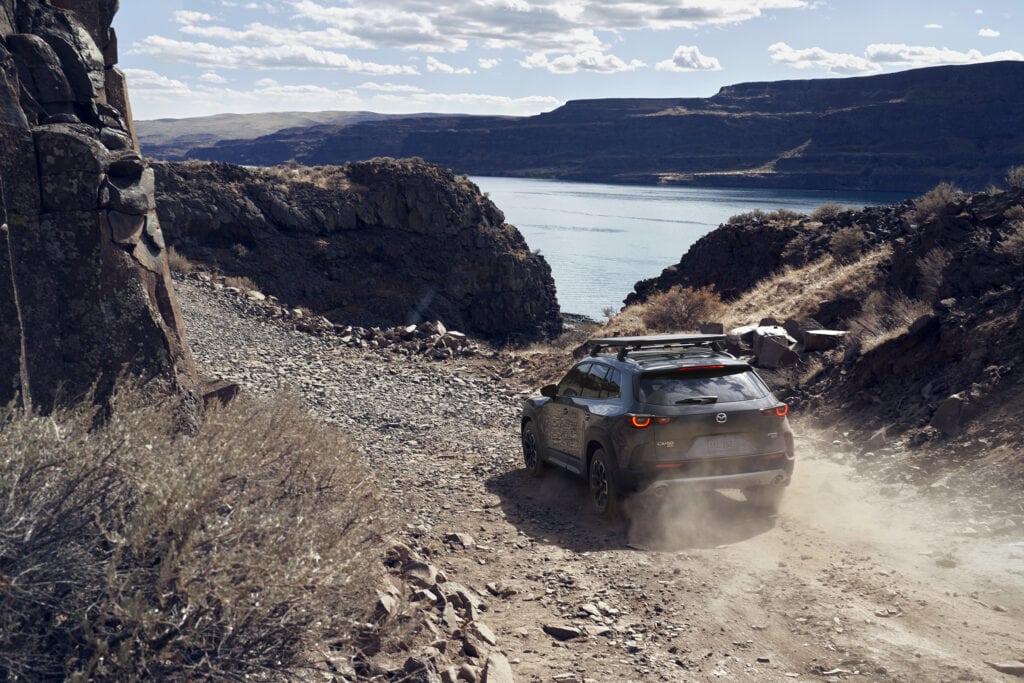
If you want the most convincing example of luxury features for family money, look at the hybrid. The CX-50 Hybrid brings 219 horsepower, three electric motors, and a combined 38 mpg rating. The practical payoff is the 551-mile total driving range. For families, that means fewer fuel stops on road trips and fewer weekly fill-ups around town. For context on how efficiency ratings are typically framed for shoppers, the EPA site is the easiest baseline reference.
Hybrid pricing starts at $34,750. That is meaningful because it undercuts several less efficient rivals by thousands while delivering the sort of range that changes how you plan travel days. Gas stations become optional scenery.
Hybrid models also keep all-wheel drive standard, delivered through electric all-wheel drive, with Power and Trail modes that actually do something. Hybrid Premium trims add ventilated seats, leather upholstery, Bose audio, and a red interior exclusive to the hybrid lineup. Hybrid Premium Plus stacks heated rear seats, a heated steering wheel, adaptive headlights, and a windshield-projected head-up display. Heated rear seats in a compact SUV priced in the mid $30,000s is exactly the kind of detail that feels like luxury, but behaves like value.
And if you are the sort of person who measures luxury in torque rather than in stitching, Mazda still gives you a turbo option. The turbo engine delivers 256 horsepower and 320 pound-feet of torque on premium fuel. Even on regular fuel, torque stays strong at 310 pound-feet, which matters more than peak horsepower numbers when you are merging, passing, or climbing a grade with a full cabin.
Turbo models tow up to 3,500 pounds, which is family-useful capability, not just brochure theater. As you climb the turbo ladder, paddle shifters, adaptive headlights, and a 360-degree camera appear. The Turbo Meridian Edition mixes all-terrain gear with terracotta leather, which is camping, but curated. It even adds trail accessories and hood graphics without turning the whole thing into cosplay.
The Turbo Premium Plus tops out at $42,900 before destination. That is not cheap, but it is still punching below luxury-brand pricing for comparable comfort and tech. You also get Traffic Jam Assist, Blind Spot Assist, and turn-across-traffic braking, features that sit in the broader driver-assist world overseen and explained by the NHTSA.
Beyond features, the CX-50 keeps a few old-school choices that quietly feel premium now, because so many brands have abandoned them. Physical controls remain front and center, because touchscreens are not a personality trait. Mazda Connect infotainment favors clarity over chaos, which is rare and appreciated. Wireless charging finally works without cooking your phone. Interior lighting stays tasteful rather than nightclub-adjacent.
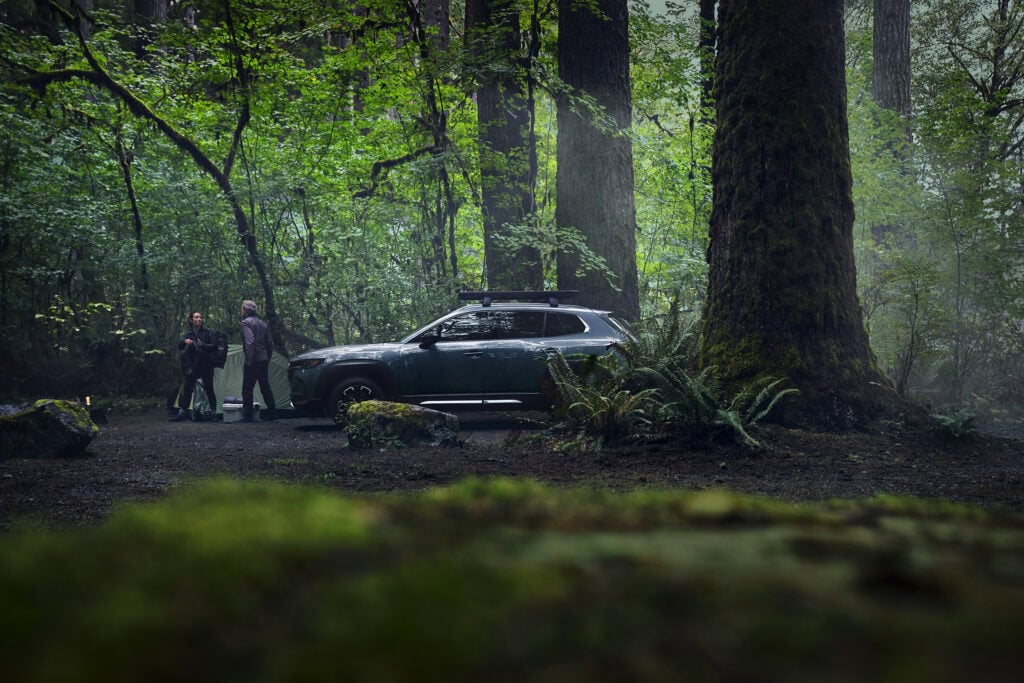
For family practicality, rear cargo space fits dogs, gear, or both, with a wide opening and a low load floor. Roof rails appear across most trims, reinforcing that this is meant to be used, not admired. Rear vents and USB-C ports show up where families actually need them. Outward visibility is strong, which matters in school zones, parking lots, and the general daily chaos of modern driving.
On the road, steering is tight, controlled, and genuinely communicative. This drives like a Mazda, not a committee decision. Wind and road noise are well managed without killing feedback. Brake feel is predictable and confidence-inspiring. Suspension tuning favors control over float, even with all-terrain tires. It is the sort of calm competence that reads as premium, because the vehicle is not constantly trying to impress you.
Why does this matter right now?
Because families are paying more for cars than they planned to, and they are keeping those cars longer than they expected. In that reality, luxury is not about status. Luxury is about reduced friction. It is about features that make the vehicle feel easier to live with on Day 900, not just exciting on Day 9.
The CX-50 hits that moment well. It offers standard all-wheel drive from the base trim, a hybrid that delivers 38 mpg and 551 miles of range, and comfort features like ventilated seats, head-up display, and heated rear seats without forcing you into luxury pricing. It is also the kind of smart value story we have been tracking recently at Prices, because the market has shifted and buyers are adapting fast.
How does it compare to rivals or alternatives?
Compared to a Toyota RAV4, the CX-50 feels more engaging and more intentional behind the wheel. Compared to a Honda CR-V, it feels more stylish and more deliberate in its interior execution. Compared to a Subaru Outback, it feels less theatrical and more composed on pavement.
Against entry-level luxury crossovers, the CX-50 delivers most of the tangible experience for far less money. You may not get the badge effect, but you get the comfort effect, and that is the part you live with. For a bigger picture view on what Americans actually prioritized in recent buying patterns, you can see how preferences played out in Sales.
Who is this for and who should skip it?
This is for families who want a premium feel without premium pricing. It is for commuters who appreciate ventilated seats in summer and a head-up display in heavy traffic. It is for dog owners who want sensible cargo space and durable materials. It is for drivers who still care about steering feel.
The hybrid is for people who rack up miles and want range that changes trip planning. The turbo is for people who tow, who carry heavy loads, or who simply want low-end torque that makes daily driving effortless.
Who should skip it? If you want the softest ride in the segment, or you want a cabin dominated by a giant touchscreen and animated lighting, this is not that vehicle. Mazda’s approach is more restrained. Also, if your buying decision is driven mainly by chasing the lowest monthly payment with the most gimmicks, you may find this too honest.
If you are the sort of buyer who wants to avoid expensive trim jumps just to get core needs covered, the CX-50’s trim walk is refreshingly coherent, a theme that matches what we outlined in Deal-breakers.
What is the long-term significance?
The CX-50 is Mazda trusting its instincts in a segment filled with copy-and-paste choices. No fake exhausts. No cartoon lighting. No unnecessary drama. Fuel efficiency, towing, and traction feel deliberately balanced. The hybrid is not a compliance move. It is genuinely useful.
Long-term ownership looks promising because the engines are proven and conservatively tuned. Driver-assist systems operate quietly instead of shouting at you. The interior avoids trendy gimmicks that date quickly. It feels like a vehicle Mazda expects you to keep longer than a lease cycle.
In a crowded segment, clarity is power. The CX-50 does not shout for attention. It earns it. If you want a reminder that restraint can be exciting, and that a family car can feel quietly premium without demanding luxury money, this one makes a very strong case.
And if your family road trips include holiday weekends, maybe drive the point home with a little realism too. We looked at the risk side of that equation in Roads, because the best luxury feature of all is arriving calm, safe, and unbothered.