The Winners and Losers of 2025: What Americans Really Bought
2025 wasn’t about reinvention. It was about execution. Here’s what last year’s Winners and Losers sales reveal.
I spend a lot of time in new cars, listening to executives describe the future. In 2025, buyers made it clear they were more interested in the present. Roughly 16.2 million new vehicles were sold in the United States, with nearly 80 percent of them trucks or SUVs. The market grew modestly, but the growth came from familiarity, not fantasy.
You may also like: From Formula One to Family Driveways: Why GM’s Global Racing Bet Matters
Why does this matter right now?
The U.S. auto market grew by about three percent year over year in 2025, driven almost entirely by light trucks and crossovers. Traditional sedans continued their retreat, and electrification slowed as buyers recalibrated expectations. According to industry tracking from Cox Automotive, affordability and interest rates reshaped purchase behavior more than any single technology shift.
Toyota reclaimed the U.S. sales crown with roughly 2.15 million vehicles sold, leaning heavily on SUVs like the RAV4 and Highlander. Hybrid models represented nearly one in four Toyota sales nationwide, reinforcing data published by Toyota’s official sales summaries.
Ford followed closely with about 2.09 million sales, anchored by the F-Series pickup. Nearly 829,000 units were sold, once again making it America’s best-selling vehicle. The consistency mirrors long-term trends tracked by NHTSA vehicle registration data.
You may also like: The Ultimate Car Lover’s Vacation Isn’t Europe Anymore
How does it compare to rivals or alternatives?
Chevrolet placed third with about 1.82 million sales, driven by Silverado and Equinox volume. Electric models contributed marginally compared to combustion vehicles, a pattern consistent with analysis from Edmunds market insights.
Honda finished fourth with roughly 1.3 million U.S. sales, relying heavily on the CR-V and Civic. The CR-V alone sold more than 400,000 units, underscoring how dependable crossovers continue to dominate suburban buying decisions.
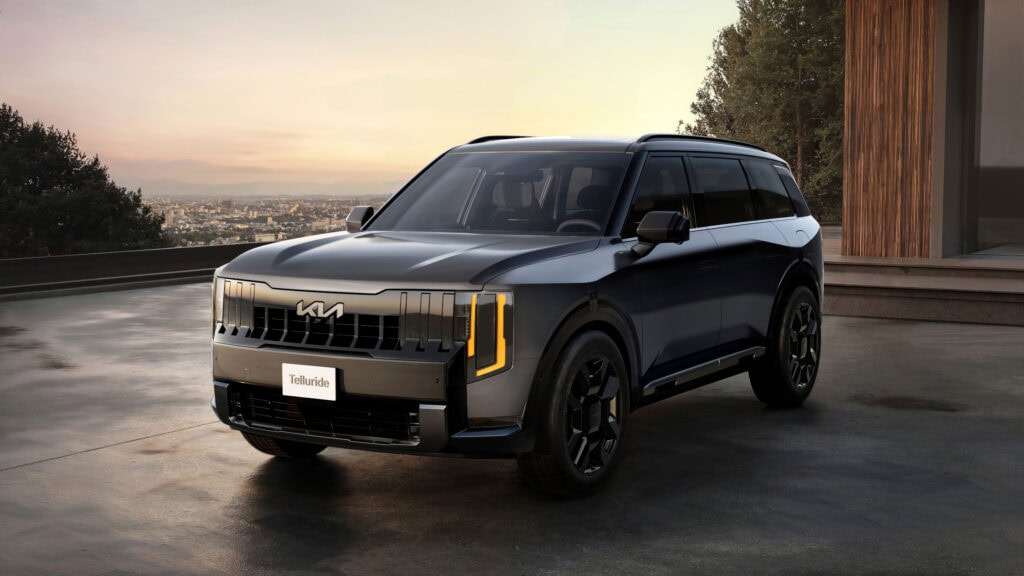
Hyundai and Kia both delivered record or near-record years, supported by refreshed SUVs, competitive pricing, and long warranties. Their growth contrasted with declines at Subaru and Jeep, where aging lineups and pricing pressure limited momentum.
Electric-only brands struggled by comparison. Tesla’s Model Y remained the best-selling EV at roughly 300,000 units, but demand softened amid increased competition and reduced federal incentives, as outlined by U.S. Department of Energy EV adoption data.
You may also like: Ram Race For The Seat: This Truck Brand Is Rewriting NASCAR
Who is this for and who should skip it?
This market favors buyers who value reliability, resale value, and predictable ownership costs. Hybrids emerged as a preferred solution for those seeking efficiency without charging infrastructure concerns.
Shoppers expecting rapid EV adoption and aggressive innovation may find the pace frustrating. Startups like VinFast, Polestar, Lucid, and Rivian faced slower sales and increasing financial pressure, reflecting the risks of scaling before demand stabilizes.
Luxury buyers also encountered fewer compelling options as high transaction prices and limited electrified portfolios constrained growth.
You may also like: Cars Are Now on Faster Networks Than Their Drivers
What is the long-term significance?
Trucks and SUVs now account for nearly four out of every five vehicles sold in the U.S., reflecting long-term consumer preferences around space, perceived safety, and utility. Hybrid adoption increased across multiple segments, offering efficiency without lifestyle disruption.
EV growth slowed but did not reverse. The brands best positioned for the future appear to be those investing in flexible platforms that support gasoline, hybrid, and electric powertrains, aligning with projections from the International Energy Agency.
In short, 2025 rewarded familiarity over fantasy. Buyers prioritized what worked, what held value, and what fit their lives. As the market moves into 2026, balance rather than extremism is likely to define success.
You may also like: Queen Elizabeth II’s Land Rover & Range Rover Fleet