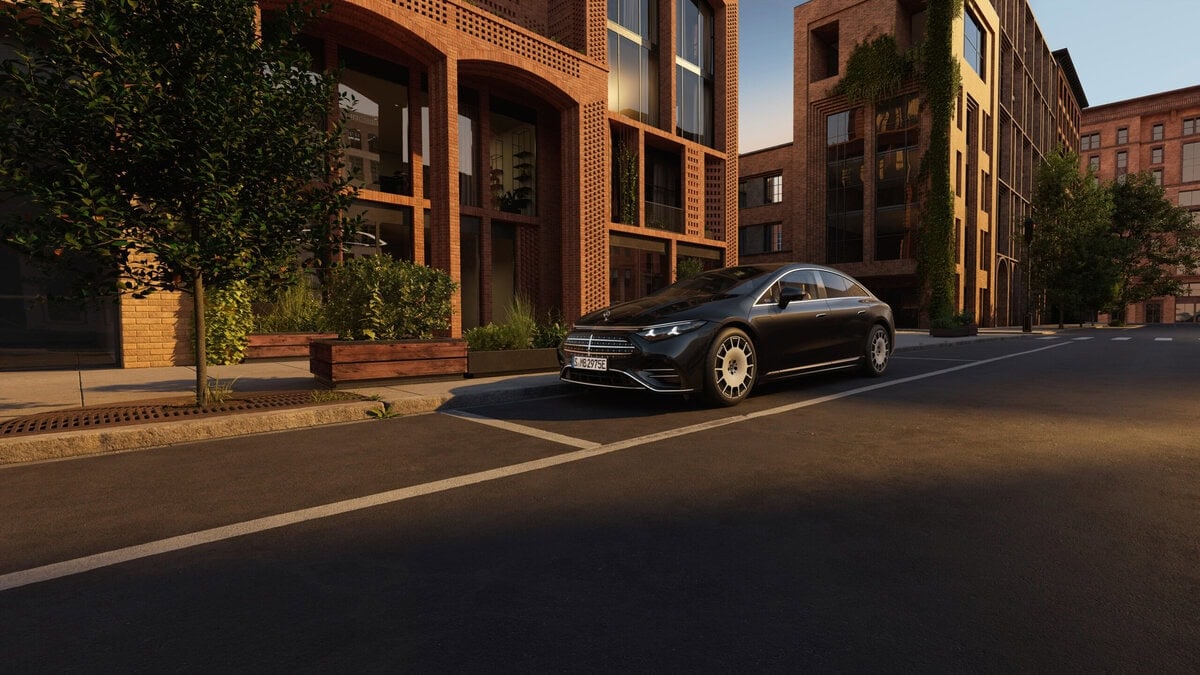
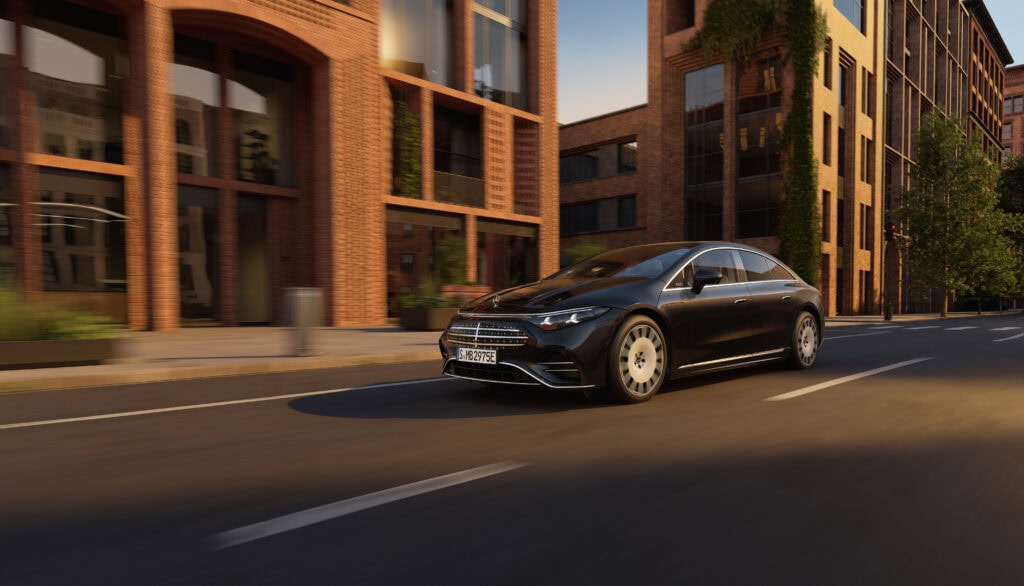
The 2027 Mercedes-Benz EQS arrives with a clear mission: prove that a flagship electric sedan can still feel unmistakably like a Mercedes-Benz. This is not a reset. It is a refinement of an idea the brand introduced when the EQS first arrived and showed that an electric luxury sedan did not need to be experimental, awkward, or stripped of character.
It could be elegant, fast, deeply comfortable, and genuinely useful over long distances. That matters now more than ever, because the luxury EV market is no longer judged on novelty. It is judged on how well it works in daily life, on the highway, and over several years of ownership.
You May Also Like This: Why the Mercedes-Benz S-Class Still Matters
A New Electric Architecture That Matters
Mercedes-Benz says more than a quarter of the vehicle’s components are newly developed, updated, or refined, and that is the right place to begin. The new EQS is built around a next-generation electric architecture with 800-volt capability, new in-house drive units, a two-speed rear transmission, a larger battery, and updated cell chemistry.
Those are not brochure ornaments. They are the engineering decisions that shape how an EV feels every single day. Mercedes is concentrating heavily on voltage, battery performance, and efficiency rather than just chasing a headline horsepower war.
Range That Changes the Conversation
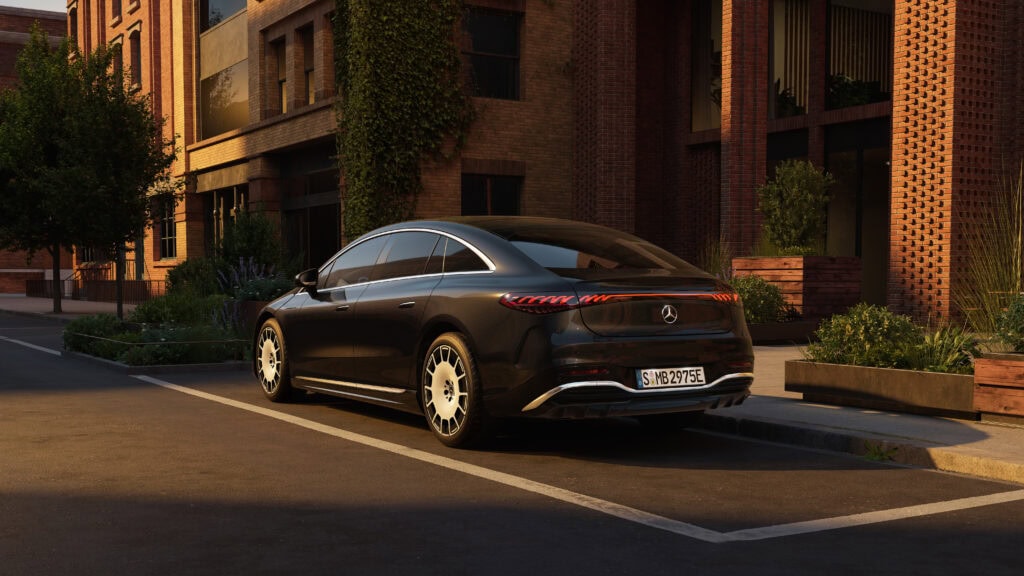
The headline figure is the one that will grab most buyers first: up to 925 kilometers of WLTP range. American certification numbers will be different, as they always are, but the point remains the same. Mercedes-Benz is making a luxury EV designed for real distance, not just urban theater.
In practical terms, that means fewer charging stops, more route flexibility, and a car that feels less tethered to infrastructure. Luxury has always meant freedom of movement. In the electric era, range is part of that equation, and Mercedes seems to understand that better than many brands that still treat range like an afterthought.
Charging That Feels Effortless
That distance is supported by very serious charging capability. With DC fast charging up to 350 kW, Mercedes says the EQS can add up to 320 kilometers of range in as little as 10 minutes under the right conditions. That is the sort of number that changes owner behavior.
It reduces the psychological burden of charging because the stop starts to feel like a pause rather than a delay. If you want the technical background on charging, it helps explain why this matters so much in the real world.
You May Also Like This: Mercedes-Benz Unleashes Ultra-Fast Charging for AMG EVs
Powertrain Engineering with Purpose
Then there is the matter of the powertrain itself. Mercedes-Benz has developed new electric drive units in-house, which is significant because it gives the company tighter control over refinement, efficiency, and long-term integration with the rest of the vehicle. The addition of a two-speed transmission on the main drive unit at the rear axle is especially interesting.
Many EVs rely on brute force and a single ratio. Mercedes is taking a more disciplined approach, using gearing to balance low-speed response with high-speed efficiency. It is a very Mercedes solution, really. Less showy than some rivals, but usually more thoughtful once you understand what the engineers were trying to achieve.
Battery Technology That Looks Beyond Day One
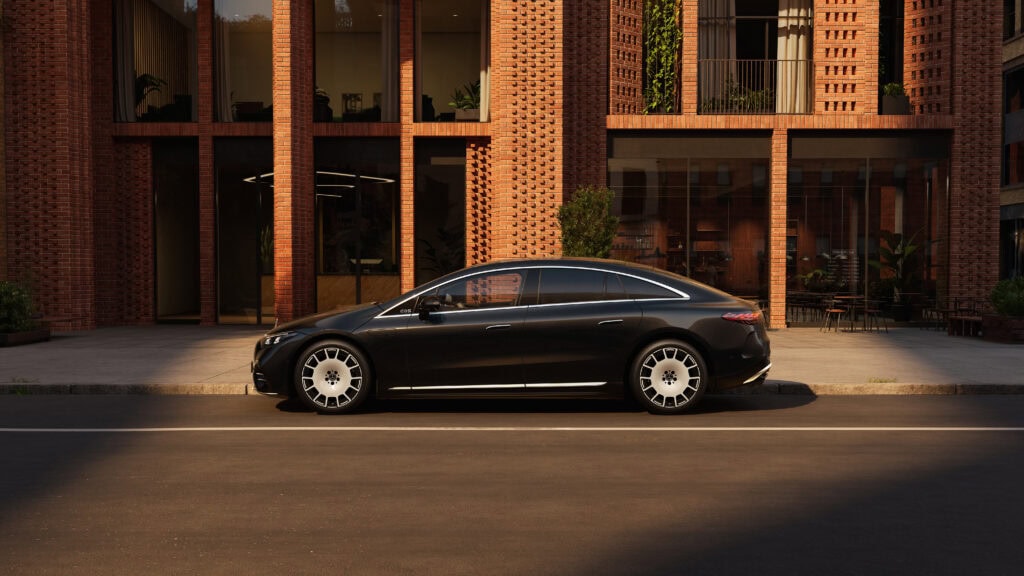
The battery is just as important to the EQS story as the motors. Mercedes says the sedan gets a larger pack and optimized cell chemistry, which should help with both range and sustained performance. Battery development is not only about absolute size. It is about energy density, thermal stability, durability, and how consistently the pack behaves across temperatures and charging cycles.
Battery chemistry improvements matter every bit as much as total capacity. This part of the story is especially relevant because premium buyers expect a flagship to feel polished not only on launch day, but years later as well.
Software as a Core Luxury Feature
One of the more striking things about the 2027 EQS is how clearly it continues Mercedes-Benz’s long habit of making technology feel like comfort rather than complication. The car introduces MB.OS, the Mercedes-Benz operating system, which turns the EQS into a more intelligent, more connected, and more adaptable product over time.
The phrase “software-defined vehicle” gets thrown around so often that it risks becoming meaningless, but here it matters. Mercedes is not just adding apps. It is creating a platform that can be updated, refined, and expanded as customer needs change.
You May Also Like This: Mercedes-Benz Vision Iconic: Heritage Meets Innovation
Artificial Intelligence and Everyday Usability
That software layer is backed by a supercomputer and artificial intelligence designed to keep the EQS current. In practice, that means the car should remain fresher for longer, not just cosmetically but functionally. Navigation, route planning, user preferences, and digital features can all become smarter with time.
Mercedes-Benz has been very clear that intelligence is now part of luxury, and that feels exactly right. A flagship should reduce mental workload, anticipate preferences, and eliminate friction. That is just as valuable as leather quality or rear legroom, and in the best luxury cars the owner notices the absence of stress more than the presence of gadgets.
Steer-by-Wire: A Fundamental Shift
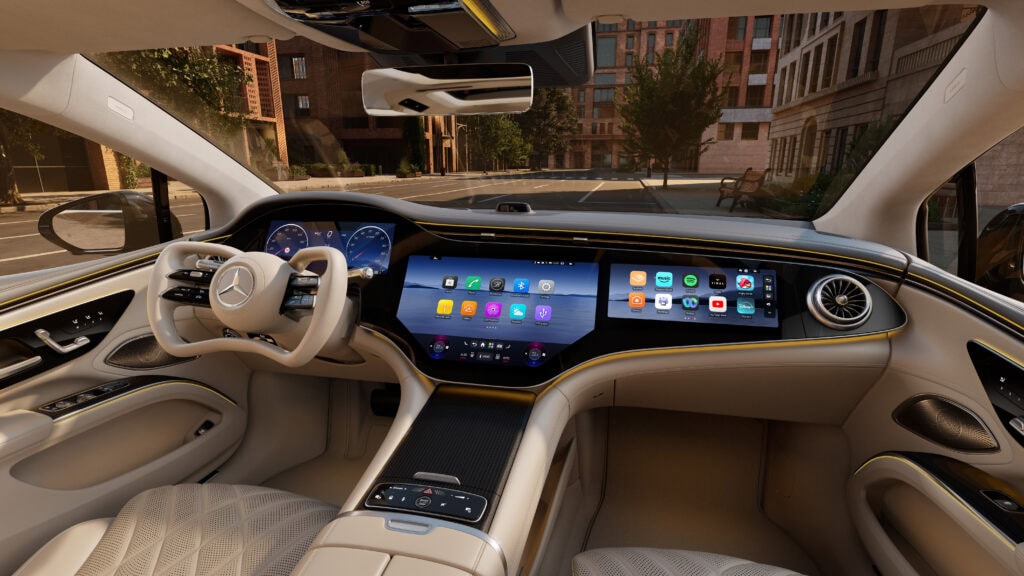
Mercedes also says the new EQS will be the first series production car from a German automaker available with steer-by-wire. That is a serious technical step, and not merely a party trick
By removing the traditional mechanical link between steering wheel and front wheels, steer-by-wire opens the door to different steering ratios, new packaging opportunities, and more tailored responses depending on speed or driving mode.
Design Philosophy and Brand Identity
There is also a philosophical point here that deserves mention. Mercedes-Benz was among the first mainstream luxury brands to treat electrification as an opportunity to redefine the flagship, not simply electrify an existing one. The original EQS introduced the MBUX Hyperscreen and established a new design language centered on smooth surfaces, digital immersion, and aerodynamic efficiency.
The 2027 car builds on that without throwing away the identity. It still aims to be serene, quiet, and deeply composed, which is exactly what a Mercedes flagship should be. The company’s long-standing obsession with aerodynamics also matters here, because slippery design is not a styling gimmick in an EV. It is directly tied to range, cabin quietness, and high-speed ease.
You May Also Like This: Mercedes-Benz Opens World’s Most Advanced Light Center
A Cohesive Luxury Experience
What makes the EQS especially compelling is that Mercedes-Benz seems to have resisted the urge to turn its flagship EV into a tech demo at the expense of elegance. Too many high-end electric sedans still feel like rolling arguments about the future.
The EQS feels much closer to a finished answer. It is meant to glide, isolate, and reassure. It is meant to cover distance without fuss. It is meant to make its driver feel that the car is working hard so they do not have to. That is a very old luxury principle, and Mercedes is wise to keep it at the center of a very modern product.
Timing and Market Position
The timing for the U.S. market is also important. Mercedes says the 2027 EQS will arrive at American dealerships in the second half of 2026, which places it into a market that is far more demanding than the one the first EQS entered. Buyers now expect strong range, credible charging speed, digital sophistication, and a cabin that feels worth the money.
They are less willing to excuse compromises simply because a vehicle is electric. That is precisely why this EQS matters. It does not ask buyers to accept less in exchange for electrification. It argues, instead, that the electric flagship can now be the most complete expression of the Mercedes-Benz idea.
A Complete Interpretation of Modern Luxury
And that may be the strongest point of all. The 2027 Mercedes-Benz EQS does not feel like a brand chasing fashion. It feels like a brand refining its thesis. More range. Faster charging. Smarter systems. Better integration. More confidence over long distances. In other words, a better flagship.
There is a temptation in the EV era to reward whatever is loudest or newest. Mercedes-Benz is taking the opposite route. It is making the EQS more useful, more intelligent, and more convincingly luxurious. Frankly, that is the adult answer, and probably the right one.
You May Also Like This: Mercedes VLE Makes the Van a Flagship
Final Thoughts
If the first EQS proved Mercedes-Benz could build an electric flagship, the 2027 model is shaping up to prove something more important: that Mercedes-Benz can keep improving it in the areas buyers actually care about. In luxury, progress is not supposed to feel frantic. It is supposed to feel inevitable. That is exactly the impression this new EQS leaves.
You May Also Like This: Mercedes VLE Reveal: What to Expect from the Luxury Electric Van