2027 Toyota Highlander goes electric as a three-row EV

Toyota is taking its familiar family three-row and rebuilding it as a U.S.-assembled battery EV—then adding the details that matter in daily life, not just on paper.
I’ve read a lot of EV announcements that feel like they were written for slide decks, not for people who actually live with cars. This one is worth your time because it’s Toyota taking a very specific swing at a very specific problem: how to make an electric vehicle that works for families who don’t want their lives reorganized around charging, apps, and compromises. A surprising concept, efficiency, I know. Just as surprising as the new Audi A6
The all-new 2027 Highlander is Toyota’s first three-row battery-electric vehicle (BEV) for the U.S. market, and the first Toyota BEV assembled in America, with production planned at Toyota Motor Manufacturing Kentucky. Toyota says battery modules will be assembled at Toyota Battery Manufacturing North Carolina and a partner supplier in the U.S., tying the vehicle’s biggest cost-and-supply component to domestic production.
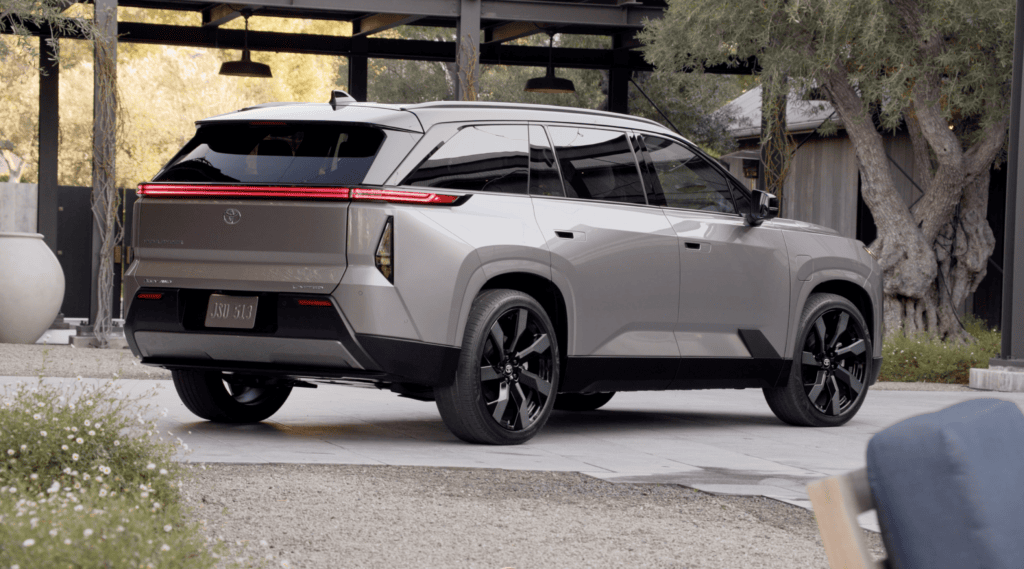
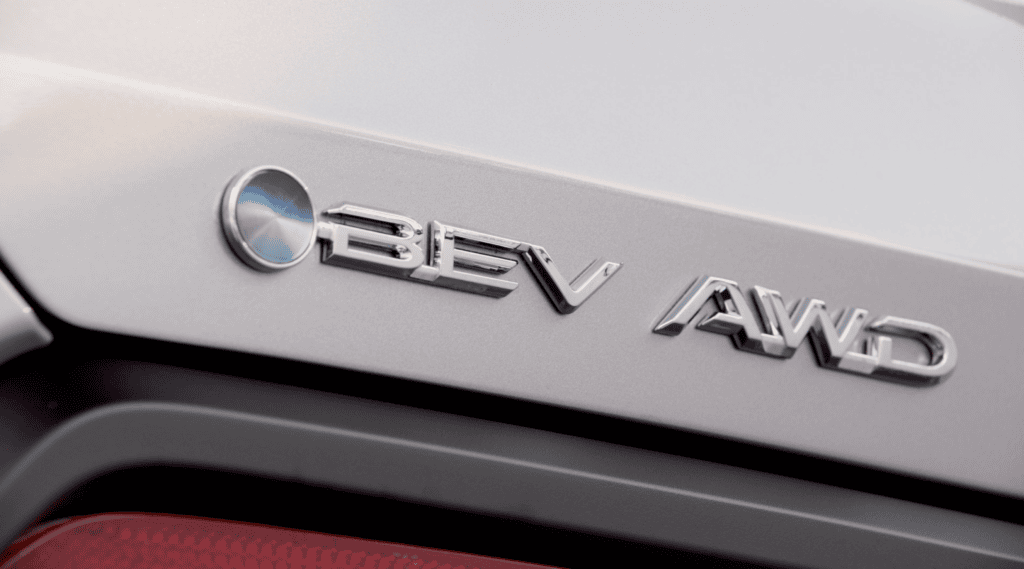
But the more interesting part isn’t the headline. It’s the small set of decisions that suggest Toyota is trying to reduce EV friction: a standard North American Charging System (NACS) port, battery preconditioning for faster DC charging, Plug & Charge capability on selected networks, and vehicle-to-load (V2L) power so Highlander can run devices—or potentially serve as backup power with the right accessories.
Why does this matter right now?
Because the EV conversation has shifted from “Can it be done?” to “Can normal people live with it?” Three-row SUVs are a perfect stress test. They carry more people, more stuff, and more expectations. They also tend to have longer days, school runs, sports, errands, and family trips where a charging plan that sounds fine on a calm Sunday becomes annoying by Wednesday.
Toyota is pitching the 2027 Highlander as an EV that fits into a household’s routine rather than forcing the routine to fit the car. The range figures it’s quoting are meant to feel useful, not heroic. In the lineup, XLE AWD and Limited AWD models with the 95.8-kWh battery target a manufacturer-estimated 320 miles of total driving range. XLE FWD with a 77.0-kWh battery targets 287 miles, while XLE AWD with the 77.0-kWh pack targets 270 miles.
Charging is the other pressure point, and Toyota is addressing it directly by fitting a standard NACS port for wide access to DC fast-charging stations. Under ideal conditions, when using DC fast charging, Toyota says the new Highlander can charge from 10% to 80% in around 30 minutes. It also supports Level 1 and Level 2 AC charging, includes a dual-voltage 120V/240V cable, and uses an 11-kW onboard AC charger. For a clear, plain-English explainer of how fast charging works in the real world (and why “ideal conditions” matters), the U.S. Department of Energy’s Alternative Fuels Data Center is a solid reference point: U.S. DOE AFDC: Electric vehicle charging basics.
Toyota also includes battery preconditioning, which is one of those technical features that actually changes your lived experience. Fast charging is often limited by battery temperature, not by the charger’s advertised peak. Preconditioning is Toyota acknowledging that EV ownership is as much about conditions as it is about specs.
And Toyota is clearly trying to make charging less of an app-and-account scavenger hunt. It says Highlander will support Plug & Charge, an industry-standard protocol that can automatically handle identification and authorization on selected networks, reducing the need to juggle multiple charging apps.
The other “daily life” feature is V2L power. Toyota says the 2027 Highlander can serve as a mobile power source, potentially powering appliances at a tailgate or providing backup power at home in an outage, though it notes that purchasing bi-directional accessories is required. This is Toyota treating the car as part of a household resilience story, not just a way to commute.
How does it compare to rivals or alternatives?
The three-row EV field is getting real, fast. If you’re shopping for this kind of vehicle, you’re likely cross-shopping not just other EVs but hybrids and plug-in hybrids that avoid the charging headache entirely. As other manufacturers and dealers are stuggling to recuperate lost investments in the EV market, Toyota seams to have figured it out and is going all-in.
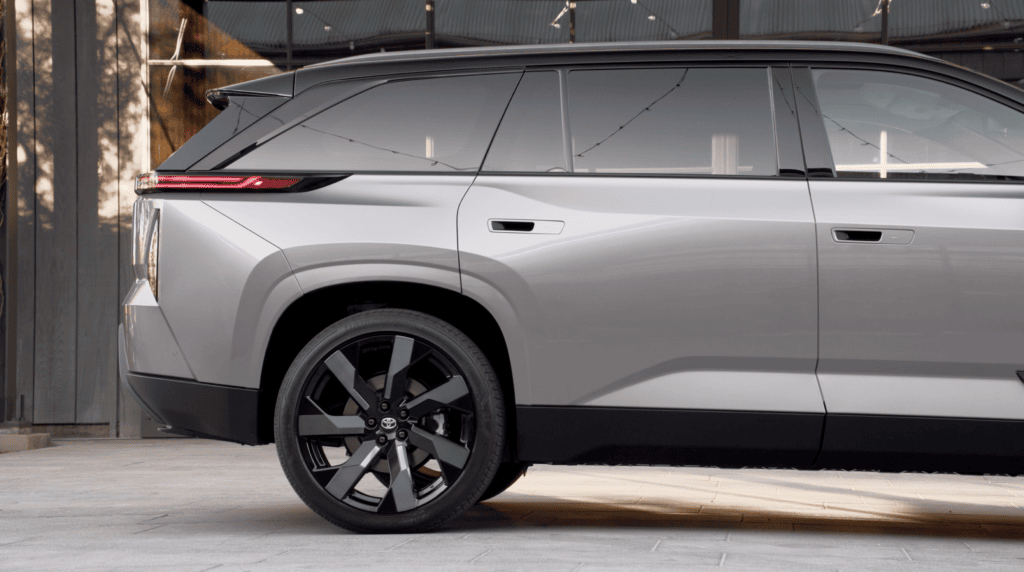
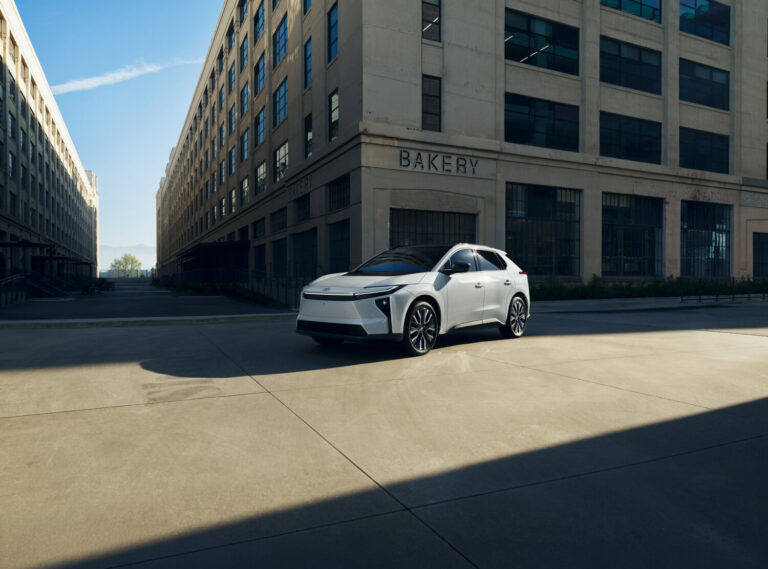
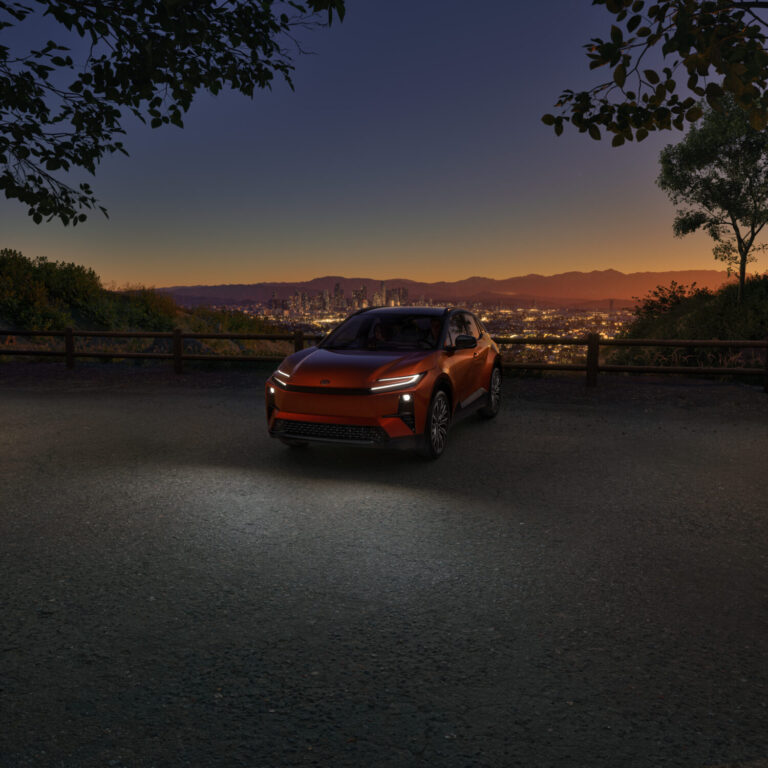
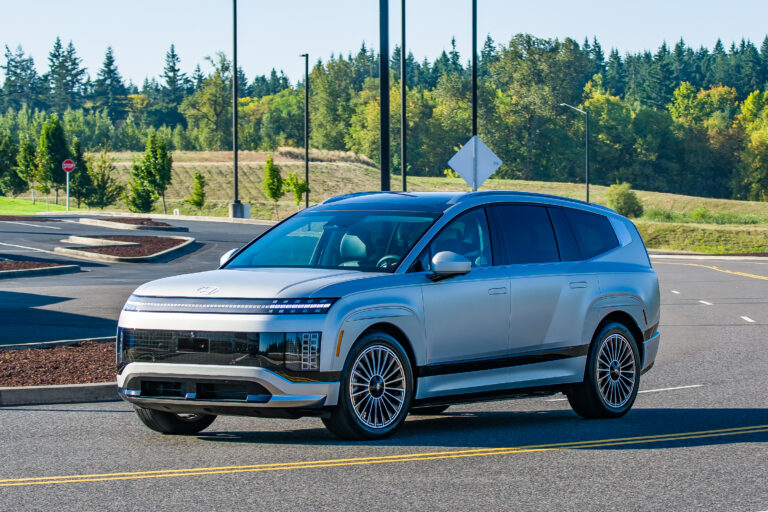
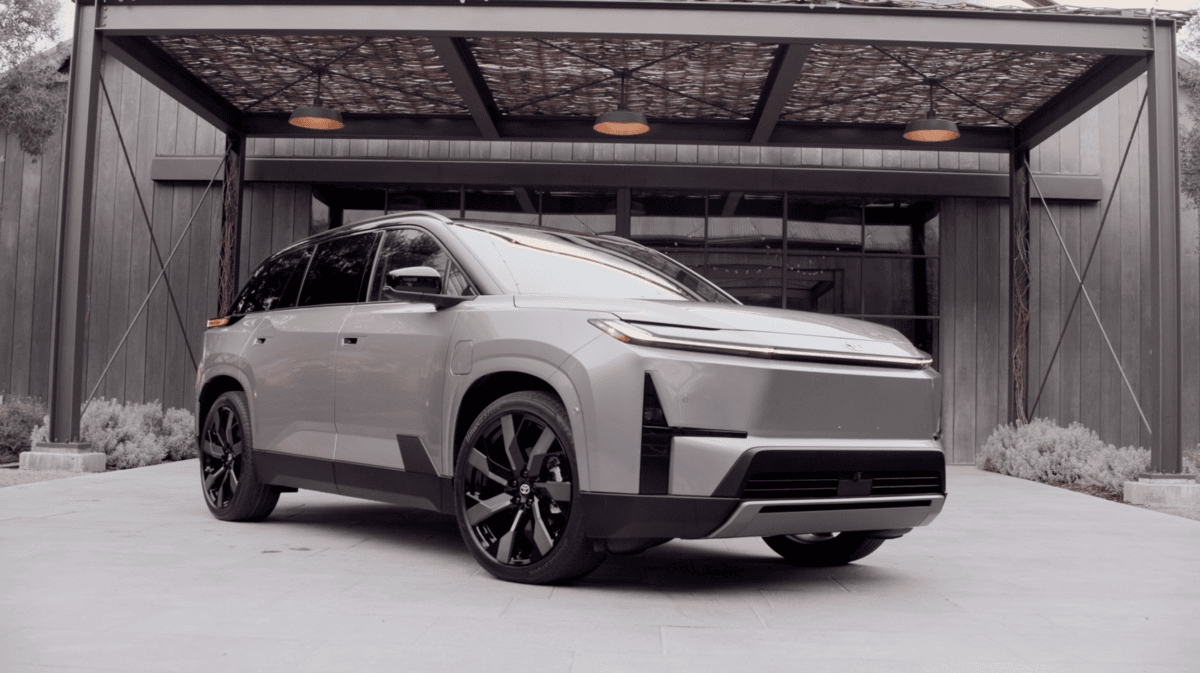
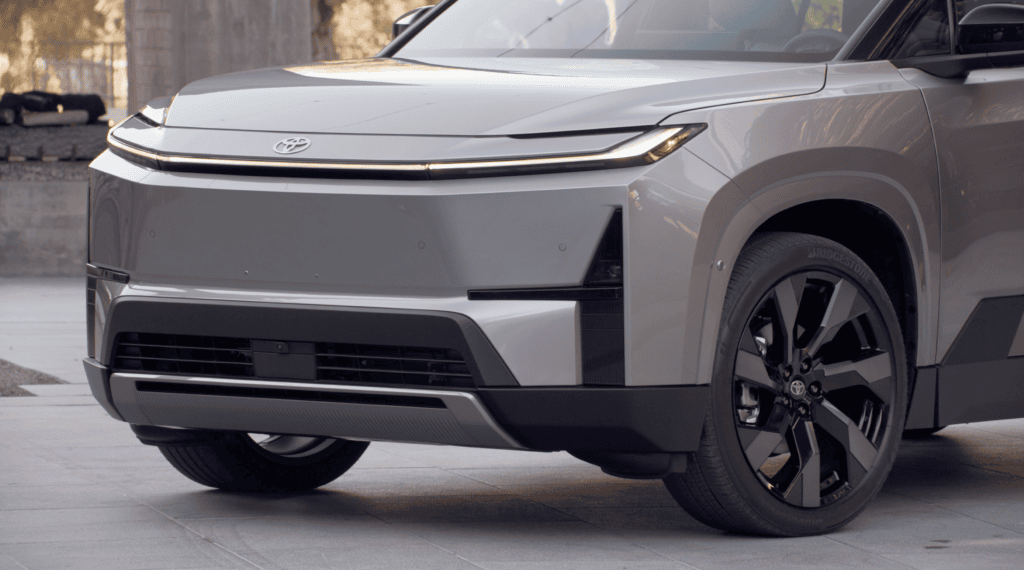
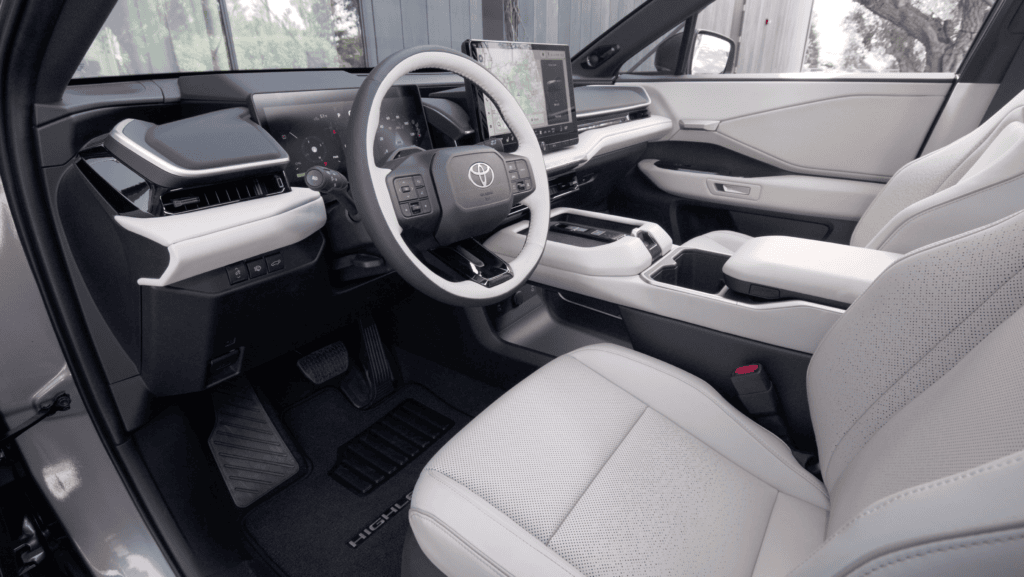
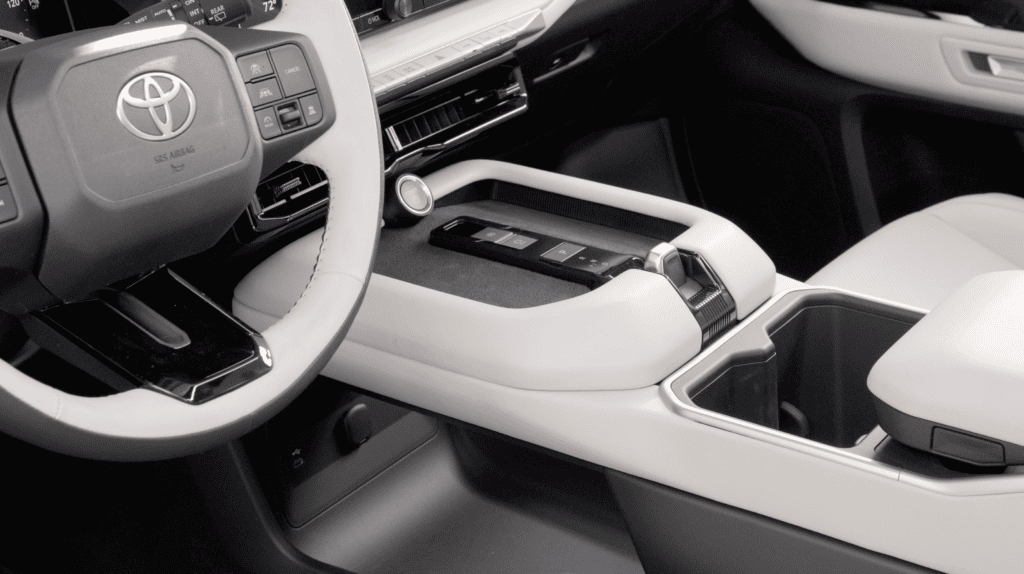
On the EV side, the family-focused three-row space has been defined by vehicles that lean into big screens, bold designs, and feature packaging meant to make EV ownership feel like a “new era.” The 2027 Highlander is more restrained: clean lines, broad fenders, full-length LED daytime running lights, flush door handles for aerodynamics, and a cabin centered around a 14-inch touchscreen and a 12.3-inch driver’s display. The detail that matters most to me is that Toyota still calls out hard buttons for temperature controls. That’s a quiet vote for usability over novelty. Praise be the buttons and knobs!
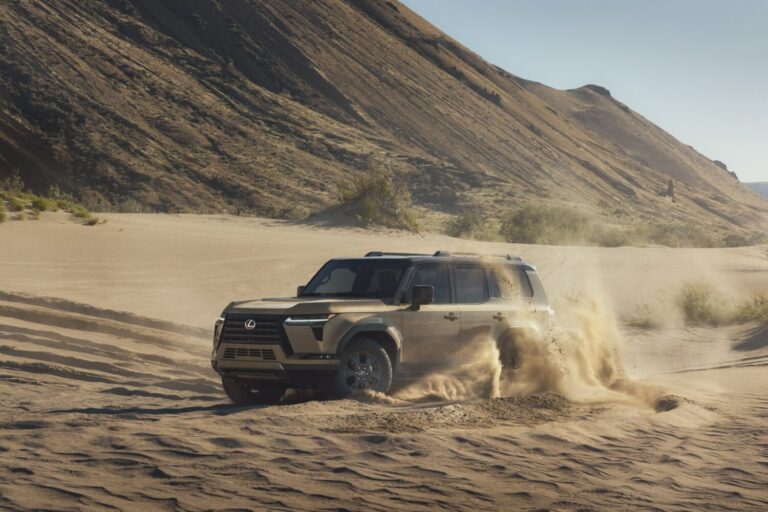
Performance-wise, Toyota is not positioning the Highlander as a dragstrip statement. AWD models are rated at up to 338 combined system horsepower and 323 lb.-ft. of torque, while FWD models are rated at 221 horsepower and 198 lb.-ft. of torque. The AWD models also get features like Multi-Terrain Select and Crawl Control, signaling that Toyota expects some buyers to want capability systems even in an EV family SUV.
On charging compatibility, the NACS detail is a meaningful competitive point. The connector ecosystem is becoming less confusing, but buyers still want confidence that the car will “fit” the chargers they see. For readers who want the technical underpinning, the formal standardization effort around the NACS-style connector is associated with SAE’s J3400 work: SAE J3400 standard overview. You don’t need to read it to buy a car, but it’s a good signal that the connector choice is becoming more standardized, not more fragmented.
The alternatives that matter most, though, may be hybrids and plug-in hybrids. If you can’t reliably charge at home or work, an EV—no matter how good, will still ask more from you than a hybrid. Toyota hasn’t provided pricing yet, and it hasn’t used EPA range language, so it’s best to treat these numbers as manufacturer estimates until final ratings and real-world tests arrive.
It’s also worth noting that “tech” in 2026 isn’t just screens. Toyota is making the case that safety and assistance tech is part of the value proposition, with Toyota Safety Sense 4.0 standard. The feature set includes pre-collision braking with pedestrian detection, adaptive cruise control, lane departure alert with steering assist, lane tracing assist, road sign assist, and proactive driving assist. For a broader, non-marketing overview of crash-avoidance technologies and how they’re discussed from a safety and regulatory perspective, the U.S. National Highway Traffic Safety Administration is a sensible place to sanity-check the concepts: NHTSA overview: Automatic emergency braking.
Who is this for and who should skip it?
This is for the person who already likes what Highlander represents, calm competence, but wants an EV that doesn’t demand a personality transplant.
It’s for:
- Families who need real space and want three rows available, with a meaningful cargo area when the third row folds flat. Toyota quotes more than 45 cubic feet of storage with the third row down. If you a 135lb black Labrador like Bill here, Space is a neccesity.
- Households that want less charging drama, helped by a standard NACS port, battery preconditioning, and Plug & Charge support on selected networks.
- Drivers who want quiet competence, with Toyota calling out noise and vibration measures like acoustic glass and noise-absorbing materials.
- People who will actually use V2L power for weekend life or emergency planning, and who like the idea of the vehicle being part of a broader household energy toolkit.
You might want to skip it if:
- You can’t charge at home or work and you’re not ready to rely on public charging. Even with improved connector access, daily EV life is easiest when you start the day full.
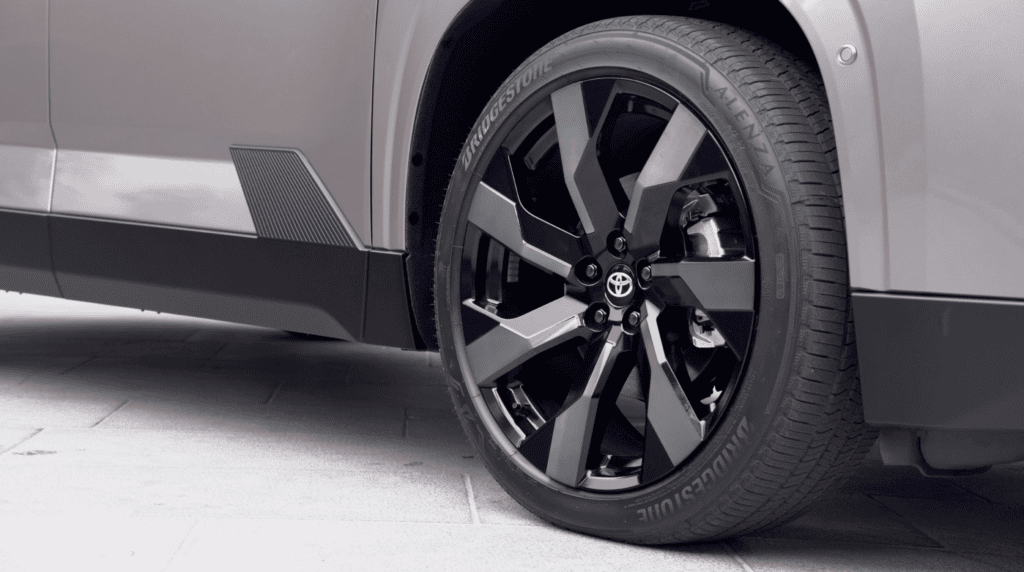
- You don’t need three rows. Larger EVs tend to come with larger ownership costs, price (TBD), tires, energy use, and potentially insurance. So, paying for size you don’t use can be its own form of friction.
- You want the most proven, least lifestyle-changing option right now. In many households, a hybrid still wins on “it just works” simplicity, especially for long-distance travel without planning stops.
What is the long-term significance?
There are two big signals here.
First: Toyota is moving from “testing the waters” to building a full-size family EV with domestic manufacturing. Assembling the 2027 Highlander in Georgetown, Kentucky, and assembling battery modules in North Carolina (plus a supplier partner in the U.S.) is not just a logistics detail. It’s Toyota describing a path to scale: local production, local supply, and a product aimed at mainstream needs rather than early-adopter novelty. Toyota has been steadily building out its battery manufacturing footprint in the U.S., and the North Carolina facility is a key part of that story.
Second: Toyota is leaning into EV features that connect the vehicle to the household, not just the driveway. V2L power is part of that, but so are features like charge scheduling, ECO Charge, and Charge Assist. That’s where EV ownership becomes less about “cars” and more about systems: home energy, grid demand, charging availability, and how much friction you’re willing to accept.
The Highlander nameplate matters, too. This isn’t Toyota launching a strangely named EV experiment and hoping people find it. This is Toyota taking a familiar family vehicle and saying, plainly: the next generation is electric. That’s a cultural shift as much as a product shift.
Toyota says sales are expected to begin in late 2026 and continue into early 2027, with pricing to be announced closer to launch. Until we have final pricing and real-world driving impressions, the smartest way to think about the 2027 Highlander is as a litmus test: can Toyota translate its reputation for low-drama family transportation into the EV era without turning ownership into a hobby?
If the answer is yes, it won’t just help Toyota. It will help normalize the idea that an electric three-row SUV can be boring in the best way: quiet, competent, and easy to live with. And for a lot of buyers, that’s the whole point.