2026 Toyota bZ Woodland: The EV for People Who Don’t Want an EV

The 2026 Toyota bZ Woodland arrives at a curious moment in the American car market. Electric vehicles are no longer novel, but they are not yet normal for many buyers either. That awkward middle ground matters. It is where people stop asking whether EVs are interesting and start asking whether they are useful.
Can they haul dogs, camping gear, and the sort of family chaos that usually destroys the brochure fantasy by Wednesday morning? Can they tow something small, deal with rough weather, and recharge without requiring a degree in modern infrastructure? Toyota appears to have looked at those questions and decided the answer should not be another rolling science project. Instead, the company built something that behaves much more like a proper SUV.
That is what makes the bZ Woodland more important than its name might suggest. The electric market has been full of noise, tribal loyalty, dramatic launch language, and enough digital chest-thumping to power a small country. Toyota has gone in another direction. This vehicle is not trying to be a manifesto. It is trying to be transport. Useful, calm, predictable transport. In today’s market, that might be the cleverest move of all.
Why the bZ Woodland matters now
The timing is not accidental. EV skepticism has not vanished just because manufacturers have improved the hardware. Buyers still worry about cost, convenience, cold-weather behavior, charging access, resale, and the long-term value equation. Toyota knows that. So instead of chasing the loudest possible electric identity, it has built the bZ Woodland around the idea of reducing friction. That means standard all-wheel drive, honest cargo room, useful ground clearance, a real towing number, and charging hardware that fits the direction of the North American market.
The official numbers tell the story plainly enough. The 2026 bZ Woodland delivers 375 horsepower from a dual-motor all-wheel-drive setup, up to 281 miles of EPA-estimated driving range in standard form, and a towing capacity of up to 3,500 pounds. Ground clearance stands at 8.4 inches, which is enough to suggest mild adventure without pretending this is some rock-crawling fantasy machine. Cargo volume is also central to the pitch. Toyota is not selling abstraction here. It is selling utility. School runs. Garden center trips. Dog crates. Wet weekends. Everyday life, just electrified.
You may also be interested in: 2026 Toyota bZ Woodland: Off-Road Soul, All-Electric Heart, and Just Enough Madness
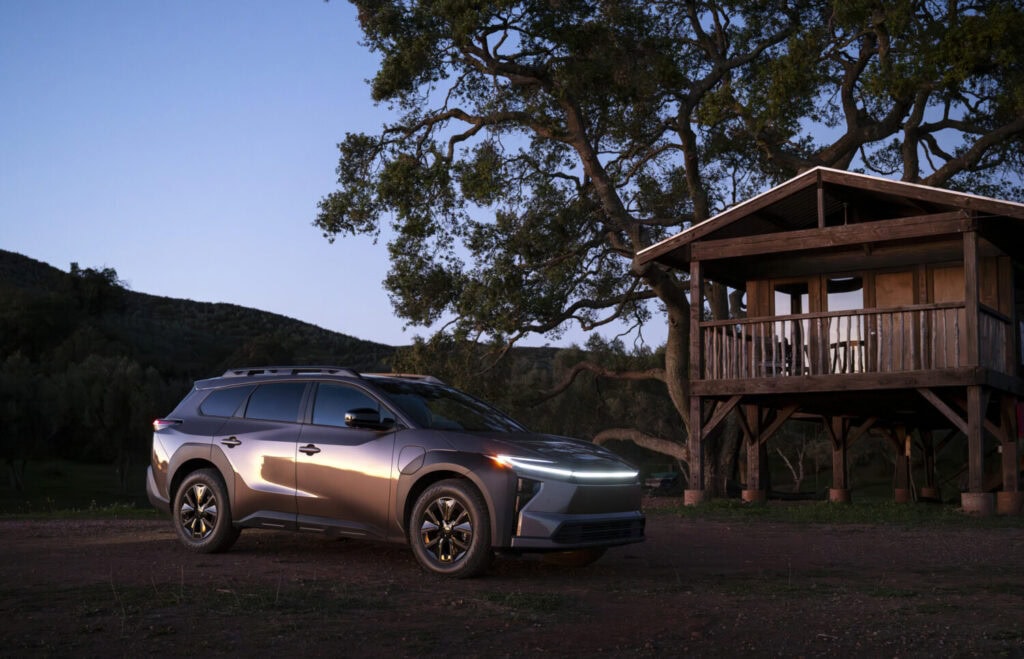
An EV that behaves like an SUV
There is a subtle but important shift happening in the market. Early EVs often sold themselves on futurism. They needed to feel different in order to justify their existence. The next wave has a tougher job. It has to feel normal enough that buyers stop thinking about the powertrain every five minutes. That is where the bZ Woodland makes its case. It behaves like an SUV first and an EV second, which is exactly how many mainstream customers want it.
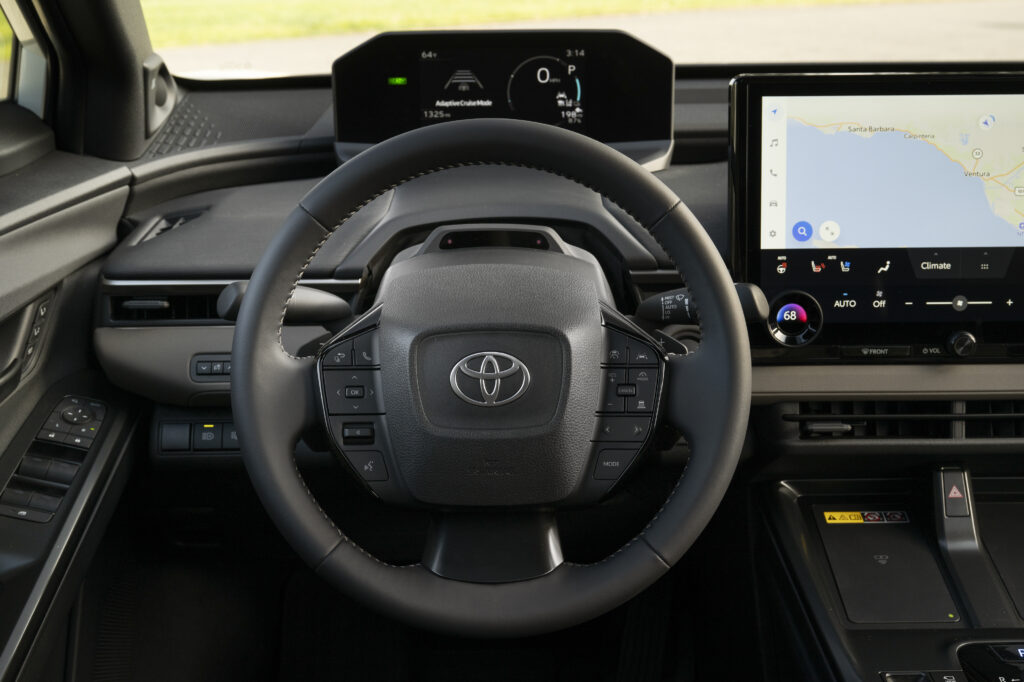
The performance numbers are more than respectable. Toyota says the Woodland can reach 60 mph in 4.4 seconds, which is properly brisk by any sensible standard. But unlike some rivals, the acceleration is not the central point. It is a supporting benefit. What matters more is how the vehicle is configured around regular use. There is standard roof rail capability, respectable cabin room, a 14-inch touchscreen, dual wireless chargers, heated front seats, heated rear outboard seats, USB-C ports, and the sort of interior layout meant to lower stress rather than raise eyebrows.
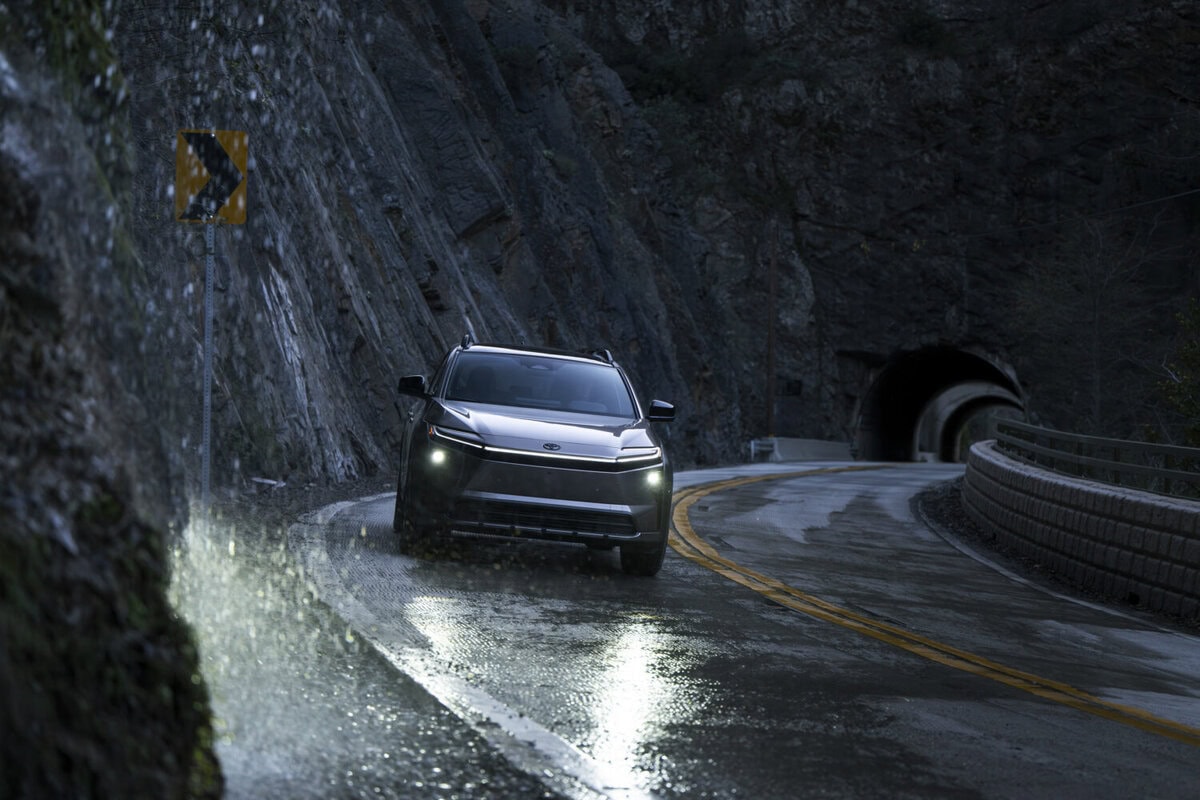
That practical tone extends beneath the skin. The Woodland uses Toyota’s X-Mode with Grip Control to help manage traction at low speed on loose or slippery surfaces. It is not theatre. It is software and motor control used to keep the car settled when the road gets ugly, the boat ramp gets slick, or the weather turns grim. That is a much more believable use case than pretending every owner is headed for Moab before lunch.
You may also be interested in: The 2026 Toyota bZ: More Range, More Power, Less Nonsense
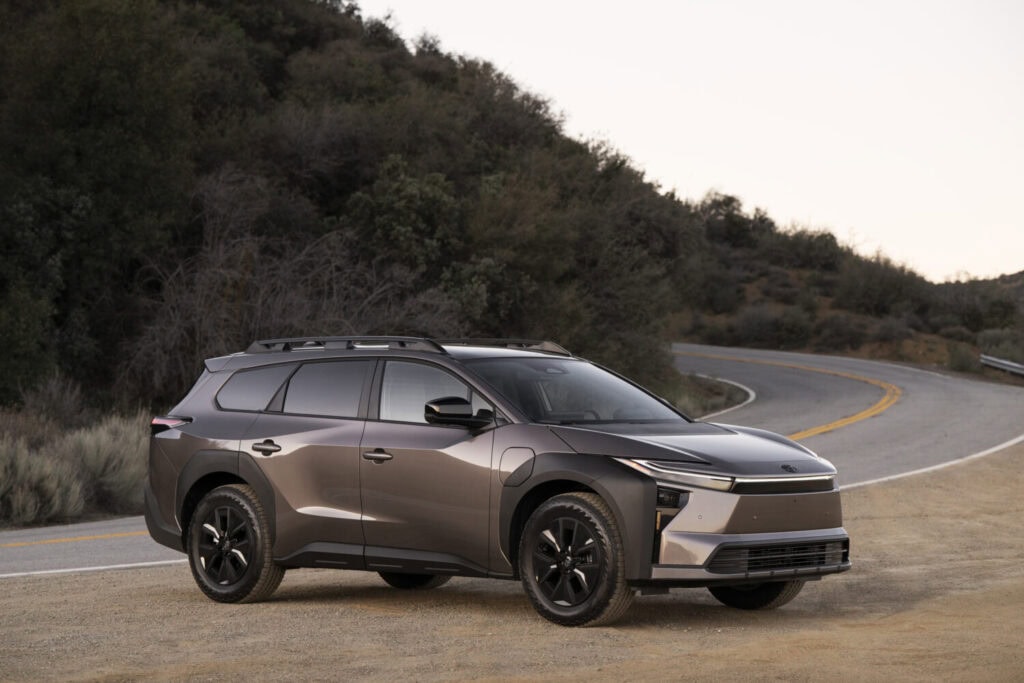
Range is only useful if it fits your week
Toyota quotes up to 281 miles of EPA-estimated range for the bZ Woodland and notes that models fitted with all-terrain tires drop to about 260 miles. That is a meaningful detail because it reflects the sort of honesty buyers deserve. Chunkier rubber adds rolling resistance. The laws of physics remain impressively uninterested in marketing language.
What makes the Woodland interesting is not that it wins every range argument online. It is that the number looks usable in the real world. For many households, that is more than enough to cover commuting, errands, school pickups, and weekend driving without constant charging anxiety. The broader conversation around range still matters, of course, but the Woodland’s figure is not absurdly optimistic or strangely compromised. It lands where a practical family EV probably should.
This is also where Toyota’s restraint starts to look rather intelligent. A great many electric vehicles are designed to impress in a headline. The Woodland seems designed to make ownership less irritating. Those are not the same thing. Buyers who spend more time living with their car than arguing about it on the internet may find Toyota’s priorities refreshingly adult.
You may also be interested in: Toyota C-HR 2026 EV: 287 Miles, 338 HP, Real Cargo

Charging that lowers the anxiety level
Charging remains the psychological barrier that refuses to leave the room. Many buyers are less worried about the vehicle itself than about the ecosystem around it. Toyota addresses that by giving the bZ Woodland a North American Charging System port, aligning it with the charging standard that is rapidly becoming central to the U.S. EV conversation. It also supports DC fast charging with a claimed 10 to 80 percent session in around 30 minutes under ideal conditions.
That ideal-conditions caveat matters because charging is influenced by temperature, battery state, charger output, and vehicle prep. Toyota includes battery preconditioning, which is one of those technical features that actually matters outside the press release. If the pack is at the right temperature, charging tends to be faster and more consistent. If it is not, advertised charging speed becomes an exercise in disappointment. Toyota’s hardware choices are more important than they first appear.
The Woodland will not set a benchmark for charging speed, but it does something arguably more useful. It reduces hassle. The car is engineered to fit the system buyers are most likely to encounter, and that is the sort of decision that can make the ownership experience feel much less experimental.
You may also be interested in: BMW Finally Fixed the Electric Car, The New i3 Proves It
Who should buy one and who should not
The strongest case for the bZ Woodland is with buyers who want an EV without wanting an entirely new lifestyle. If you have been curious about going electric but remain weary of drama, this Toyota is aimed directly at you. It offers standard all-wheel drive, enough clearance for rough weather and the occasional muddy trailhead, enough cargo volume for genuine family use, and enough performance to feel modern without becoming silly.
It also makes sense for people who have practical reasons for liking SUVs in the first place. If you carry pets, recreational gear, or awkward household cargo, the Woodland has the packaging to justify itself. If you tow a small camper, light trailer, or weekend toy, that 3,500-pound tow rating moves it out of novelty territory and into relevance. The packaging is not decorative. It is functional.
Inside, Toyota has wisely avoided overcomplicating the experience. The cabin does not appear determined to punish users for preferring buttons, clarity, and immediate comprehension. There is enough technology to feel current, but not so much that the vehicle begins to resemble a rolling consumer electronics experiment. That may sound faint praise. It is not. For many buyers, it will be the reason they seriously consider the car at all.
On the other hand, not everyone should rush out and buy one. Drivers who regularly travel long distances in areas with poor fast-charging support may still find a hybrid or plug-in hybrid easier to live with. Buyers obsessed with maximum DC charging speed will notice that some competitors do better. And serious off-road enthusiasts will likely want more ground clearance, tougher tires, and a different level of underbody protection. The Woodland is adventurous in the sensible way, not the tattoo-and-winch way.
You may also be interested in: 2027 Toyota Highlander Goes Electric as a Three-Row EV
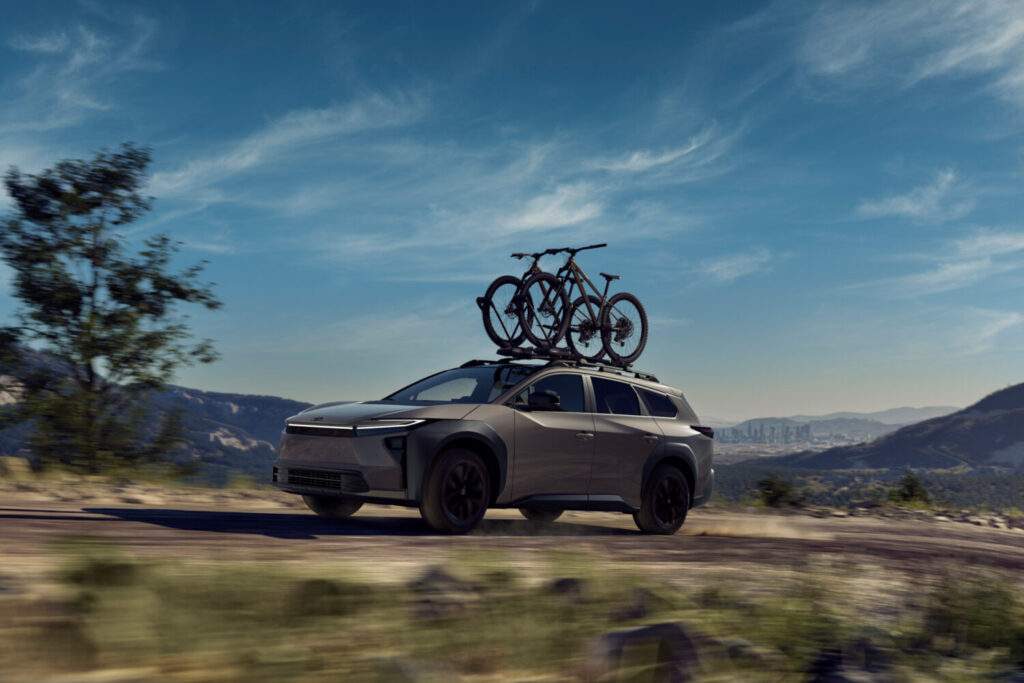
The wider significance for Toyota and the market
The Woodland matters beyond its own sales figures because it reflects a broader shift in electric strategy. The market is moving from novelty toward normalization. That means future winners may not be the loudest brands or the weirdest products. They may be the ones that make electric ownership feel boring in the best possible sense. Predictable. Straightforward. Trustworthy. Familiar.
Toyota has a particular opportunity here because its brand reputation has long been built on exactly those qualities. People do not generally buy Toyotas to start arguments at dinner parties. They buy them because they expect them to work. That expectation, if Toyota can successfully transfer it into the EV era, is extremely valuable. The bZ Woodland feels like an attempt to do precisely that.
Safety also supports the broader appeal. Toyota Safety Sense 3.0 is standard, and the bZ Woodland includes features such as a panoramic view monitor and multi-terrain monitor to assist at low speeds. Buyers trying to understand electric vehicle safety will find that the bZ Woodland does not ask them to trade reassurance for innovation.
The pricing also positions the bZ Woodland as a serious player rather than a halo experiment. Toyota says pricing starts at $45,300, and U.S. dealer arrival is scheduled for March 2026. That puts it right into the heart of the electric family-SUV conversation, where value, packaging, and trust all matter far more than online swagger.
You may also be interested in: Cadillac Vistiq: The Electric Three-Row That Actually Works

Final verdict
The 2026 Toyota bZ Woodland will not win every EV debate, and it is plainly not trying to. It is not the wildest, flashiest, or fastest-charging electric SUV on sale. What it is, however, may be more valuable. It is one of the clearer signs that the EV market is maturing.
Toyota has built an electric SUV that appears to understand the emotional state of the buyer. People are tired of hype. They want answers. They want a vehicle that can fit into an ordinary American life without turning every journey into a discussion about ideology, software updates, or charging strategy. They want enough range, useful traction, real cargo room, straightforward tech, and the confidence that the badge on the nose still means sensible engineering.
That is why the bZ Woodland matters. It does not ask buyers to become believers. It asks only whether they would like a practical SUV that happens to be electric. For a lot of people, that question is finally starting to sound reasonable.