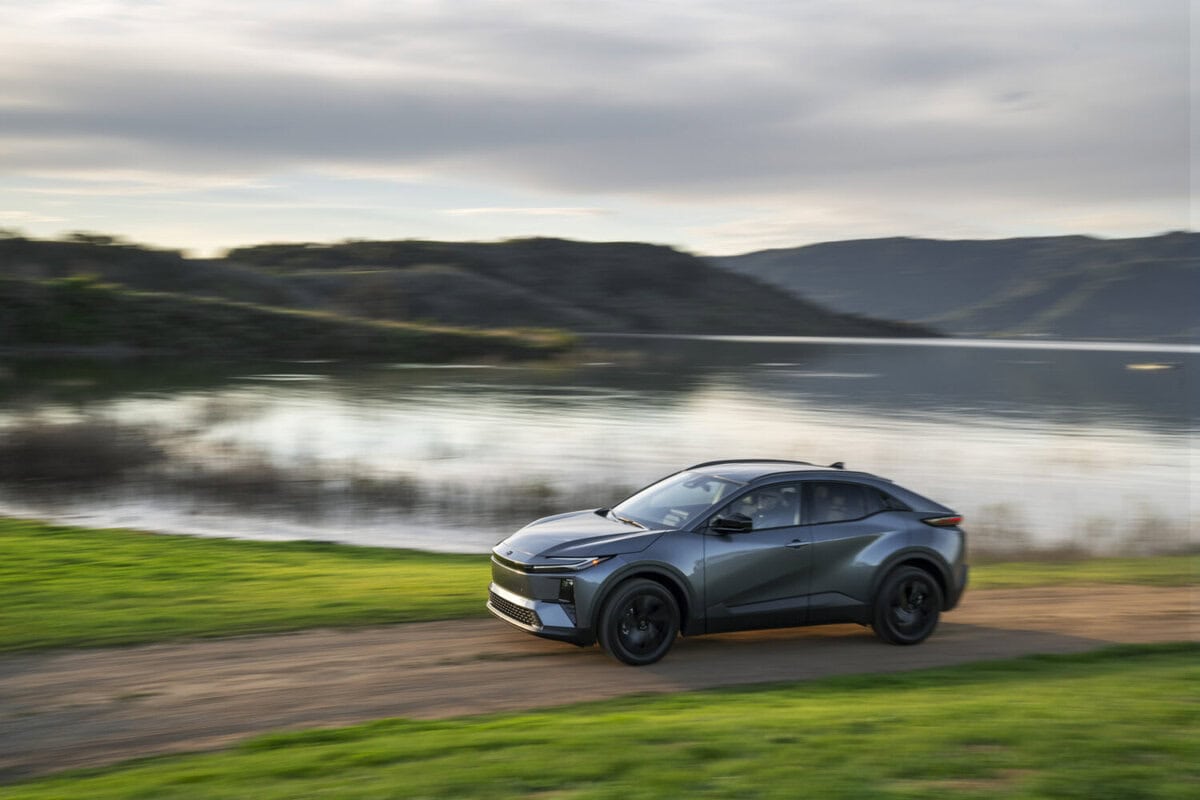
Toyota C-HR 2026 EV: 287 Miles, 338 HP, Real Cargo

The 2026 Toyota C-HR EV offers up to 287 miles of range, standard AWD, and real cargo space, without asking you to change your life.
I have spent years listening to smart, busy people explain why they are still mildly sceptical about EVs. Not because they hate the idea, but because the real world keeps getting in the way. Range anxiety is usually just schedule anxiety. Charging stress is often just “I do not have time for a tech support call.” And some EVs still feel designed for people who never carry anything heavier than a tote bag.
That is why the 2026 Toyota C-HR Battery Electric Vehicle matters. Not because Toyota finally built another EV. The more interesting story is that Toyota built an EV that behaves like a normal person’s car. It is shaped like a coupe for no practical reason at all, but underneath that roofline Toyota has combined useful range, straightforward charging hardware, real cargo room, and a cabin that is designed around everyday routines.
|
Why does this matter right now?
Because February 2026 is a different EV market than it was even a year ago. First, the federal EV tax credit is no longer a current shopping tool. The IRS now states the New Clean Vehicle Credit is not available for vehicles acquired after September 30, 2025, which shifts the decision back to whether the car makes sense on its own, not on a spreadsheet that assumes a credit you cannot claim. IRS
Second, charging standards have consolidated. Toyota fitting the C-HR with a NACS charge port and including a NACS-to-CCS adapter reduces friction. It is the difference between “I can charge here” and “I need to find another station.” The NACS standard is now formalised as SAE J3400, which is why this connector choice is more than a trend. SAE
Then there is the basic EV math. Toyota lists a 74.7-kWh battery pack and an 11-kW onboard AC charger for Level 2 charging. That sounds boring until you are the one paying for time. For DC fast charging, Toyota says 10 to 80 percent can take around 30 minutes under ideal conditions, and the key detail is that this is positioned for normal road-trip stops, not heroic planning. Toyota
Range is up to 287 miles on the SE grade with 18-inch wheels, and 273 miles on the XSE with 20-inch wheels. If you care about maximum range, the smaller wheels are not a downgrade, they are a strategy. And because most Americans drive far less than that in a typical day, the number is less about bragging and more about reducing weekly stress. FHWA
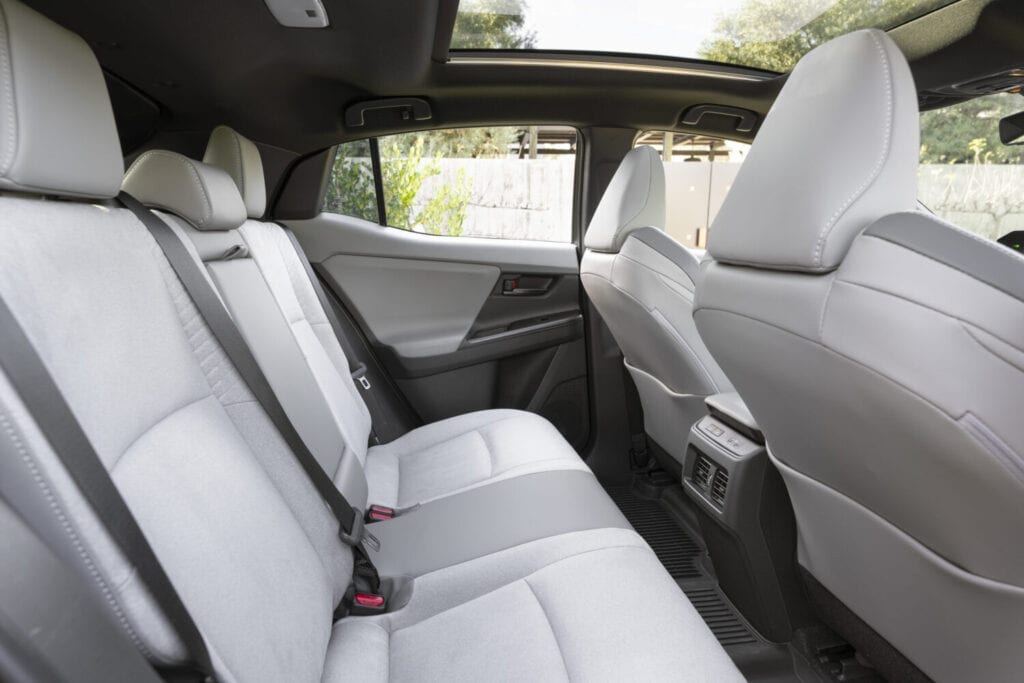
Practicality matters more on an EV because you are already asking buyers to change habits. Toyota quotes 25.3 cubic feet of cargo space behind the rear seats and up to 59.5 cubic feet with the 60/40 seats folded. Add a power liftgate and low-profile roof rails, and it becomes clear Toyota is aiming at daily life, not showroom drama.
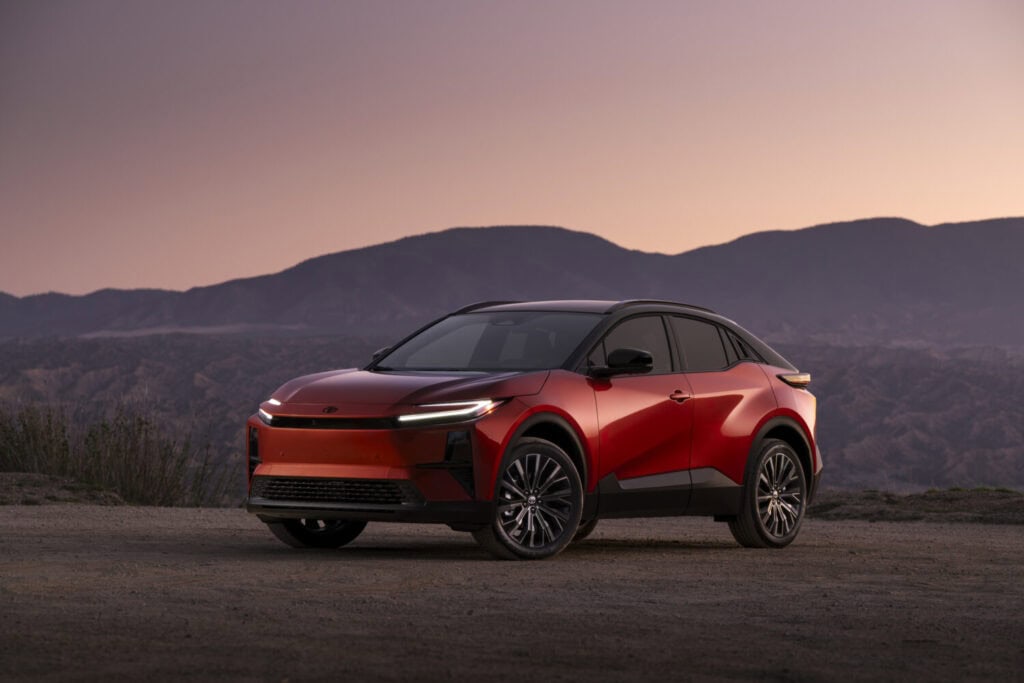
How does it compare to rivals or alternatives?
The compact electric crossover space is properly crowded. The Tesla Model Y remains a benchmark for sales and ecosystem confidence, Hyundai’s Kona Electric has been a sensible efficiency-first choice, and Chevrolet’s Equinox EV has tried to pull pricing closer to mainstream budgets. Toyota is not chasing the loudest headline. It is chasing the easiest week.
The C-HR’s standard dual-motor all-wheel drive and 338 horsepower give it a very specific personality: confident, quick, and unbothered by a full load. Toyota also claims a manufacturer-estimated 0 to 60 mph time of 4.9 seconds, which is quick enough to make merging and passing feel effortless without turning the school run into a performance demonstration.
Where Toyota has a real advantage is the charging hardware decision and its practical flexibility, plus battery preconditioning that Toyota says can activate manually or automatically when routing to a fast charger using navigation. The details and specification framing are outlined on Toyota’s vehicle information page. Specs
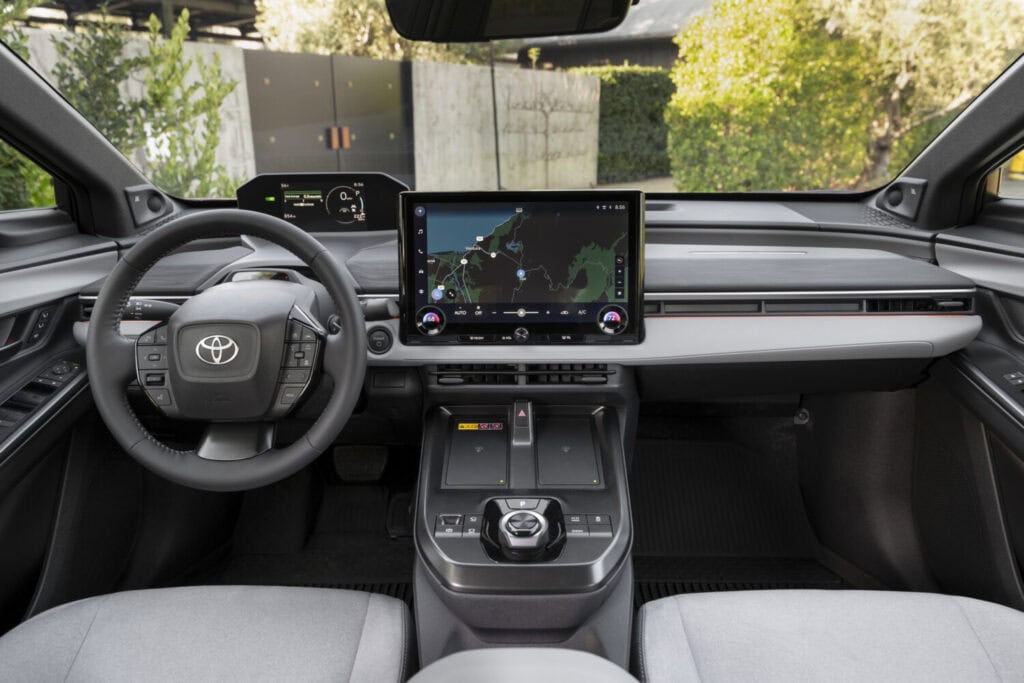
Inside, Toyota’s priorities feel practical rather than performative: a 14-inch touchscreen, dual wireless Qi chargers, and USB-C ports for the back seats. There are also steering-wheel paddles for four levels of regenerative braking so you can choose lighter coasting or stronger regen for stop-and-go traffic and descents.
Safety is standard, with Toyota Safety Sense 3.0 and Safe Exit Alert designed to reduce workload and prevent the expensive kind of learning experience in cities. For broader context on why advanced driver assistance systems matter, IIHS explains the role of these technologies in real-world crash reduction. IIHS
Who is this for and who should skip it?
The 2026 Toyota C-HR EV is for the person who wants an EV to be a car first. If you commute, run errands, carry family or friends, and occasionally take a road trip, this blend makes sense: up to 287 miles of estimated range in the most efficient configuration, quick performance with standard AWD, and cargo space that is genuinely usable.
It is also for people who are tired of complexity. The NACS port plus included adapter, the 11-kW onboard charger, and battery preconditioning are all signals that Toyota has thought about ownership, not just launch-day specifications. If you are tracking how affordability is shifting across the market, our latest look at cheap-car options is worth reading alongside this.
If you are comparing EVs to electrified alternatives in 2026, it helps to understand why more shoppers are choosing electrified without plugging in. Our recent breakdown on hybrids explains that mood shift clearly.
If you want a real-world example of “daily-life features that matter more than hype,” the 2026 Mazda CX-50 story is a useful parallel, because it shows how comfort and usability win decisions. CX-50
If you are the sort of buyer thinking about what the next decade of mobility looks like, including the way software and infrastructure shape vehicle value, our update on Waymo offers useful context.
And if you are watching how legacy brands simplify complexity to reduce buyer friction, that wider market theme shows up everywhere, not just in EVs. Our recent take on the Jeep reset captures that pattern in plain English.
Who should skip the C-HR EV? If you need three rows, this is not your solution. If you need serious towing capability, there is no towing story provided here, so you should not buy this expecting it to behave like a heavy-hauler. And if you are shopping purely around incentives, remember the federal EV tax credit is no longer available for vehicles acquired after September 30, 2025, so the car has to stand on its own merits in February 2026.
What is the long-term significance?
The long-term significance of the 2026 Toyota C-HR EV is not a single number. It is Toyota’s philosophy shift becoming visible. The engineering choices point toward a future where EV adoption is driven less by hype and more by habit: charging standards consolidating, convenience features reducing friction, safety systems reducing workload, and packaging that acknowledges dogs, sports gear, camera bags, and groceries.
And with the federal EV tax credit no longer available for vehicles acquired after September 30, 2025, that shift matters even more. The cars that will win in 2026 are the ones that make sense without a government nudge.
The 2026 Toyota C-HR EV, on paper, looks like Toyota doing real-life engineering. It is fast enough to feel confident, practical enough to feel useful, and thoughtfully equipped enough to make EV ownership feel less like a new hobby. I still think the coupe roof shape is silly. But I can live with silly if the rest of the car is sensible.