Mercedes VLE Makes the Van a Flagship

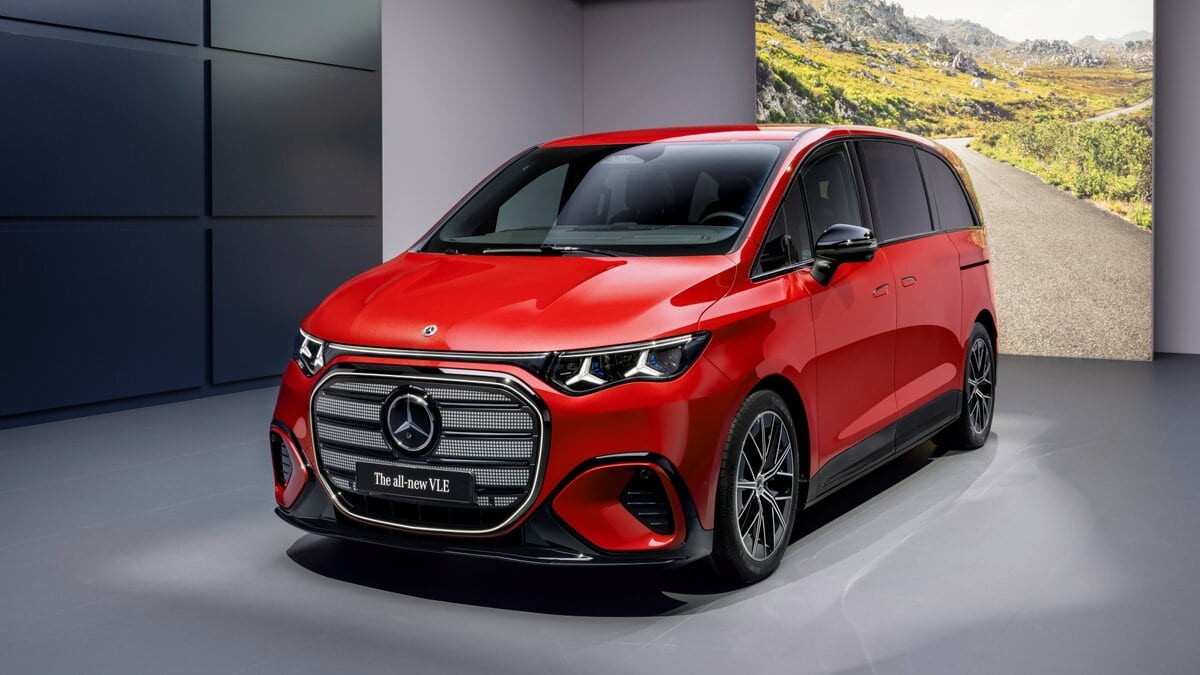
There is something wonderfully subversive about the Mercedes-Benz VLE. In a market obsessed with tall SUVs, exaggerated coupe rooflines, and electric cars that look as if they were designed by committee during a power outage, Mercedes is preparing to make one of its boldest premium statements with a van. Not a work van, not a shuttle with a posh badge, but a full electric people carrier that aims to combine limousine comfort, software-heavy luxury, and real-world family practicality.
The brief matters. Mercedes says the VLE will be the first passenger model on its new van architecture, and it has already used the platform to prove long-distance efficiency in testing from Stuttgart to Rome with only two short charging stops. That is a much more interesting story than another oversized electric SUV with a dramatic press kit and limited imagination.
If the numbers in Mercedes’ early material translate well to production, the VLE could land as one of the most rational luxury EVs in years. The script behind this story points to more than 435 miles of European-calculated range, a usable 115-kWh battery, an 800-volt electrical system, charging at more than 300 kW, and enough interior flexibility to work as family transport, mobile office, entertainment hub, or dog-hauling road-trip machine without any of those uses feeling like an afterthought.
You may also enjoy this: Mercedes VLE Reveal: What to Expect from the Luxury Electric Van
Why does this matter right now?
Because Mercedes is not just launching a new model. It is challenging one of the industry’s laziest assumptions, namely that luxury must arrive in SUV form to be taken seriously in America. The VLE argues that space itself is a premium feature. Easy access is a premium feature. Quietness is a premium feature. Being able to carry people, luggage, dogs, and technology without feeling squeezed is a premium feature. None of that should be controversial, yet the market has behaved for years as though practicality and prestige were awkward relatives who should never be seen together in public.
Mercedes is taking a different route. The VLE is part of a broader top-end van strategy that also includes the future VLS, with the company using the Vision V concept to preview how generous space, a highly digital interior, and chauffeur-grade comfort can coexist in one package. The concept language is deliberately aspirational, but the important point is that Mercedes is treating this segment as a place to debut flagship thinking rather than hand-me-down engineering.
The timing is also sharp. Buyers are increasingly comfortable with EV ownership, but they remain wary of large electric vehicles that are either too compromised in range or too compromised in packaging. The VLE appears designed to answer both concerns at once. A claimed 15-minute stop for roughly 200 miles of added range changes the psychology of family travel. It turns charging from a scheduling problem into something much closer to a coffee break.
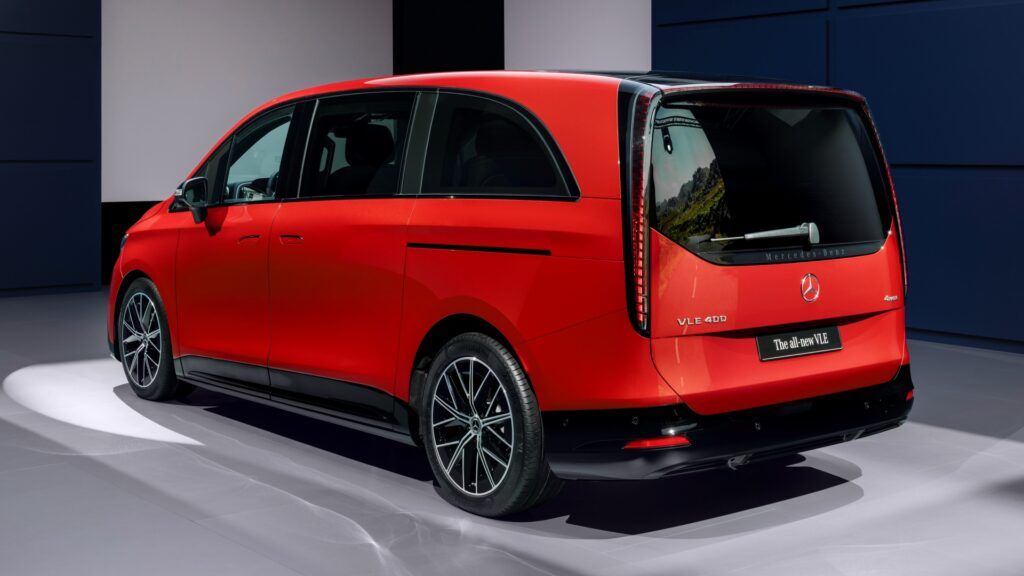
Then there is the engineering tone. A dual-motor VLE 400 4MATIC with about 409 horsepower is more than enough for a vehicle with up to eight seats, but Mercedes is not really selling this as a performance machine. It is selling efficiency, composure, and calm. The battery-to-wheel efficiency claim of 93 percent is telling. So is the disconnect unit that allows the rear motor to decouple when full traction is unnecessary, reducing losses during steady cruising. That is not chest-thumping engineering. That is thoughtful engineering.
The ride and handling story is equally important. Air suspension, intelligent damping, and rear-axle steering of up to seven degrees are the sort of features that matter daily. They make the vehicle easier to place in cities, easier to maneuver in parking structures, and more relaxing on rough roads. Real luxury is not just about acceleration. It is about reducing friction in ordinary use, and the VLE seems built around that principle.
You may also enjoy this: Why Off-Road Trims Dominate SUVs in 2026
How does it compare to rivals or alternatives?
That is where the VLE becomes especially interesting, because in the United States there is almost no direct rival that matches its exact brief. Traditional minivans remain brilliant at family duty. A Toyota Sienna still makes enormous sense. A Chrysler Pacifica remains one of the smartest interior packaging tools on sale. But these are mainstream vehicles, not premium electric flagships. Their value lies in competence and convenience, not in redefining what upper-end electric travel can look like.
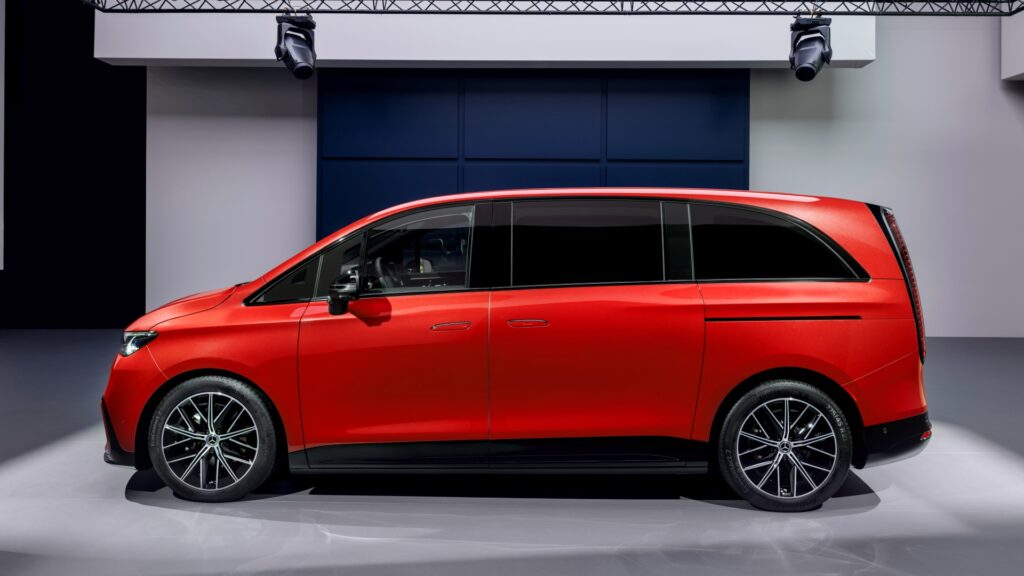
Large luxury SUVs fill the emotional role the VLE is now trying to capture. Think Cadillac Escalade, Lincoln Navigator, BMW X7, or Mercedes-Benz GLS. They deliver presence and prestige, but they also bring height, mass, and compromises in entry, third-row access, and true cabin flexibility. SUVs often look more glamorous from the outside than they feel useful from the inside. The VLE may not carry the same bluff-road visual drama, but it answers with sliding-door practicality, lower floor convenience, and a cabin that appears designed around people rather than posture.
The electric comparison is even more revealing. The Volkswagen ID. Buzz is the closest thing to an EV people mover on sale here, but it leans into charm, nostalgia, and lifestyle flair. The Mercedes approach is more grown-up and more ambitious. Less beach bungalow, more airport lounge. If the VLE delivers the silent running, premium isolation, and integrated digital environment promised in early material, it will occupy a space the ID. Buzz was never meant to chase.
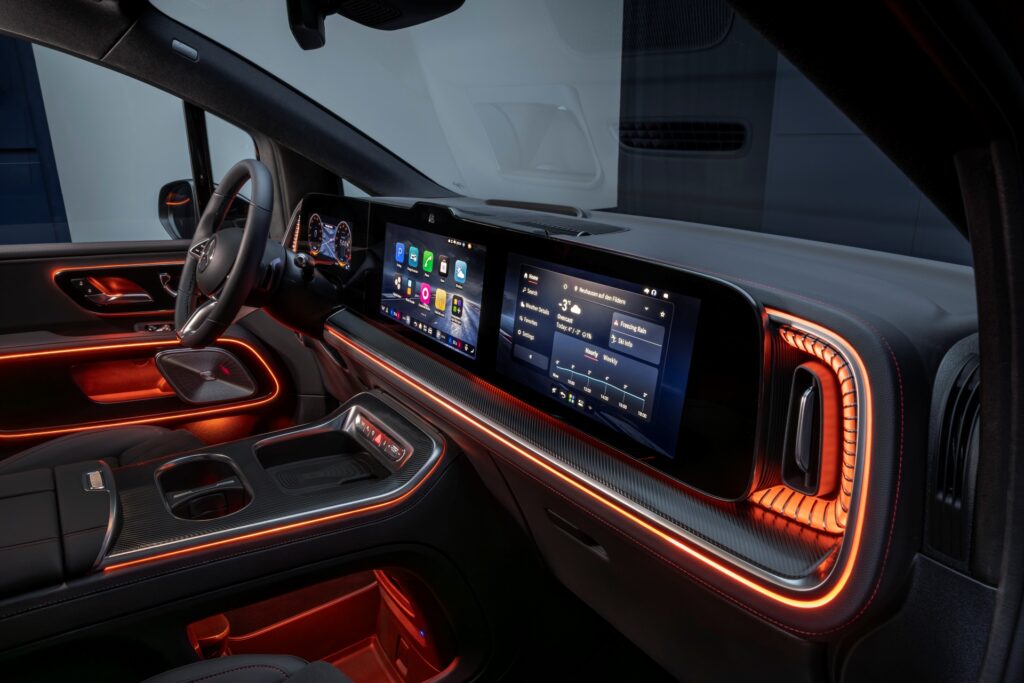
That premium ambition shows up in the cabin. A 31.3-inch 8K rear display, split-screen functionality, video-call capability, gaming support, and a camera for rear occupants turn the second and third rows into more than a passive passenger zone. Up front, the MBUX Superscreen and augmented head-up display continue the “eyes forward, information where it matters” approach. This is exactly the sort of software-led luxury that Mercedes wants as part of its future identity, and the architecture behind it sits within the company’s broader MB.OS strategy.
Charging support also helps differentiate the package. Mercedes has been expanding its integrated public-charging ecosystem, and the VLE script references more than 2.7 million public charge points and up-front pricing visibility before a session begins. For a luxury buyer, that kind of clarity matters. The fewer surprises between departure and arrival, the better the ownership experience.
You may also enjoy this: Honda Passport and Acura Integra Type S Head to Japan from US
Who is this for and who should skip it?
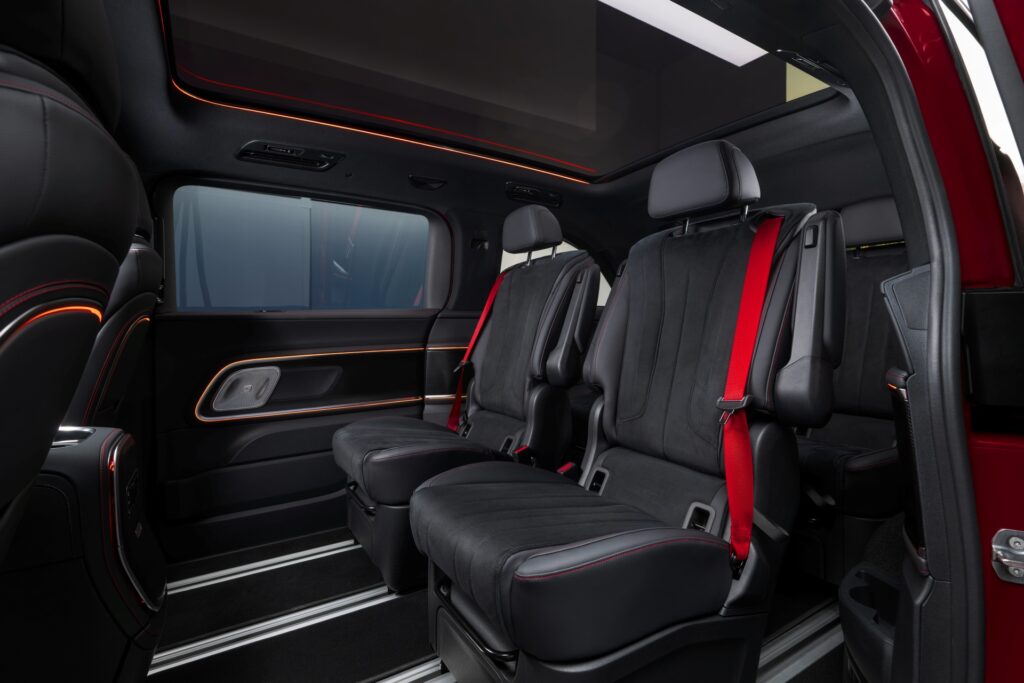
The obvious VLE customer is someone with a full life and no patience for false trade-offs. Big families fit the brief. So do buyers with dogs, sports gear, airport runs, grandparents, or the sort of weekly calendar that turns a vehicle into shared infrastructure. The VLE also makes sense for executive shuttle duty, boutique hospitality transport, and anyone who wants a cabin that can switch between lounge, office, and family room without needing three separate vehicles.
It also suits buyers who have moved past the need for their vehicle to pretend it climbs mountains every Tuesday. There is a quiet maturity to this idea. Instead of choosing a giant SUV to signal possibility, the VLE chooses actual usefulness and wraps it in real luxury. The remote seat reconfiguration, multiple seating layouts, removable “Roll-and-Go” seats, premium audio, and screen-heavy rear compartment all suggest that Mercedes understands how different customers use space across a normal week.
That said, not everyone should rush toward it. If you rarely carry more than one passenger, do not need sliding doors, cannot charge at home, or simply dislike the shape of a van on principle, the VLE is not going to convert you through force of software. Nor should it. Some buyers will always prefer the commanding seating position and image of an SUV. Others will want something smaller, cheaper, or less digitally saturated. Sensible people are allowed to disagree.
The bigger challenge may be cultural. Europe is far more accepting of premium MPVs and chauffeur-style vans than the United States has traditionally been. Mercedes clearly believes that resistance is fading, especially if the vehicle in question is quiet, fast-charging, highly connected, and properly luxurious. The start of pre-series assembly in Spain suggests the company is well past the dabbling phase and serious about production readiness. Mercedes detailed that factory step in its Vitoria update.
You may also enjoy this: How Toyota Builds The Perfect Car For Real Life
What is the long-term significance?
The VLE matters because it may change the industry’s definition of a flagship. For decades, premium hierarchy has been easy to decode. The top car was the big sedan. Then the big SUV complicated the picture. Now Mercedes is suggesting that in the electric age, the most sophisticated answer may be the vehicle that best handles modern life. That means fast charging, flexible packaging, updateable software, quiet distance capability, and energy intelligence, not just leather thickness and horsepower bragging rights.
That is a significant strategic shift. Bidirectional charging alone hints at a broader future where luxury vehicles are not merely transport devices but energy assets. If the VLE can genuinely support vehicle-to-home or vehicle-to-grid functions with the right hardware, it becomes useful even when parked. That sort of practicality does more to justify an expensive EV than a few extra tenths in a 0-to-60 sprint.
It also sends a message to rivals. If Mercedes succeeds here, expect others to follow. The VLE would prove that premium buyers will embrace a new form factor when the total experience is strong enough. It would also reinforce the idea that packaging elegance and software intelligence are becoming more important than genre loyalty. In other words, the next luxury battleground may not be sedan versus SUV. It may be which vehicle understands real life best.
There is a final point worth making. Luxury has spent too many years pretending that usefulness is slightly embarrassing. The VLE turns that idea on its head. Space is luxurious. Silence is luxurious. Easy boarding is luxurious. Rear-seat entertainment that actually works is luxurious. A road-trip stop that restores meaningful range in 15 minutes is luxurious. So is a vehicle that can carry eight without making any of them feel like an afterthought.
Mercedes did not simply build an expensive van. It appears to have built a serious argument about where top-end mobility is headed next. And for once, the sensible answer may also be the sophisticated one.
You may also enjoy this: The Ice-Cold Reality of the 544-HP Polestar 4