Audi Q5 dog-friendly SUV: a real-world dog test

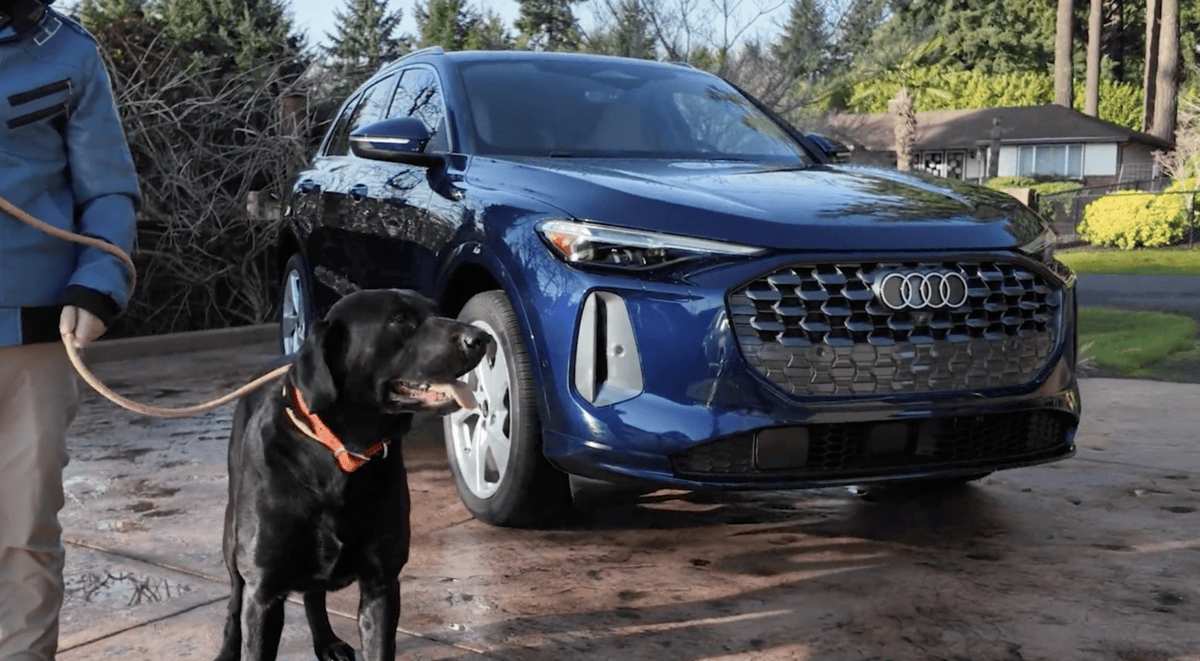
This started as a quick rainy run to my parents’ house. Then two muddy dogs jumped into a light interior, and the Q5 SUV had to prove itself.
I didn’t plan to review the Audi Q5 as a “dog vehicle.” I was doing something normal—heading over to my parents’ place behind my house—when the weather and the dogs turned it into a stress test.
It was still raining. The ground was wet from the night before. The dogs were already tense, the kind of restless energy you get when they’ve been left alone too long and they’ve decided your baseboards are an acceptable coping mechanism.
Then they jumped into the back of the Q5, and I remembered the detail that changes your heart rate as a dog owner:
This one had a white interior.
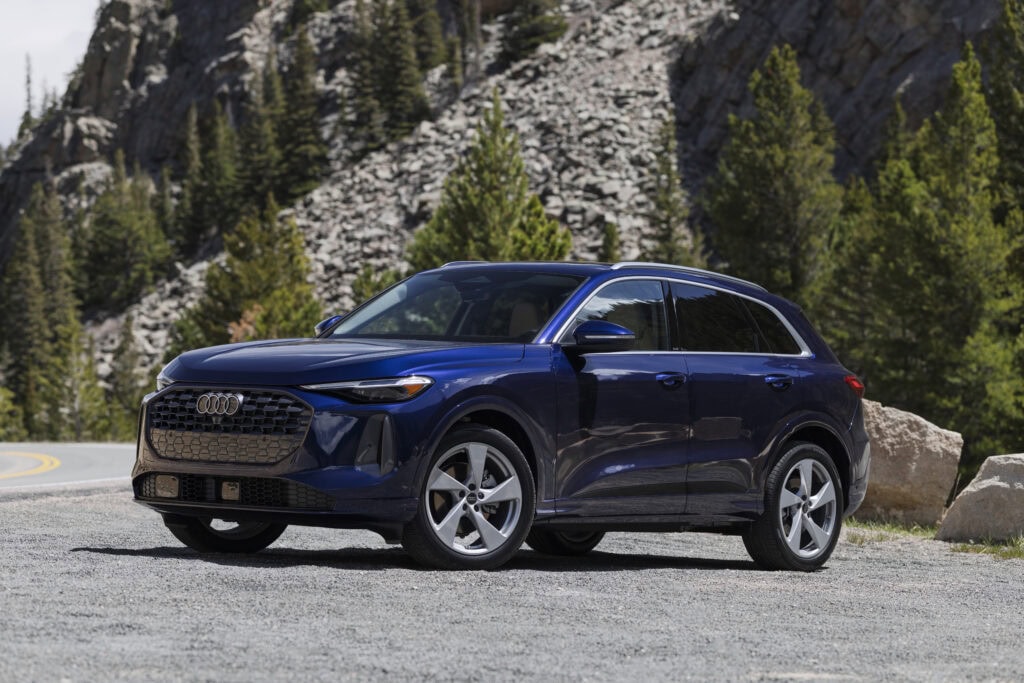
That’s when the drive stopped being about “cargo volume” and “rear seat legroom” and started being about reality: muddy paws, quick loading, whether the surfaces absorb grime, whether the dog slides under braking, and whether the cabin is calm enough to keep an already-stressed animal from escalating.
None of this is theoretical. If you live with dogs, you know the difference between a vehicle that photographs well and a vehicle that survives. And if you live with big dogs, you learn even faster.
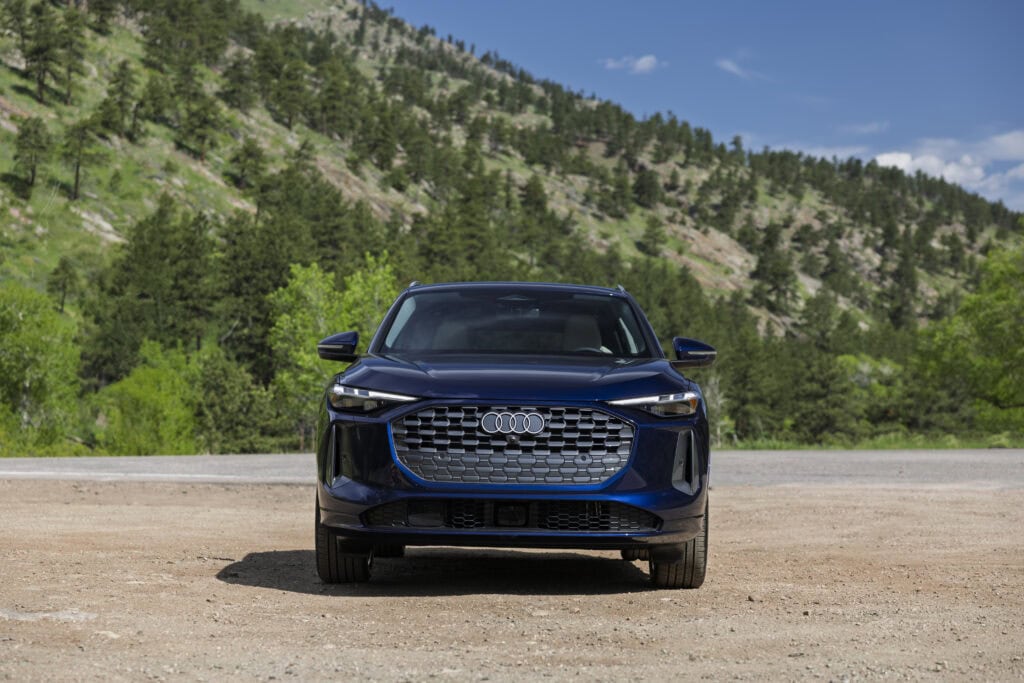
For context, Audi positions the Q5 as the everyday luxury SUV—an all-rounder meant to handle normal life, not just special occasions. You can see that intent in how the current model is presented by Audi of America’s Q5 overview. :contentReference[oaicite:0]{index=0}
But “normal life” only counts if it includes the messiest passengers you’ve got. Mine happen to have fur.
And if you want one more grounding number before we get into the mud: the 2026 Audi Q5 starts at $52,800 according to Audi’s own model page. That matters because this isn’t a cheap beater you shrug at. If a vehicle costs real money, it should be able to handle real life. :contentReference[oaicite:1]{index=1}
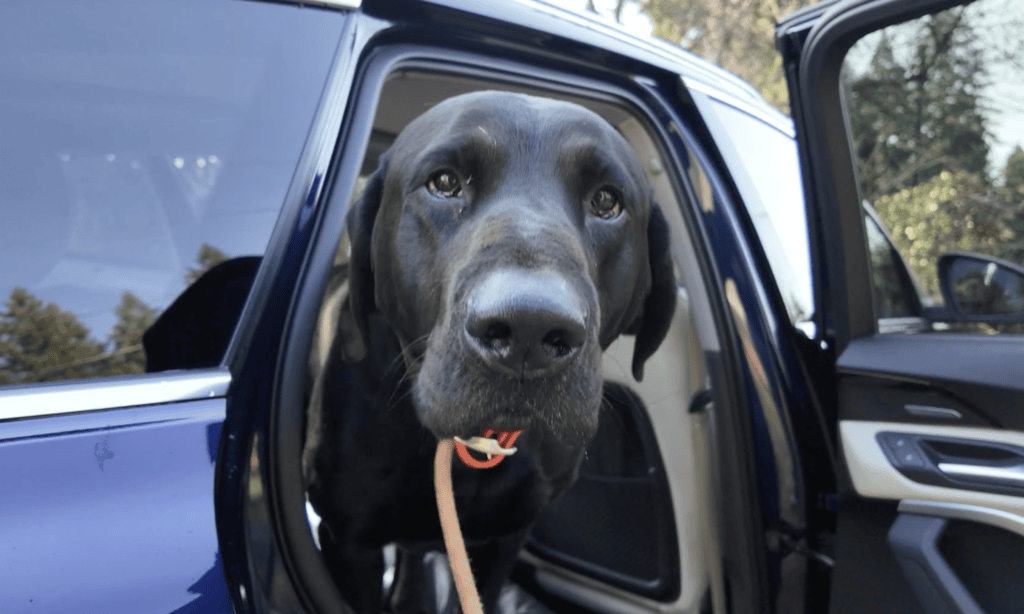
In this story, the dog doing most of the auditing is Bill—a 134-pound American black Labrador. He’s tall, long, and immensely strong. Strangers ask if he’s a Great Dane mix. He isn’t. He’s just a very serious Labrador with very serious opinions.
Small dogs can “forgive” awkward design because you can lift them and reposition them. Big dogs don’t. They expose bad access, poor stability, slippery surfaces, and cramped openings immediately.
If Bill is comfortable, the vehicle is usually family-friendly too. It’s the same logic, just without the snacks and the iPad.
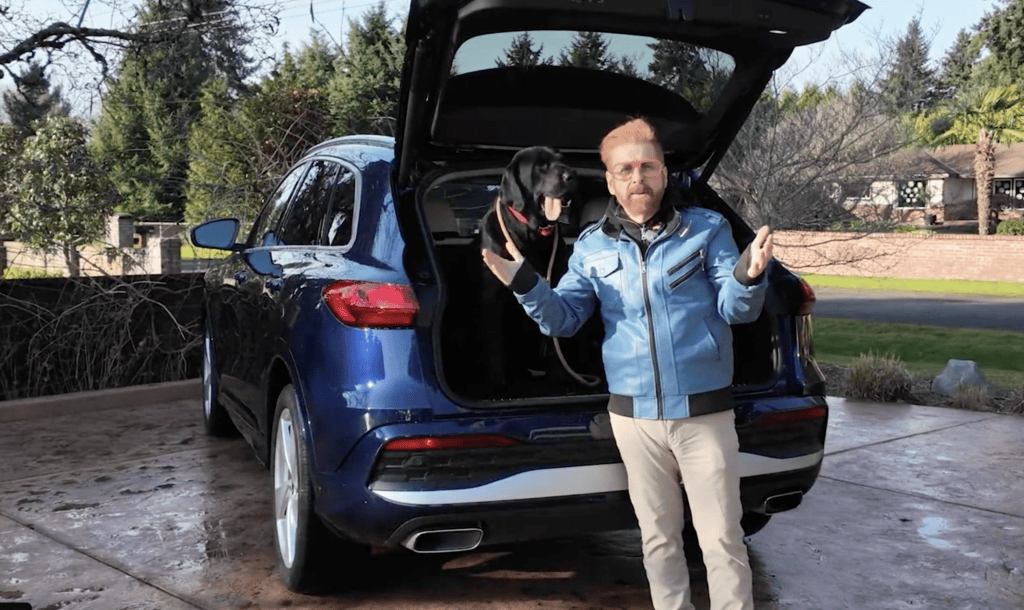
So I opened the rear of the Q5 and looked for dog-owner details first—things most reviews mention only in passing.
Why does this matter right now?
Because more people are buying SUVs for daily life, not for image. And daily life has become more complicated: more errands, more time pressure, more stress, and—quietly—more people treating dogs as full-time passengers instead of occasional cargo.
That changes what “good design” means. A wide cargo opening isn’t just convenience; it’s the difference between a smooth load-in and a wrestling match in the rain. A calm ride isn’t just “refinement”; it’s what keeps a dog from sliding forward under braking and panicking. Materials aren’t just “premium”; they determine whether muddy paw prints wipe off or permanently settle in.
It also matters because people are keeping vehicles longer. When ownership stretches, durability becomes the real luxury. You’re not buying a vibe. You’re buying the thing you’ll live inside when life is messy and you’re in a hurry.
One more subtle point: pet travel safety is getting more attention, and for good reason. A loose dog in a moving car can become a dangerous projectile in a sudden stop or crash. That’s not drama; it’s physics. Organizations like AAA have been blunt about using crates or harnesses and treating restraint as a safety issue, not just a “distraction” issue. :contentReference[oaicite:2]{index=2}
In other words: if you’re shopping now, you’re not just deciding what you like. You’re deciding what your dog can safely and calmly live with for years.
And that’s where the Q5’s basic design started to look quietly smart.
1) Ingress and egress: the opening tells the truth. When you load a big dog, the opening shape matters more than the spec-sheet volume. The Q5’s rear access is straightforward: wide enough that Bill didn’t have to twist or solve a geometry problem, and shaped in a way that let him step in rather than scramble in.
2) Flat utility matters more than “cargo numbers.” Audi’s own press materials talk about the Q5 as an all-rounder and highlight how much space opens up with the rear seats down. The Audi newsroom notes storage volume up to 1,473 liters with the rear seats folded (depending on model variant). That’s a useful data point, but the dog-owner takeaway is simpler: the fold-down functionality gives you a more continuous, usable space for an animal to settle. :contentReference[oaicite:3]{index=3}
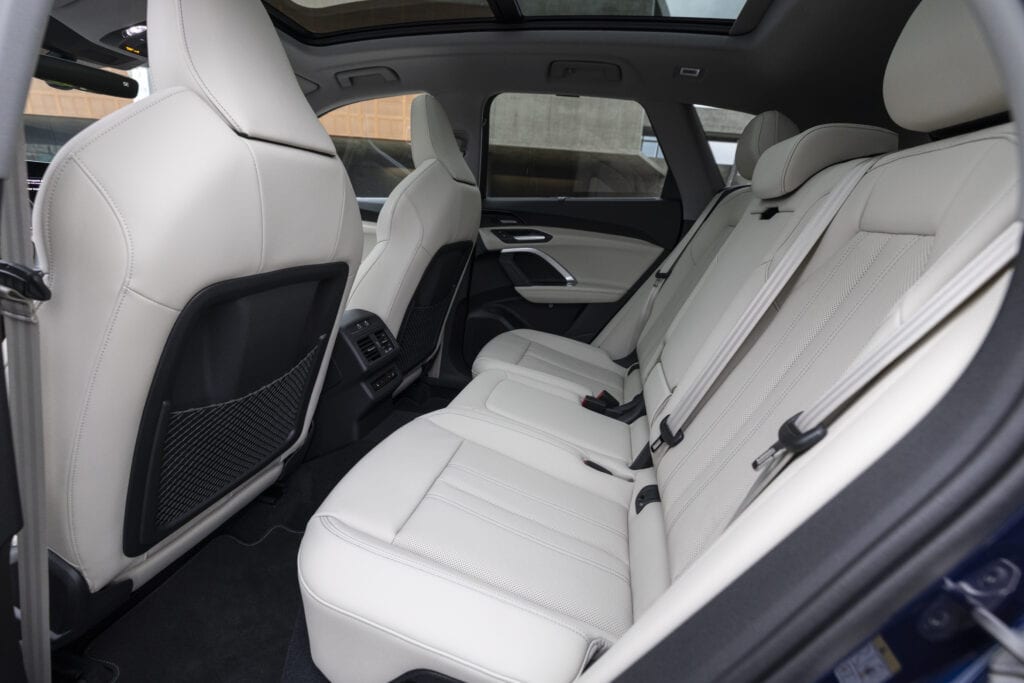
3) Anchor points and secure setups: dog-friendly is safety-friendly. I look for places to secure gear and manage restraints because I don’t want a dog sliding forward under braking. This is the moment where it’s worth being precise: child-seat anchor systems (LATCH) are designed for child restraints, and official guidance lives with agencies like NHTSA. The lesson isn’t “clip your dog anywhere.” The lesson is that the best practice is to use pet restraints built and rated for vehicle use, installed the way the manufacturer intends. :contentReference[oaicite:4]{index=4}
That’s also why I like pointing people to independent certification, not marketing claims. The Center for Pet Safety lists crash test certified harnesses and explains what has actually passed testing. Even if your dog is too large for some harness options, the bigger point stands: restraint should be chosen like safety equipment, not like an accessory. :contentReference[oaicite:5]{index=5}
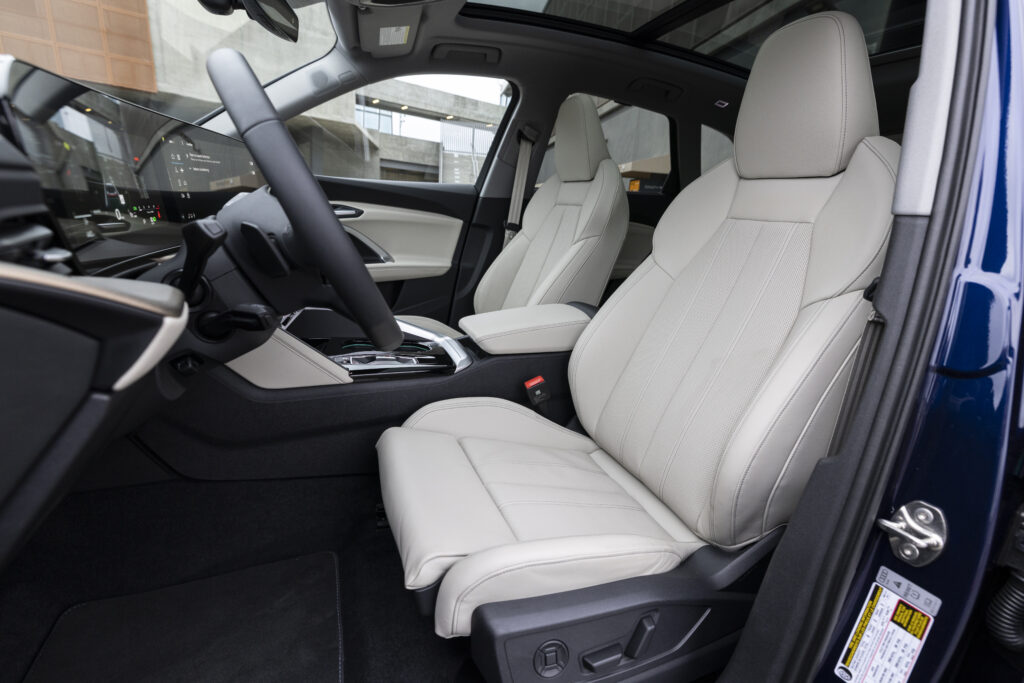
4) The white interior moment: materials either absorb chaos or resist it. I’m not going to pretend white interiors make sense for most dog households. They don’t. They’re a lifestyle choice, and dogs are not a lifestyle choice—they’re a commitment to mess.
But the Q5’s surfaces behaved the way quality leather and well-finished materials should: mud and moisture sat on top rather than immediately soaking in. That made the difference between panic and a quick wipe-down. This is also where trim selection matters. The same model can feel radically different depending on materials, and “dog-friendly” often comes down to surface behavior more than anything else.
5) Ride quality and cabin calm: the comfort feature nobody calls “dog-friendly.” Here’s where the Q5 surprised me in a quiet way. Bill didn’t slide around. Under braking, he stayed planted. In corners, he didn’t brace like he was on a boat. That tells you the vehicle is composed, and it tells you the surfaces and body motion aren’t working against a large passenger who’s trying to stay stable.
Cabin quiet also matters. Dogs don’t understand traffic noise, sirens, or people shouting outside; they just feel the intensity. A calmer cabin can reduce stress, and reduced stress tends to mean a safer, more settled animal.
Some of this is simply what happens when an SUV is well engineered as an everyday machine. Audi itself frames the Q5 exactly that way in its communications—an everyday all-rounder rather than a niche product. :contentReference[oaicite:6]{index=6}
If you want a similar “design under pressure” lens, I’d point you to a few recent pieces from Test Miles that look at how vehicles succeed (or fail) when they meet real-world conditions: The New S-Class Is Mercedes’ Answer to Tesla’s Hype, Maserati Drives $200000 Supercars on St. Moritz Ice, That New Car Is $6,400 More Expensive. Here’s Why., The Winners and Losers of 2025: What Americans Really Bought, and From Formula One to Family Driveways: Why GM’s Global Racing Bet Matters. :contentReference[oaicite:7]{index=7}
(Those aren’t “dog articles,” but they’re all about the same idea: vehicles have to perform under lived conditions, not showroom conditions.)
How does it compare to rivals or alternatives?
It’s worth being honest here: if your only priority is dog utility at the lowest possible cost, there are alternatives that may be simpler and, in some cases, more practical.
A wagon-like vehicle with a lower load floor can be easier for older dogs or dogs with joint issues, because the step-in height is the whole battle. Some mainstream SUVs also lean into tougher, wipe-clean cabin materials that are less precious by design, which can be a relief when you’re living in rain and mud for half the year.
Premium rivals like the :contentReference[oaicite:8]{index=8} XC60, :contentReference[oaicite:9]{index=9} X3, and :contentReference[oaicite:10]{index=10} GLC can absolutely be made dog-friendly—especially with the right accessories and the right trim materials—but they won’t all feel the same in day-to-day dog use. Some will have shapes that dogs find less stable. Some will have surfaces that show wear faster. Some will feel “busy” in motion in a way that makes an anxious dog less settled.
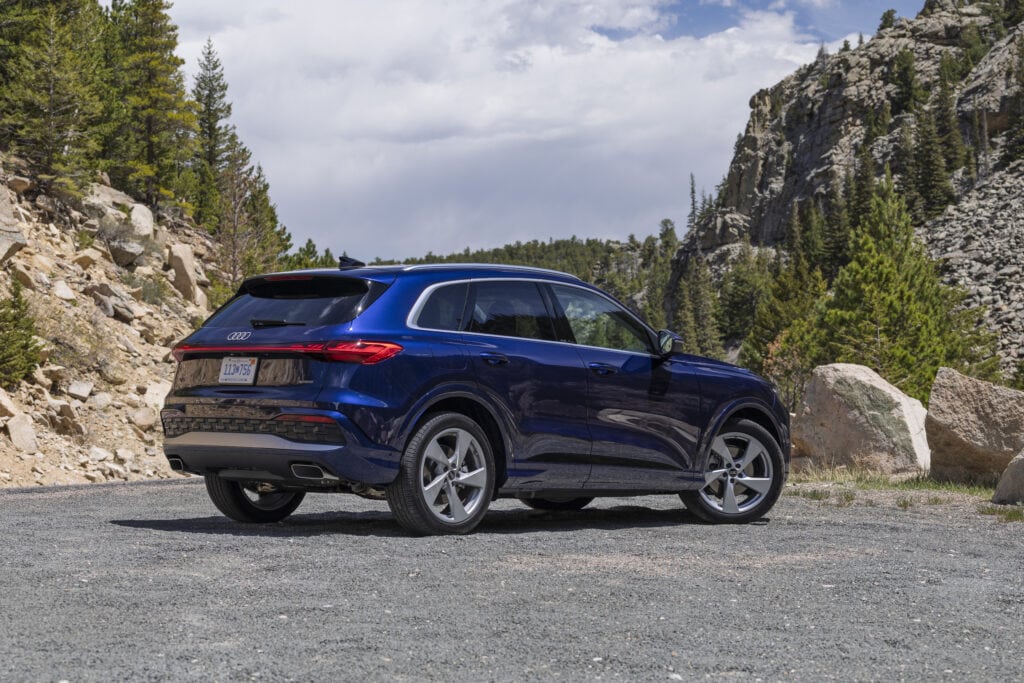
The Q5’s strength, based on this muddy, unplanned test, is balance. It doesn’t require you to fight the opening. It offers a usable, flatter space when you need it. It behaves calmly enough that a big dog isn’t constantly correcting his posture under braking and cornering. And its interior surfaces, at least in this experience, didn’t instantly surrender to the weather.
That doesn’t mean it’s the only good option. It means it’s one of the few that feels like it can be premium and durable at the same time.
Who is this for and who should skip it?
This is for:
- People with medium or large dogs who ride along regularly, not occasionally.
- Drivers who want a quiet, stable vehicle because their dog is sensitive or easily stressed.
- Families who need one SUV that can handle errands, trips, and messy weeks without feeling fragile.
- Dog owners who have learned that “nice interior” means nothing if it isn’t wipeable and durable.
You should skip it if:
- Your dog needs the lowest possible step-in height and struggles to climb (in that case, a lower-loading alternative may simply be kinder).
- You want maximum interior space per dollar and luxury refinement isn’t part of the mission.
- You prefer openly rugged interiors—rubberized floors, hard-wearing plastics, “hose it out” honesty—over premium finishing.
What is the long-term significance?
The longer I do this, the more I think “dog-friendly” is just a practical way of saying “well designed.” Dogs don’t care about branding. They care about physics and surfaces.
Can they get in without fear? Can they settle without sliding? Can they ride without being overwhelmed by noise? Can the interior survive what they naturally bring into your life?
Vehicles that answer those questions tend to age well for families too, because the same design traits that help a big dog—easy access, stable motion, usable floor space, wipeable materials, calm cabins—also help kids, groceries, wet shoes, and hectic schedules.
The Audi Q5 didn’t “try” to be a dog vehicle in my story. It simply behaved like an everyday SUV that had been engineered with real use in mind. Audi’s own positioning of the Q5 as an everyday all-rounder is consistent with that outcome. :contentReference[oaicite:11]{index=11}
And that’s the best compliment I can give it: it didn’t make the day harder. It made the day calmer. When you’re living with dogs who can stress out when left alone—and when it’s raining and the paws are muddy—that calm is the feature you actually feel. ::contentReference[oaicite:12]{index=12}