Why the 603-HP Mercedes-AMG GLS 63 Still Matters

The 2027 Mercedes-AMG GLS 63 combines a 603-horsepower V8, 3-row luxury, and advanced chassis technology into one absurdly capable full-size performance SUV.
Why This SUV Exists
The 2027 Mercedes-AMG GLS 63 is the kind of vehicle that makes a reasonable person pause before asking the obvious question: why does this exist? It has three rows, S-Class-level luxury ambition, all-wheel drive, a 603-horsepower V8, and enough engineering complexity to make a sensible family crossover look like a garden shed. On paper, it sounds unnecessary. In practice, that may be exactly the point.
This is not a vehicle built for people who merely need transportation. It is for drivers who want space, speed, comfort, presence, and mechanical character in one machine without apologizing for any of it. The Mercedes-AMG GLS 63 sits in that rare corner of the luxury SUV world where practicality and absurdity are not enemies. They are co-conspirators.
At a time when many performance vehicles are being quietly reshaped by electrification, downsizing, and software, the AMG GLS 63 still puts a serious V8 at the center of the experience. It does use mild-hybrid assistance, but not as a substitute for character. A hybrid vehicle uses electric assistance alongside an internal combustion engine, and in this case the electric support is there to sharpen response, smooth low-speed driving, and fill in the gaps. The heart of the thing is still very much combustion.
You may also enjoy this: New Mercedes-Benz GLS Review: S-Class Luxury SUV Refined
The V8 Is the Story
The headline number is 603 horsepower, backed by 627 pound-feet of torque. Those figures are more than enough to make a two-row performance SUV feel outrageous. In a full-size, three-row luxury SUV, they become something else entirely. This is not about merely being quick for its size. It is about making size feel temporarily negotiable.
The 4.0-liter AMG V8 biturbo has been extensively reworked for this application. The flat-plane crankshaft is the detail that will matter most to enthusiasts because it changes the way the engine responds. A flat-plane crank typically allows a sharper, more immediate character, and in a large AMG SUV, that matters. Without that edge, a heavy luxury SUV can feel like it is merely using brute force. With it, the engine should feel more awake, more precise, and more eager to climb through the revs.
AMG also revised the breathing side of the engine, including the intake and exhaust paths, fuel injection, turbocharger housing, and camshaft strategy. These changes are not just engineering trivia. They are the difference between an engine that feels like a big hammer and one that feels like a properly developed performance tool. In a vehicle this large, response matters as much as raw output.
The mild-hybrid system adds another layer. The integrated starter-generator contributes 23 horsepower and 151 pound-feet of torque at lower engine speeds, operating through a 48-volt electrical system. It is not designed to make the GLS 63 feel like an electric vehicle. It is designed to keep the V8 from ever feeling lazy. That matters because performance in a full-size SUV is not just about peak output. It is about how quickly the vehicle responds when the driver asks for power.
Speed That Feels Slightly Ridiculous
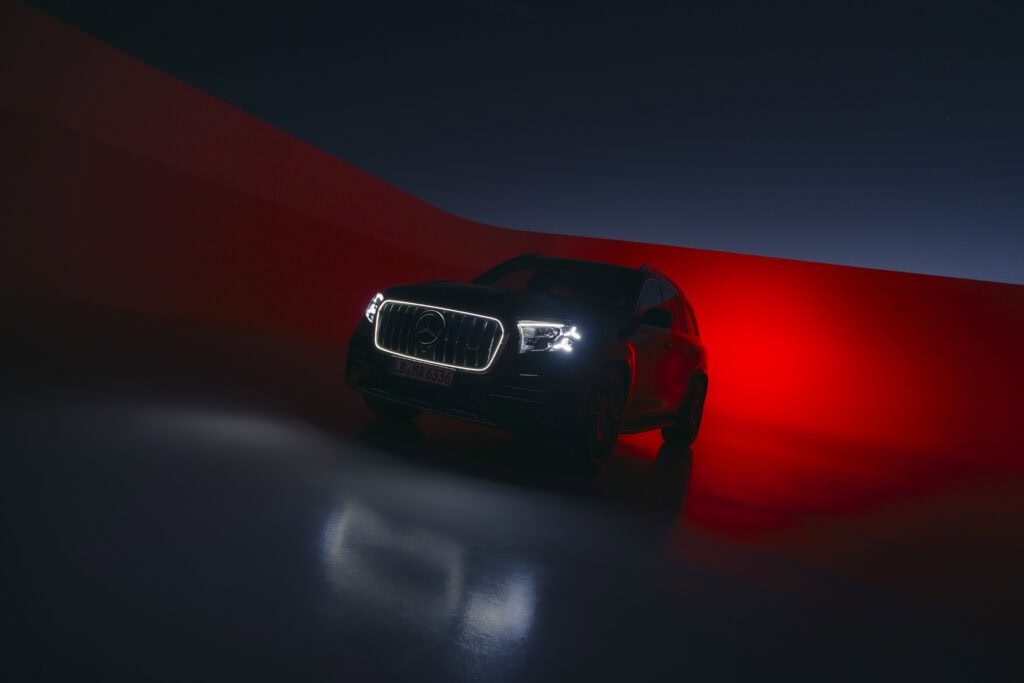
Mercedes-Benz USA lists the 2027 AMG GLS 63 with an estimated 0-to-60 mph time of 3.9 seconds and an electronically limited top speed of 174 mph. That is sports-car territory from something with three rows and a luxury cabin. The numbers are not just impressive. They are mildly absurd, which is very much part of the appeal.
Power is routed through the AMG SPEEDSHIFT TCT 9G transmission and AMG Performance 4MATIC+ all-wheel drive. The all-wheel-drive system is fully variable, which means the vehicle can continually decide how much torque should go where. That matters because 627 pound-feet of torque is not especially useful if the chassis cannot put it down cleanly.
There is also an electronically controlled AMG locking rear differential. Its job is to distribute torque between the rear wheels to help the SUV accelerate harder and corner with more confidence. In a lighter performance car, that kind of hardware is expected. In a three-row luxury SUV, it is a reminder that AMG is not simply adding horsepower and hoping for the best.
The result is a vehicle that should feel forceful when asked, but not chaotic. That distinction matters. Anyone can make a heavy SUV fast in a straight line by adding power. Making it feel composed, repeatable, and believable at speed is a much harder job. Modern electrified vehicles also use systems such as regenerative braking to recover energy during deceleration, and that broader thinking around energy flow now influences everything from hybrids to full EVs.
You may also enjoy this: 2027 Mercedes-Benz GLE Review: Bigger Screens, Smarter Tech, and Real Luxury
The Chassis Has to Do the Impossible
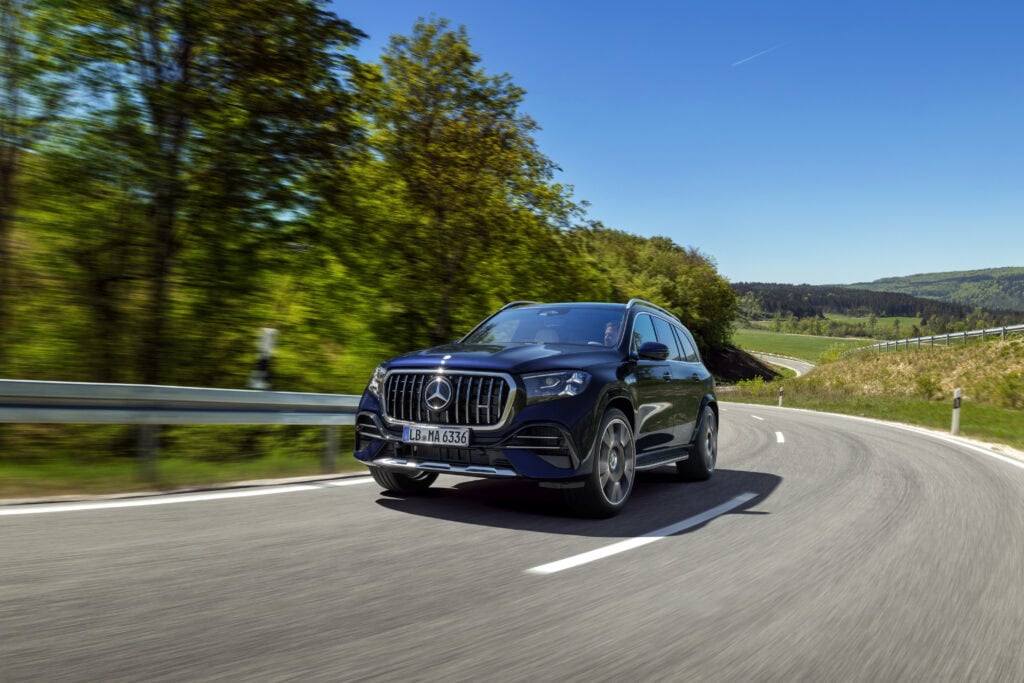
The real engineering challenge is not making the GLS 63 powerful. It is making that power feel usable in a vehicle this large. Big luxury SUVs carry weight, height, and expectation. They must ride comfortably, carry families, absorb bad pavement, and still feel controlled when the driver decides to stop behaving like a responsible adult.
AMG RIDE CONTROL+ air suspension gives the GLS 63 a wide operating range. In Sport and Sport+ modes, the ride height drops by 0.4 inches to lower the center of gravity and sharpen the feel. In Comfort mode, the vehicle can lower itself at highway speeds to reduce drag. When the road gets rough, ground clearance can increase by up to 2.2 inches.
That range is important because a vehicle like this cannot have one personality. It has to be calm on the school run, composed on the freeway, alert on a mountain road, and capable enough when the driveway turns into gravel or snow. The GLS 63 is not pretending to be a rock crawler. It is trying to be ready for the messy realities of expensive daily life.
AMG ACTIVE RIDE CONTROL adds electromechanical stabilizers at both axles, with sensors analyzing road surface and driving inputs up to 1,000 times per second. That kind of system is not there to create a gimmick. It is there to fight physics. Body roll, pitch, and mass are the enemies of confidence in a large SUV, and this is AMG’s way of keeping them from taking over the conversation.
A Luxury SUV With a Complicated Personality
The drive modes tell you almost everything about the GLS 63. Comfort, Sport, Sport+, Trail, Slippery, and Individual are not just labels on a screen. They are separate operating philosophies. Each changes throttle response, shift behavior, steering weight, suspension calibration, and exhaust character.
Comfort is the mode that allows the GLS 63 to behave like a proper luxury SUV. Sport wakes up the engine, transmission, and chassis without making the entire vehicle feel unhinged. Sport+ is where AMG lets the SUV become more theatrical, with sharper shifts, more aggressive response, and a louder voice. Trail and Slippery are reminders that buyers still expect a full-size Mercedes SUV to handle difficult surfaces without drama.
That range is what makes the 2027 Mercedes-AMG GLS 63 interesting. A dedicated sports car can be single-minded. A family SUV cannot. The owner may use the same vehicle for airport runs, school pickup, dinner in the city, ski weekends, and an empty freeway on-ramp. The GLS 63 has to make all of those moments feel natural, even when they have very little in common.
Modern luxury vehicles also carry more safety and convenience technology than ever, which makes clarity essential. The National Highway Traffic Safety Administration explains how driver-assistance technologies can warn drivers or help intervene in certain situations, but the driver still needs to understand what the vehicle can and cannot do. In a powerful SUV like the AMG GLS 63, technology should support confidence rather than replace judgment.
You may also enjoy this: 2027 Mercedes-AMG GLC 53 Adds Drift Mode to Family SUV
Design That Does Not Whisper
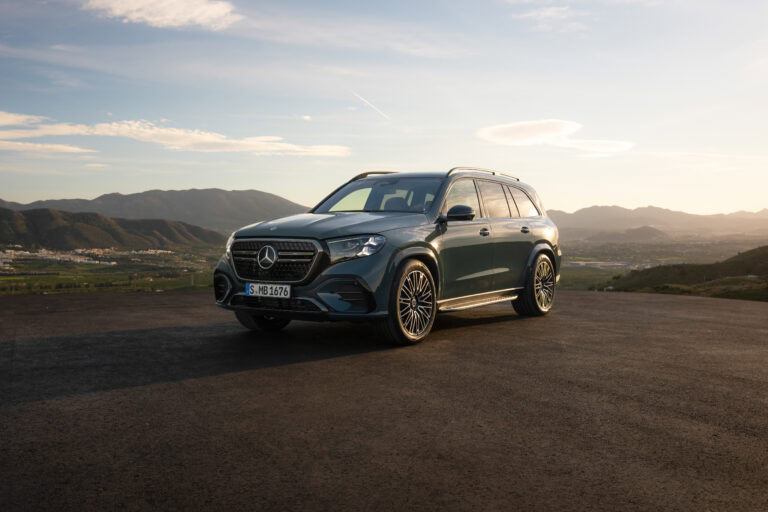
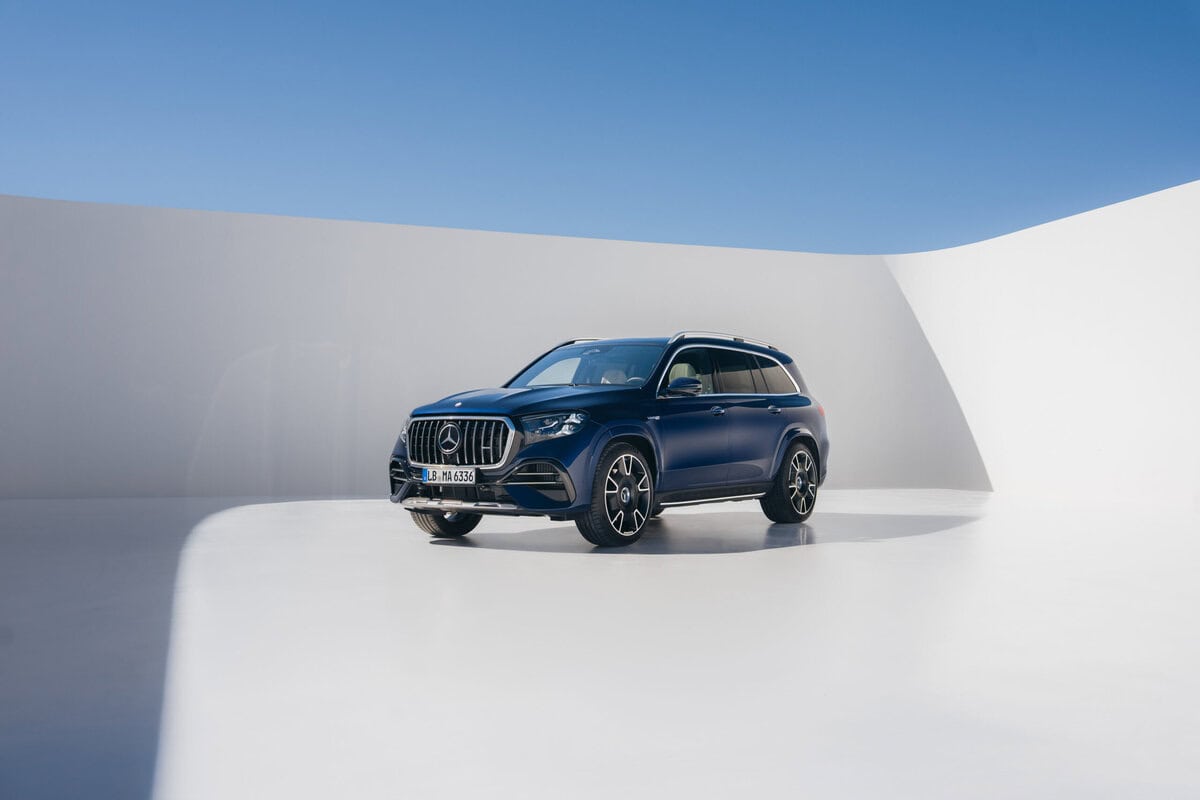
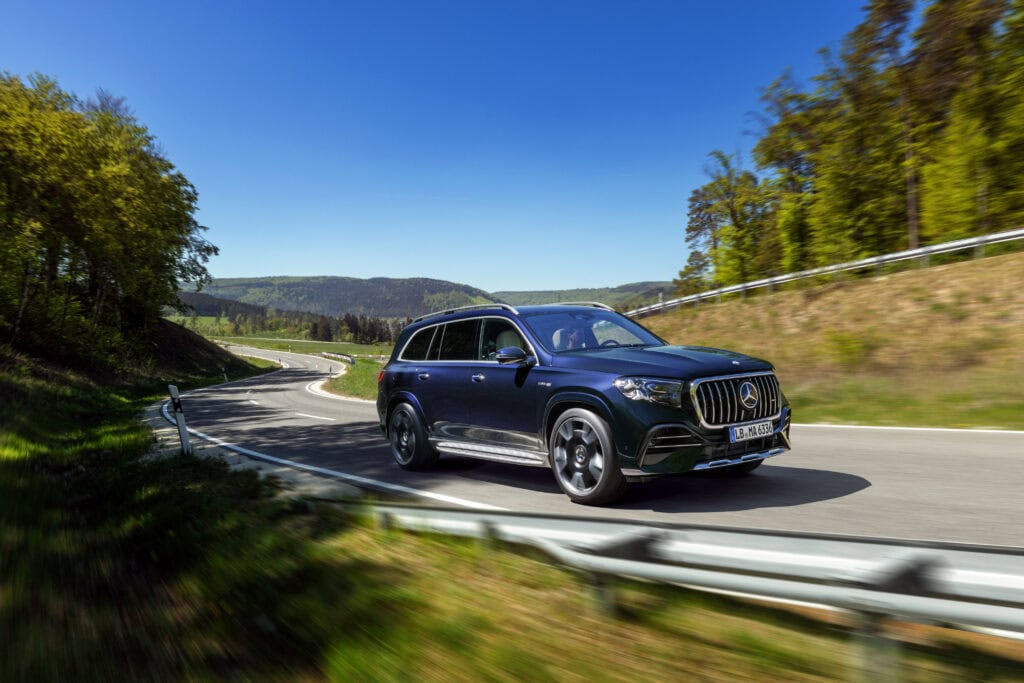
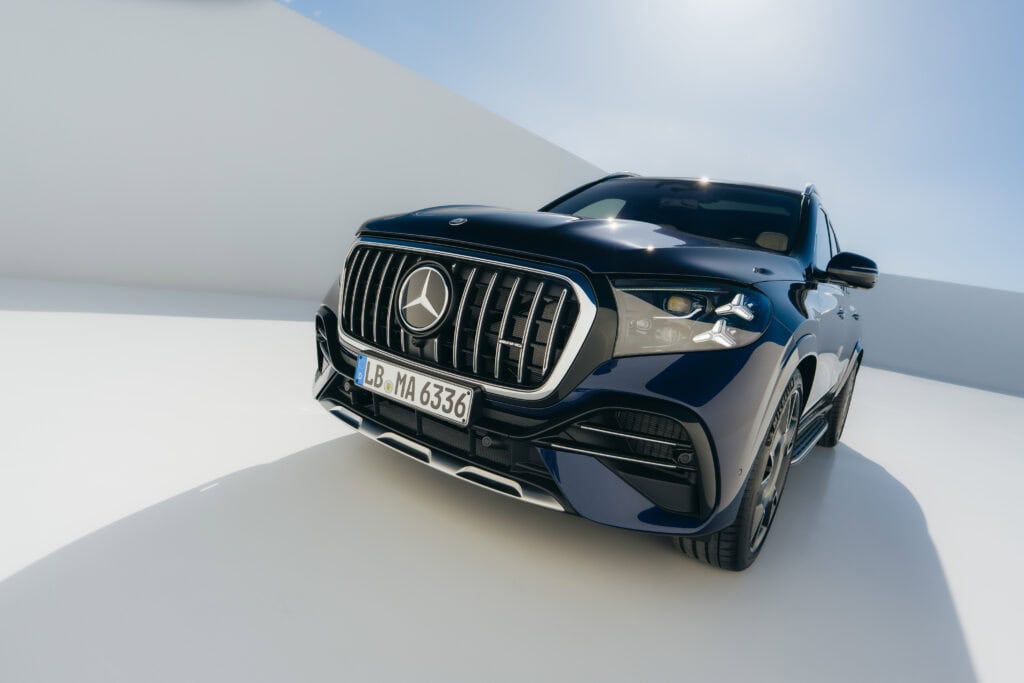
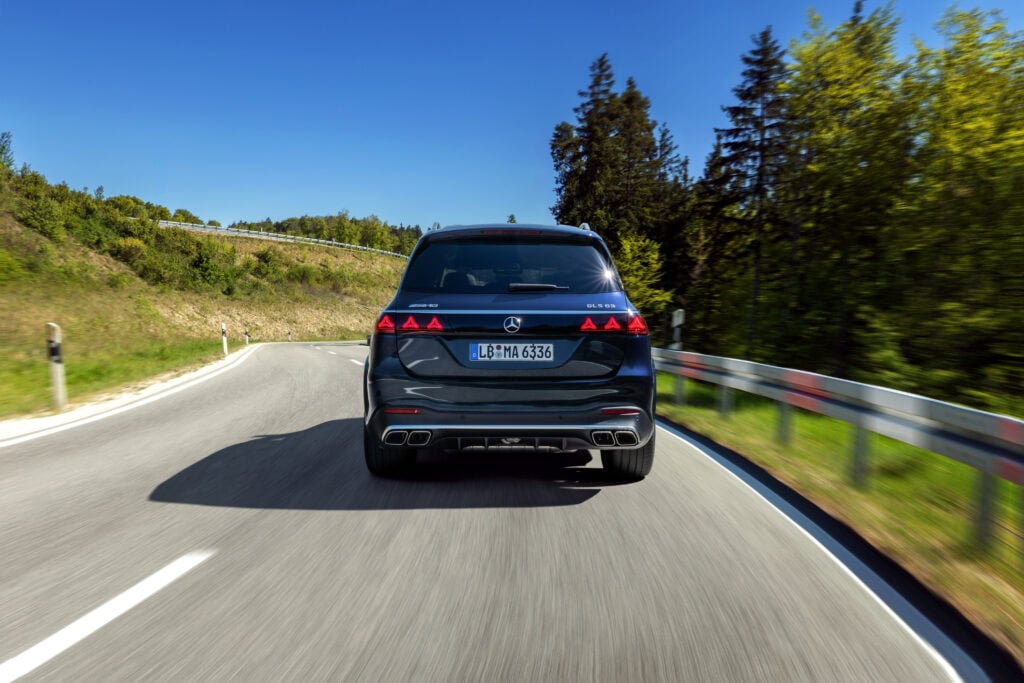
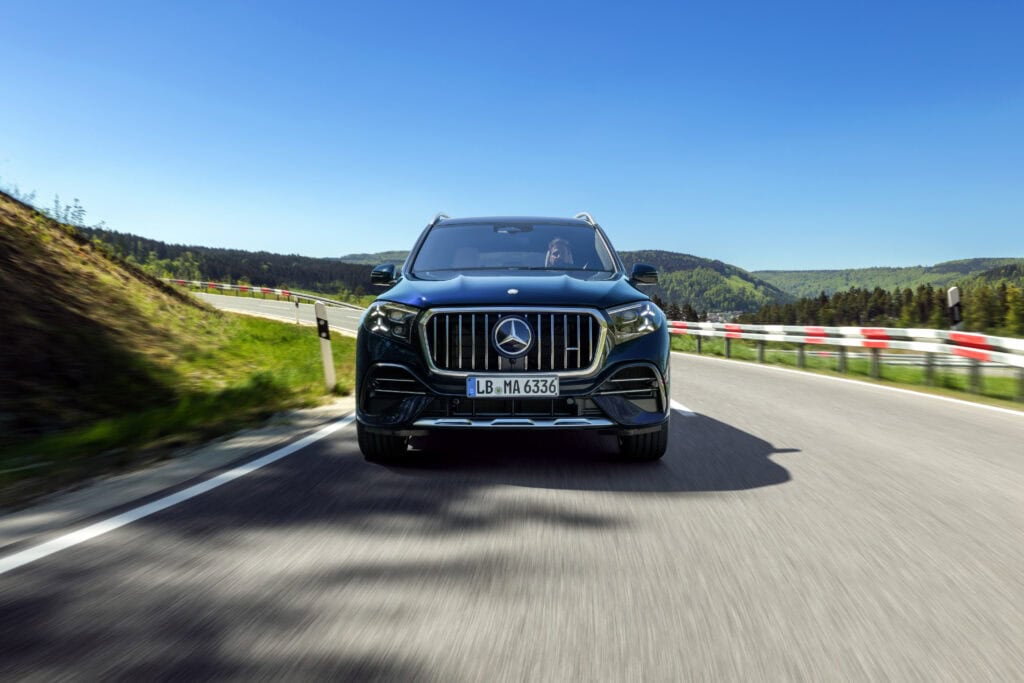
The updated AMG styling is not subtle, and it should not be. A 603-horsepower GLS 63 with a revised AMG V8 has no business pretending to be shy. The redesigned AMG front fascia, larger air intakes, exclusive LED lighting, rear diffuser-style treatment, and large exhaust outlets all serve a visual purpose. They warn everyone that this is not the regular family shuttle.
The functional side matters too. A high-output V8 needs airflow and cooling, especially in a large SUV that may be asked to carry passengers, luggage, and speed at the same time. The enlarged openings are not merely decorative. They support the mechanical demands of the engine and help give the GLS 63 its more aggressive character.
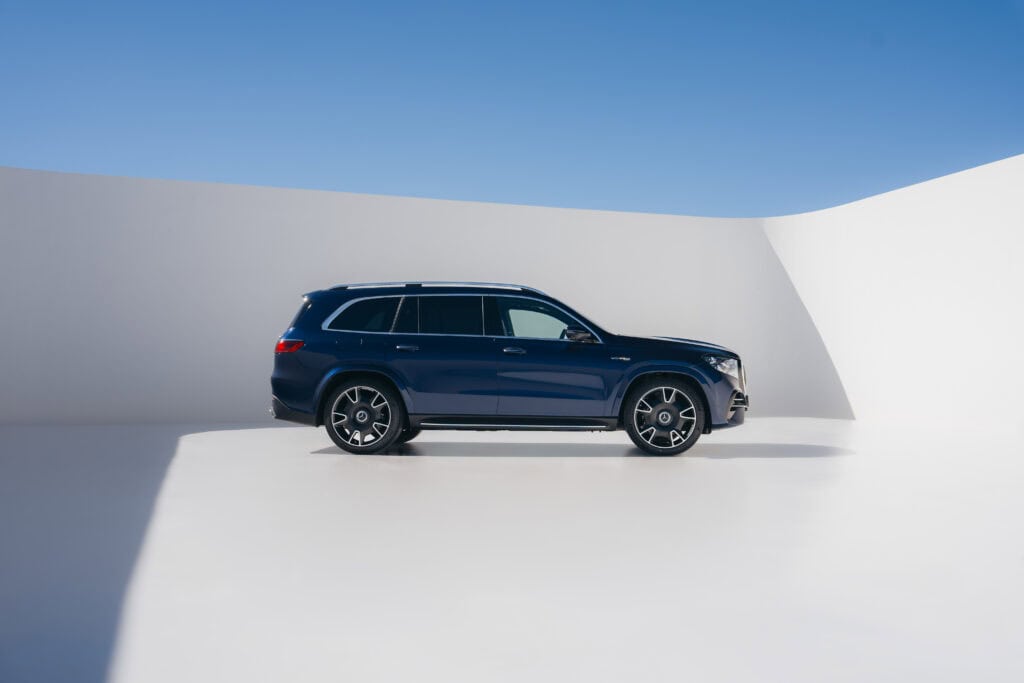
Wheel options extend up to 23 inches, which sounds excessive because it is. But excess is part of this segment. Buyers are not choosing an AMG GLS 63 because they are trying to disappear quietly into a supermarket parking lot. They want presence, proportion, and a stance that makes the vehicle feel special before anyone presses the starter button.
The challenge for AMG is to make the GLS 63 look assertive without turning it into a caricature. The best version of this vehicle is not a cartoon. It is a large, expensive, technically serious SUV with enough visual drama to match the powertrain. That is a fine line, but AMG has spent decades learning where it is.
The Cabin Still Has to Be Useful
Underneath the speed and theater, the GLS 63 still has to function as a full-size luxury SUV. That means three rows, adult-usable space, real cargo flexibility, and a cabin that can survive family life without feeling like a compromise. This is where the GLS formula matters. The AMG version may be wild, but it is still built on the idea that luxury should make daily life easier.
The air suspension helps maintain level ride height regardless of payload, which is more important than it sounds. Load the vehicle with passengers, luggage, or weekend gear, and the chassis has to keep its composure. The mild-hybrid system also helps in the real world by smoothing stop-start behavior and low-speed power delivery, especially in traffic.
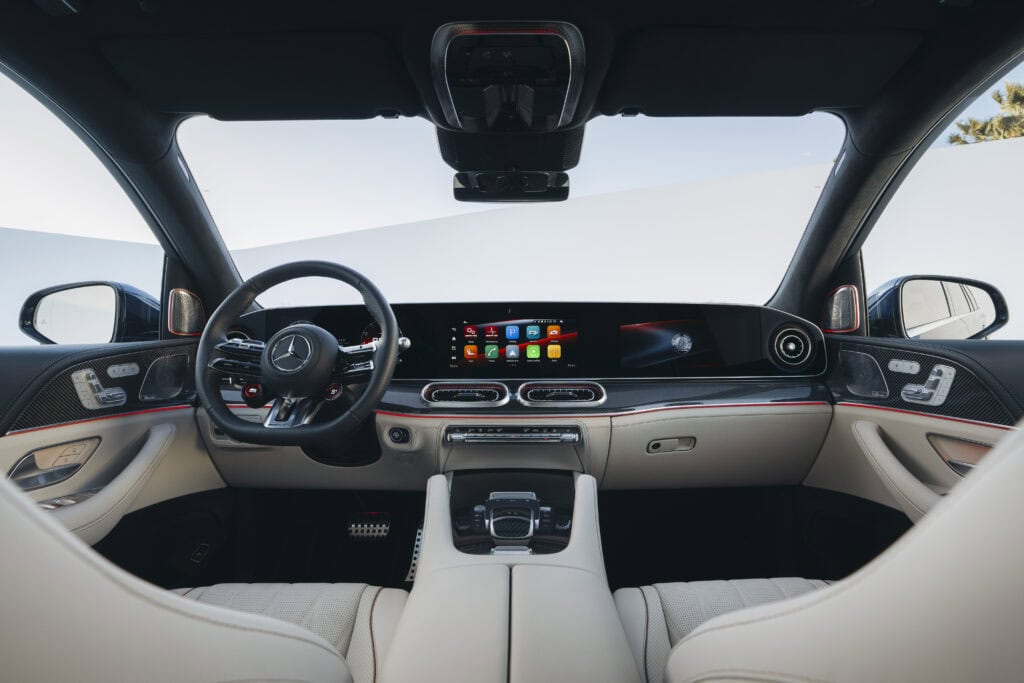
Inside, the AMG Performance steering wheel gives drivers direct access to drive modes and performance settings. Available finishes include Nappa leather, microfiber, and carbon fiber, depending on how much theater the owner wants in hand. The digital displays can show performance data such as torque distribution, G-forces, and engine information. Some of it is useful. Some of it is wonderfully unnecessary. Both things can be true.
The technology story is not just about screens. MB.OS is meant to integrate the vehicle’s systems more intelligently, while the latest infotainment and performance displays give the driver more immediate control. NHTSA explains that electronic stability control is one of the systems that helped modern vehicles reduce spin-outs and loss-of-control situations. In a performance SUV, that kind of stability thinking matters because complexity can quickly become annoying. The best interface is the one that makes a complicated vehicle feel simple to operate.
You may also enjoy this: 2027 Mercedes-AMG GT 4-Door Coupe Recreates Signature V8 Thrills
Why the V8 Still Means Something
The AMG GLS 63 arrives at a moment when performance is being redefined. Electric vehicles can deliver extraordinary acceleration, and the best of them can make even serious combustion-engine machines feel old-fashioned in a straight line. But acceleration alone is not the same as personality. A V8 delivers sound, vibration, response, and mechanical texture in a way that still matters to certain buyers.
That does not mean AMG can ignore the future. The GLS 63’s 48-volt mild-hybrid system is part of the bridge between old-school performance and modern expectations. It helps smooth the engine’s behavior, supports low-speed torque, and allows the big SUV to feel more responsive in normal driving. It is not there to turn the GLS 63 into a silent commuter appliance. It is there to keep the V8 relevant.
The broader industry is moving toward more electrified choices, and the U.S. Department of Energy explains that electric vehicles, plug-in hybrids, and hybrids all use electricity in different ways to improve efficiency or propulsion. The AMG GLS 63 sits on the combustion-heavy side of that transition, but it no longer exists in a world where performance can be separated from electrical support.
That makes the GLS 63 emotionally complicated, which is often where the best luxury vehicles live. It is not trying to be the most rational choice. It is trying to preserve a specific kind of mechanical drama while adding enough modern technology to keep that drama usable, refined, and relevant.
Who Buys This?
The AMG GLS 63 buyer is not looking for the cheapest way to move seven people. They are not looking for maximum efficiency or the most rational ownership spreadsheet. They are looking for one vehicle that can deliver luxury, speed, space, confidence, and emotional appeal without making them choose just one identity.
That person may have owned sports cars, large luxury sedans, or previous AMG models. They may need three rows now, but they do not want to surrender the sense of occasion that made driving interesting in the first place. The GLS 63 exists for that exact tension. It is a family vehicle for someone who does not want family life to feel like the end of performance.
It also appeals because V8 character still means something. Electric performance can be astonishing, and many modern EVs are brutally quick. But the GLS 63 is not trying to win a spreadsheet argument against an electric SUV. It is trying to deliver a different emotional equation: luxury, space, speed, sound, and presence in one machine.
Nobody needs a 603-horsepower three-row SUV. But need has never been the most interesting reason people buy cars. Sometimes the point is that a vehicle can do the sensible thing and still have the nerve to be magnificent.
You may also enjoy this: Mercedes-AMG Electric GT 4-Door Coupe Sounds and Feels Like a Real V8
Final Verdict
The 2027 Mercedes-AMG GLS 63 is excessive, complicated, powerful, comfortable, and deeply intentional. It takes the practical shape of a full-size luxury SUV and fills it with the kind of engineering normally reserved for vehicles with far fewer seats and far less responsibility. That contrast is what makes it compelling.
The reworked AMG V8 gives it a sharper mechanical identity. The 48-volt mild-hybrid system helps the engine feel smoother and more immediate. The adaptive air suspension, active roll stabilization, variable all-wheel drive, and rear differential work together to make the size feel less intimidating than it should. None of this makes the GLS 63 sensible. It makes it convincing.
So yes, it is unnecessary. Completely unnecessary, in fact. But in a world where many vehicles are becoming increasingly careful, quiet, and similar, the AMG GLS 63 still has a point of view. It is a luxury apartment with a serious V8, three rows, and a personality that refuses to behave. That may not be rational, but it is absolutely magnificent.