Why Small Trucks Are America’s Smartest Pickup Choice

America has a pickup truck problem, and it is not that we lack choice. It is that too many trucks have become enormous, expensive, and increasingly hard to justify for people who need utility but not a rolling office tower with a mortgage attached.
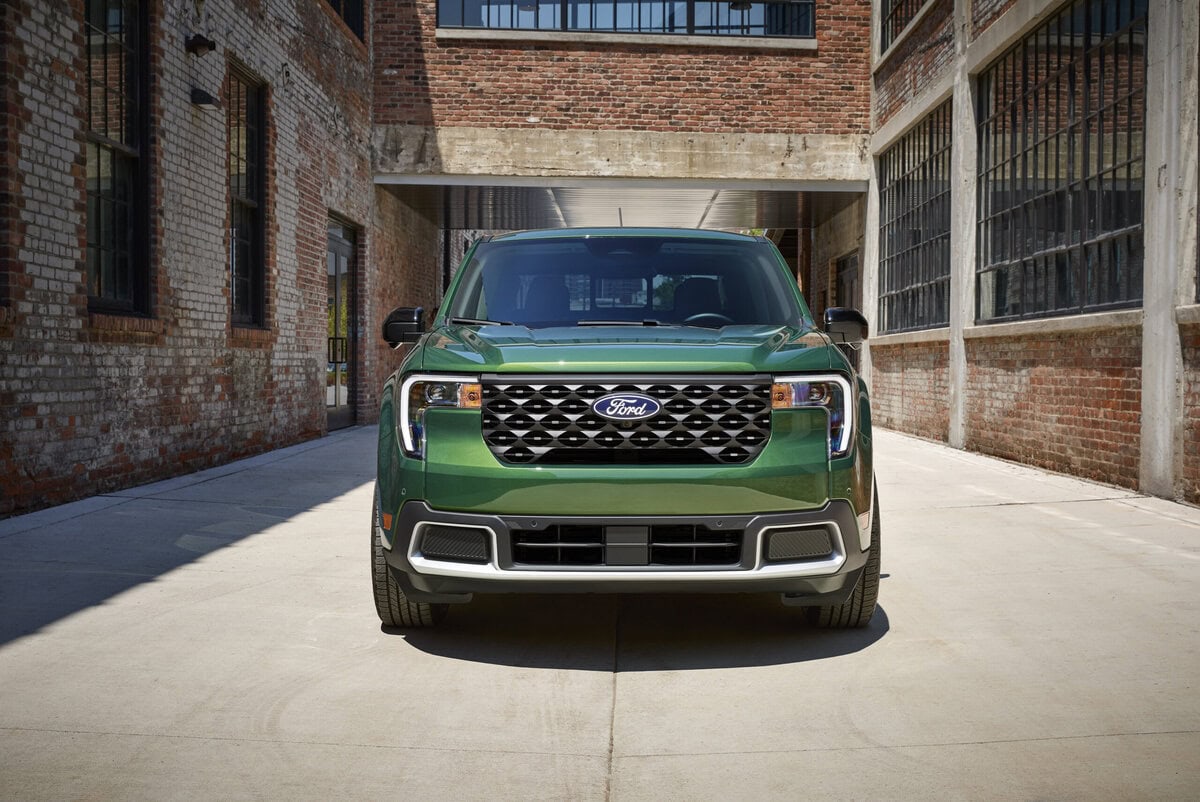
Full-size pickups still make sense for serious towing, heavy payloads, and worksite duty, but a growing number of buyers are asking a more practical question: how much truck do I actually need? The Ford Maverick Lobo, Hyundai Santa Cruz, Ford Ranger, Toyota Tacoma, and Chevrolet Colorado show how compact and midsize pickups are becoming smarter, more useful, and easier to live with for modern drivers.
Why This Segment Suddenly Matters
That is where small and midsize trucks are becoming genuinely interesting. The Ford Maverick Lobo, Hyundai Santa Cruz, Ford Ranger, Toyota Tacoma, and Chevrolet Colorado all approach the problem from different angles. Some are compact and city-friendly. Some are traditional body-on-frame machines. Some prioritize comfort, resale value, towing, or tech. Together, they show that the pickup market is no longer just about who can build the biggest grille.
The smarter truck buyer is looking for balance. They want a bed for bikes, dogs, mulch, tools, camera gear, or weekend projects. They want real towing, but not necessarily 12,000 pounds of it. They want fuel economy that does not feel like funding a small offshore drilling operation. Most of all, they want something useful that still fits in a parking space without requiring an apology note.
You may also enjoy: The $20,000 Car Is Dead in 2026: Cheap Options That Deliver
The Ford Maverick Lobo Is the Fun One
The Ford Maverick has already changed the conversation around compact pickups, but the Maverick Lobo adds something unusual: attitude. This is not the Maverick for the person who wants to quietly haul potting soil on a Saturday morning. This is the Maverick for the buyer who remembers street trucks, lowered stances, sharper steering, and the idea that a pickup can have a little mischief baked into it.
The Lobo uses Ford’s 2.0-liter EcoBoost engine with 250 horsepower. It also gets Lobo Mode, torque vectoring, a lowered stance, performance-tuned steering and suspension, and a seven-speed quick-shift transmission with paddle shifters. That combination turns the Maverick from a useful compact pickup into something closer to a small sport truck. It is still practical, but it no longer feels like practicality was the only item on the menu.
That matters because many modern trucks have become so serious that they have forgotten to be enjoyable. The Maverick Lobo does not pretend to be a heavy-duty hauler. It is not trying to tow a horse trailer across Wyoming. It is for city streets, back roads, daily errands, and the kind of driver who wants a truck that can carry gear during the week and still make the long way home feel worthwhile.
The Maverick’s Real Advantage Is Size
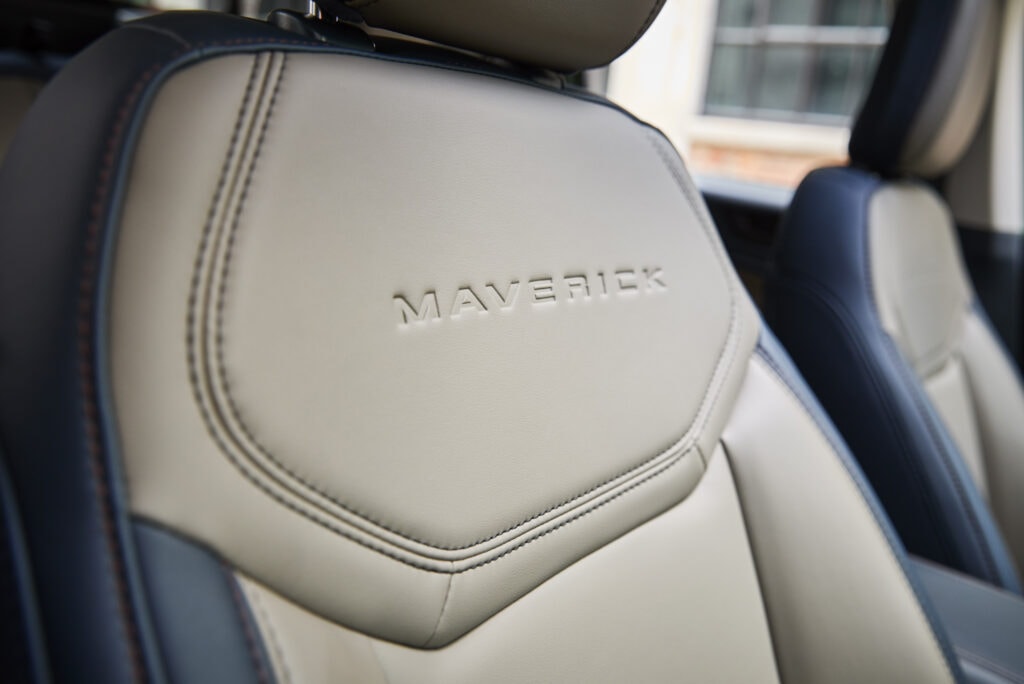
The ordinary genius of the Maverick is not just price or performance. It is packaging. This is a unibody compact pickup that seats five, offers a usable bed, and feels far less intimidating in daily life than a traditional full-size truck. For urban buyers, younger families, empty nesters, and people who live in places with actual parking garages, that is a serious advantage.
It also challenges one of America’s great automotive myths: that everyone needs more truck than they actually use. Plenty of owners buy large pickups because they might tow something heavy someday, possibly, if the stars align and a cousin buys a boat. The Maverick makes the opposite argument. Buy the truck that matches your real life, not the fantasy version of your life where you suddenly become a rancher with two hay trailers and a weathered hat.
Ford also offers the Maverick with a hybrid powertrain, which is part of the reason the truck has found such a strong audience among practical buyers. A hybrid electric vehicle uses an internal combustion engine with one or more electric motors, helping improve efficiency without requiring the driver to plug in.
You may also enjoy: New Ram Compact Pickup Takes On Ford Maverick in 2028
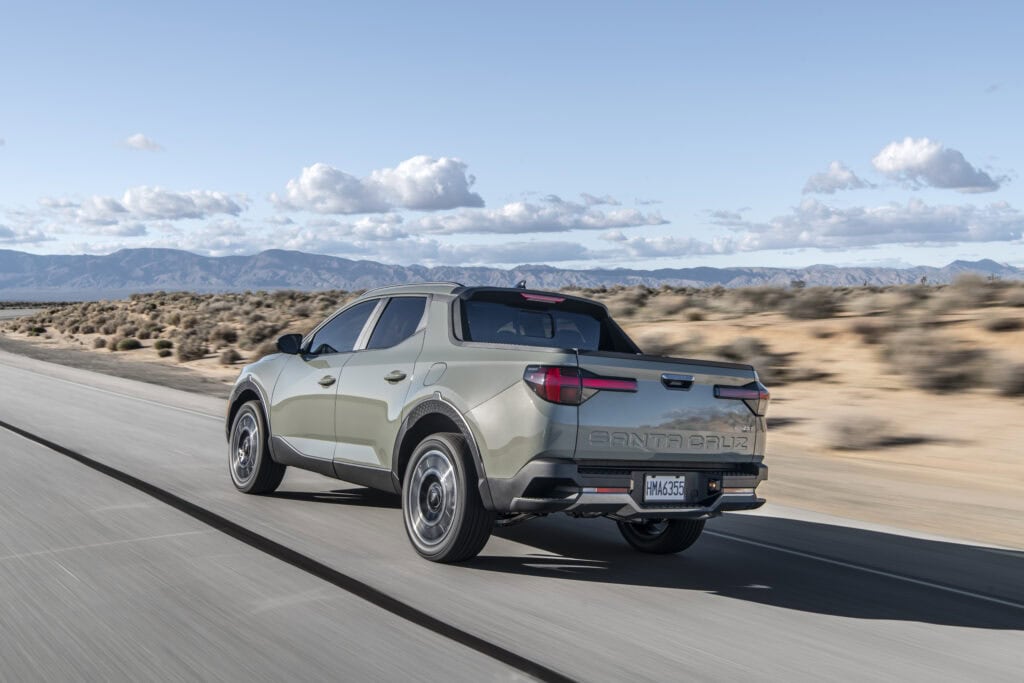
The Hyundai Santa Cruz Is the Crossover With a Bed
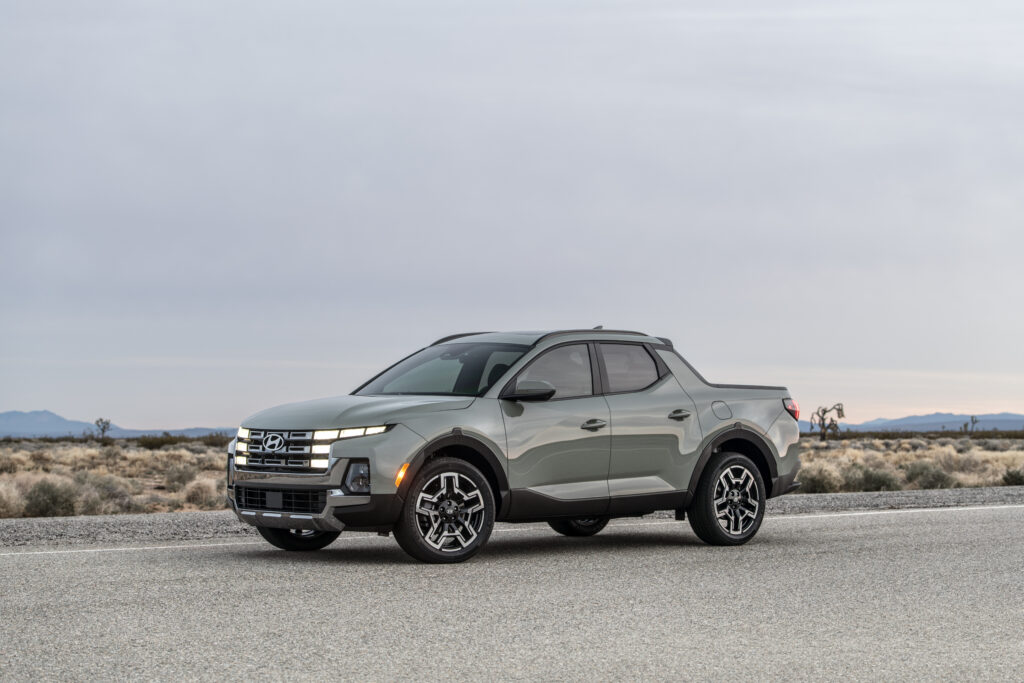
The Hyundai Santa Cruz is not a traditional truck, and that is exactly the point. It behaves more like a crossover SUV that discovered a useful party trick. Built around a unibody structure, it offers a lower step-in height, more car-like road manners, and a friendlier daily driving experience than most conventional pickups.
Top Santa Cruz trims offer a turbocharged 2.5-liter engine and can tow up to 5,000 pounds when properly equipped. That is enough for many buyers who need to pull a small trailer, personal watercraft, motorcycles, or light camping gear. It is not trying to replace a heavy-duty pickup, but it gives active households a useful blend of comfort and capability.
The clever part is the bed. The Santa Cruz includes hidden, lockable, waterproof storage under the bed floor, which is exactly the sort of feature that sounds minor until you actually use it. Tools, muddy dog equipment, camera gear, recovery straps, and wet boots all suddenly have somewhere to go. For buyers who live with pets, outdoor hobbies, and the occasional Costco run, that matters more than another macho badge on the tailgate.
The Ford Ranger Is the Workhorse Middle Ground
The Ford Ranger moves the conversation back toward a more traditional truck formula. It is bigger and tougher than the Maverick, more conventional than the Santa Cruz, and more focused on towing, payload, and truck credibility. With maximum available towing of 7,500 pounds when properly equipped, the Ranger makes sense for buyers who regularly tow boats, campers, utility trailers, or work equipment.
The Ranger’s appeal is that it feels like a real truck without demanding the full-size compromise. It is easier to park than an F-150, but still strong enough for serious weekend and jobsite use. Ford also improved the Ranger’s structure and suspension tuning to make it feel more stable under load, which is where midsize trucks either prove themselves or start to feel nervous.
Anyone towing should remember that trailer safety is not just about headline towing capacity. NHTSA notes that trailers and towing equipment must meet applicable federal safety standards, and owners should always follow the specific vehicle manual, weight limits, hitch ratings, and braking requirements.
You may also enjoy: Ford California Skunk Works Team Builds Affordable $30,000 Electric Pickup
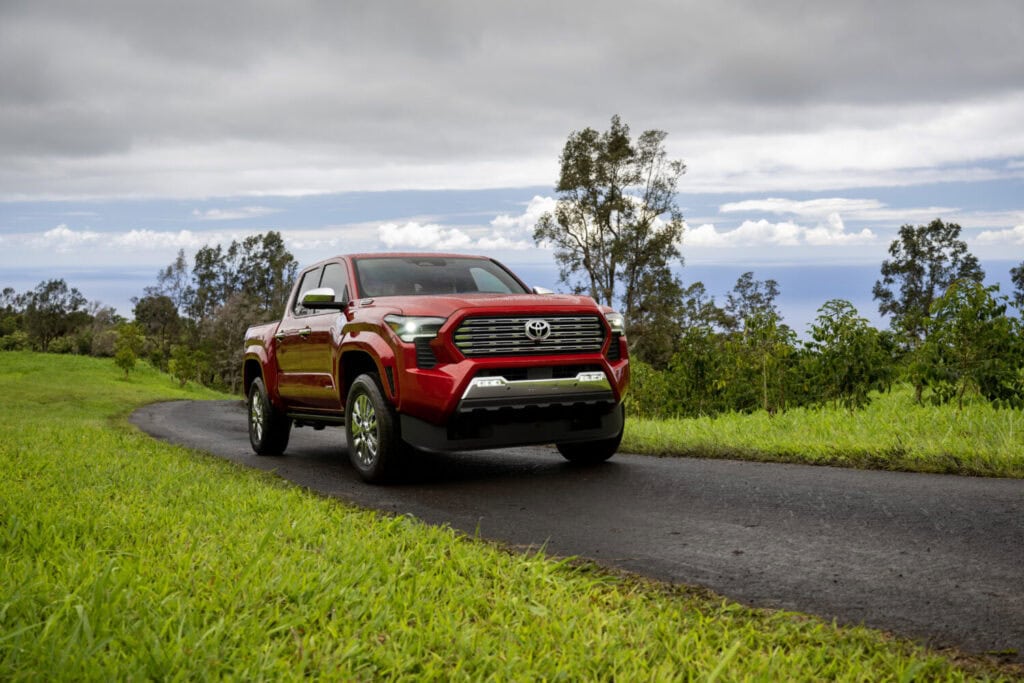
The Toyota Tacoma Still Owns the Long Game
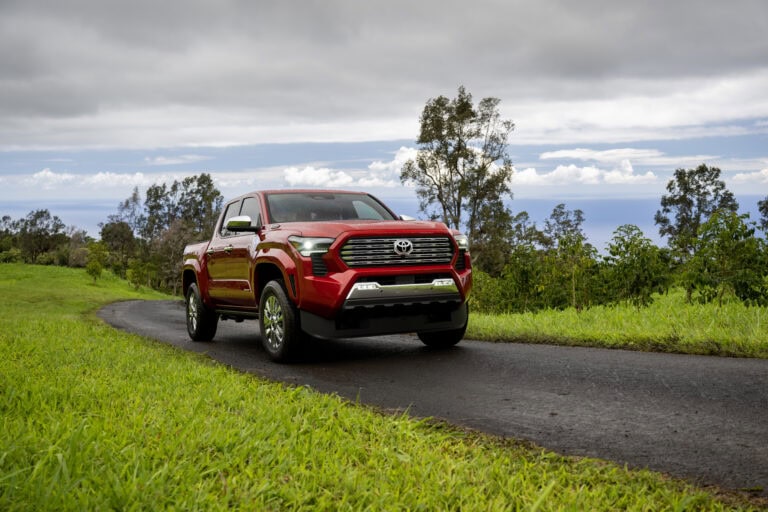
The Toyota Tacoma remains the emotional security blanket of the midsize truck world. People buy Tacomas because they expect them to last, hold value, and survive years of indifferent treatment. The latest Tacoma keeps that reputation but adds a more modern powertrain lineup, including the available i-FORCE MAX hybrid system with up to 326 horsepower and 465 pound-feet of torque.
That torque figure is the key. In trucks, horsepower makes the headline, but torque does the grimy work. It helps when crawling off-road, pulling away with a trailer, or climbing slowly over terrain where smooth low-speed response matters more than speed. The Tacoma also remains one of the few trucks in this space still offering a manual transmission, which gives it extra credibility with enthusiasts who still want to feel mechanically involved.
Off-road hardware also keeps the Tacoma near the top of the list for trail-minded buyers. Locking differentials, available disconnecting sway bars, skid plates, and rugged trims give it a sense of purpose. The Tacoma is not always the most refined truck in the class, and it may not always be the value leader, but its reputation gives buyers confidence. Some people keep Tacomas longer than marriages, often with less emotional damage.
You may also enjoy: 2025 Toyota Tacoma Trailhunter Review: Worth the Hype?
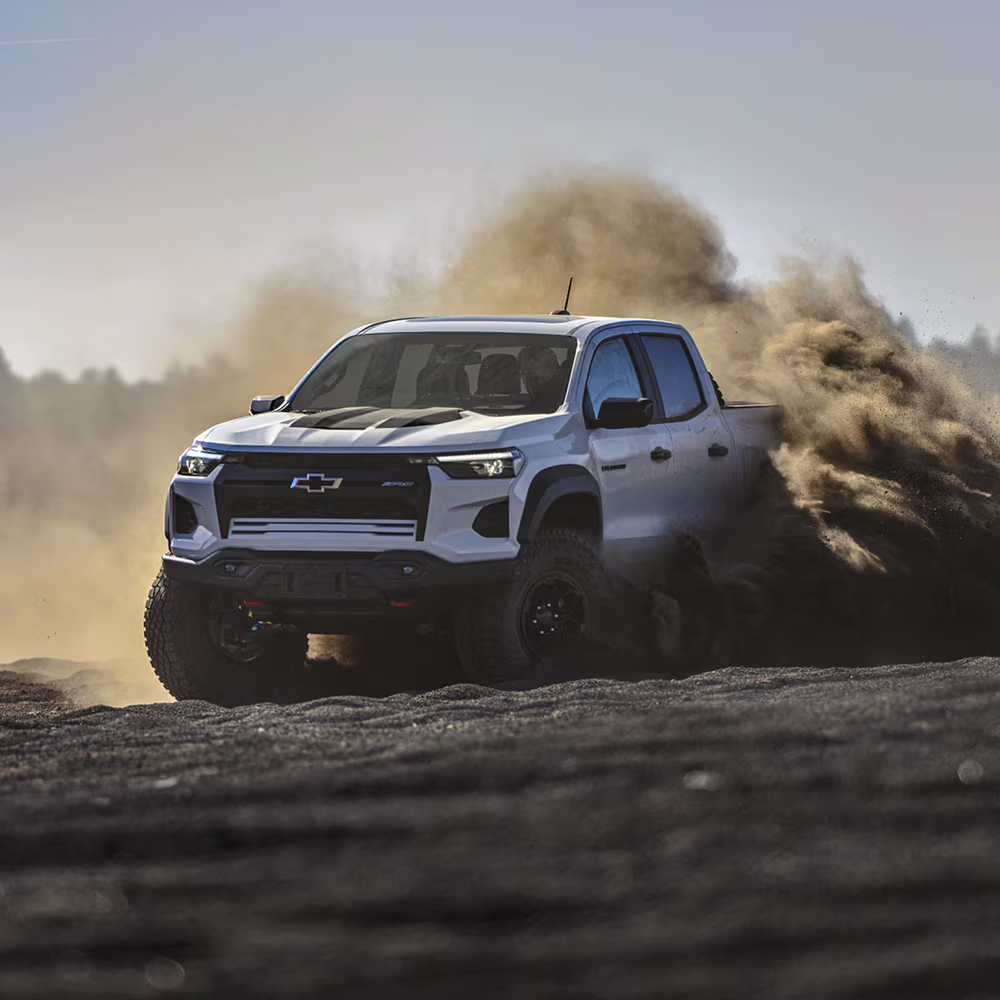
The Chevrolet Colorado May Be the Best All-Rounder
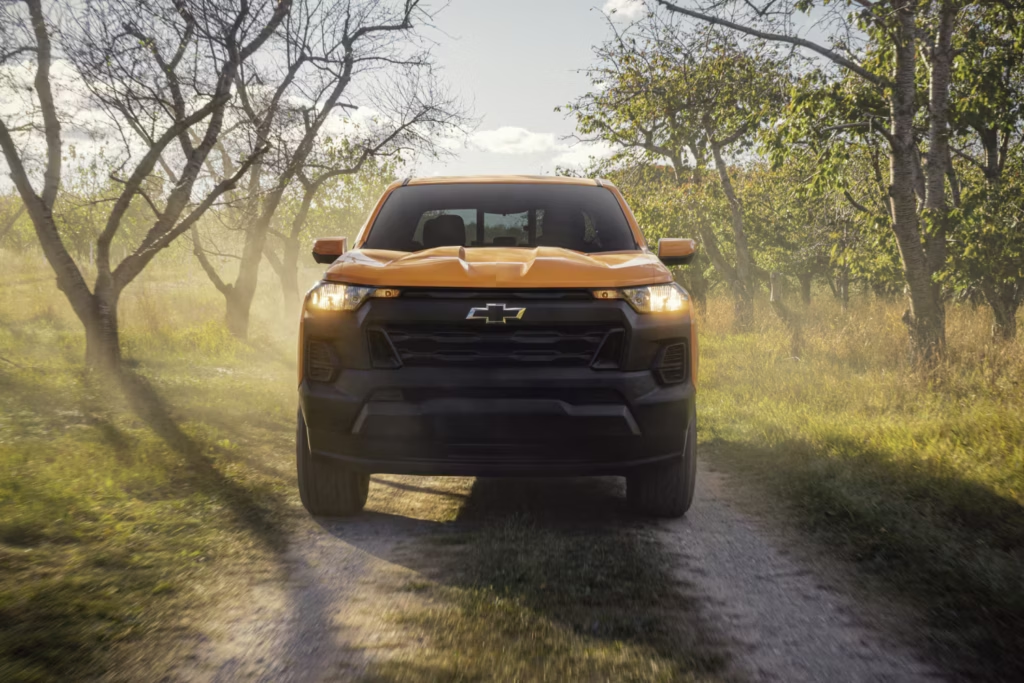
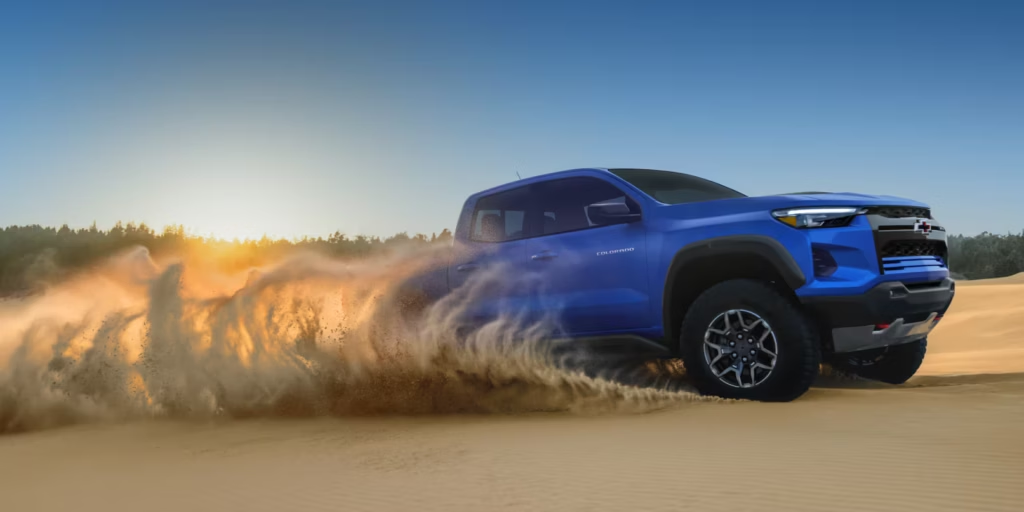
The Chevrolet Colorado makes perhaps the cleanest case for the modern midsize truck. It uses a 2.7-liter TurboMax engine with 310 horsepower and 430 pound-feet of torque, and it brings strong towing capability, useful technology, and a more refined cabin than Colorados of the past. It feels like Chevrolet finally stopped treating midsize trucks as smaller work appliances and started treating them as main vehicles for real households.
The Colorado’s available towing capability reaches 7,700 pounds, which puts it at the top of this comparison. That gives it an edge for buyers who want midsize dimensions but still need meaningful pull. Just as important, the torque arrives in a way that makes daily driving feel strong and relaxed. You do not have to thrash the engine to get the truck moving, which makes it feel more confident around town and on the highway.
Inside, the Colorado’s 11.3-inch center touchscreen with Google built-in helps modernize the experience. It feels less commercial and more connected, especially for buyers who use navigation, voice commands, and phone integration every day. The Colorado has become one of the strongest examples of a truck that still works hard but no longer asks the driver to suffer for it.
Modern pickups also come with more advanced safety and driver-assistance features than small trucks of the past. NHTSA explains that driver assistance technologies can help reduce crashes, although the driver remains responsible for staying alert and in control.
Which Small Truck Should You Actually Buy?
The answer depends entirely on what problem you are trying to solve. That is what makes this group so interesting. These trucks are not interchangeable. They are five different answers to five different versions of pickup ownership.
The Maverick Lobo is the personality choice. It is for someone who wants a useful truck but refuses to drive something dull. The Santa Cruz is the comfort-first urban truck for people who want SUV manners with extra utility. The Ranger is the traditional work-and-weekend machine for buyers who tow often enough to care. The Tacoma is the long-term durability and resale champion, especially for off-road buyers. The Colorado is the balanced all-rounder with strong torque, real towing, and modern tech.
That is the new pickup landscape. Bigger is no longer automatically better. More expensive is not automatically more useful. Capability matters, but so does livability. EPA data has shown how the market shift toward larger vehicles affects fleet efficiency, while the agency’s Automotive Trends Report also tracks how fuel economy, weight, horsepower, and vehicle size have changed over time.
You may also enjoy: Ram Dakota Revival: The Midsize Pickup You’ve Been Waiting For
Final Verdict
My pick is still the Ford Maverick Lobo, because life is too short to drive something dull. It is not the most powerful truck here, not the strongest tow vehicle, and not the one most likely to be running after civilization collapses. That honor probably still goes to the Tacoma, which will one day be found idling calmly next to a ruined shopping mall while humanity rebuilds.
But the Maverick Lobo captures the moment. It is compact, useful, cheeky, and unexpectedly fun. It proves that practical vehicles do not have to be joyless and that pickup ownership does not have to mean buying more truck than you need. For buyers tired of bloated prices, oversized bodies, and trucks that take themselves far too seriously, the small truck revolution is not coming. It is already parked in the driveway.
Before buying any new or used truck, shoppers should also check open recalls and safety information. NHTSA’s recall lookup tool lets owners search by VIN, plate, or model to see whether a vehicle has an unrepaired safety recall.