Luxury SUV Buying Checklist to Avoid Remorse
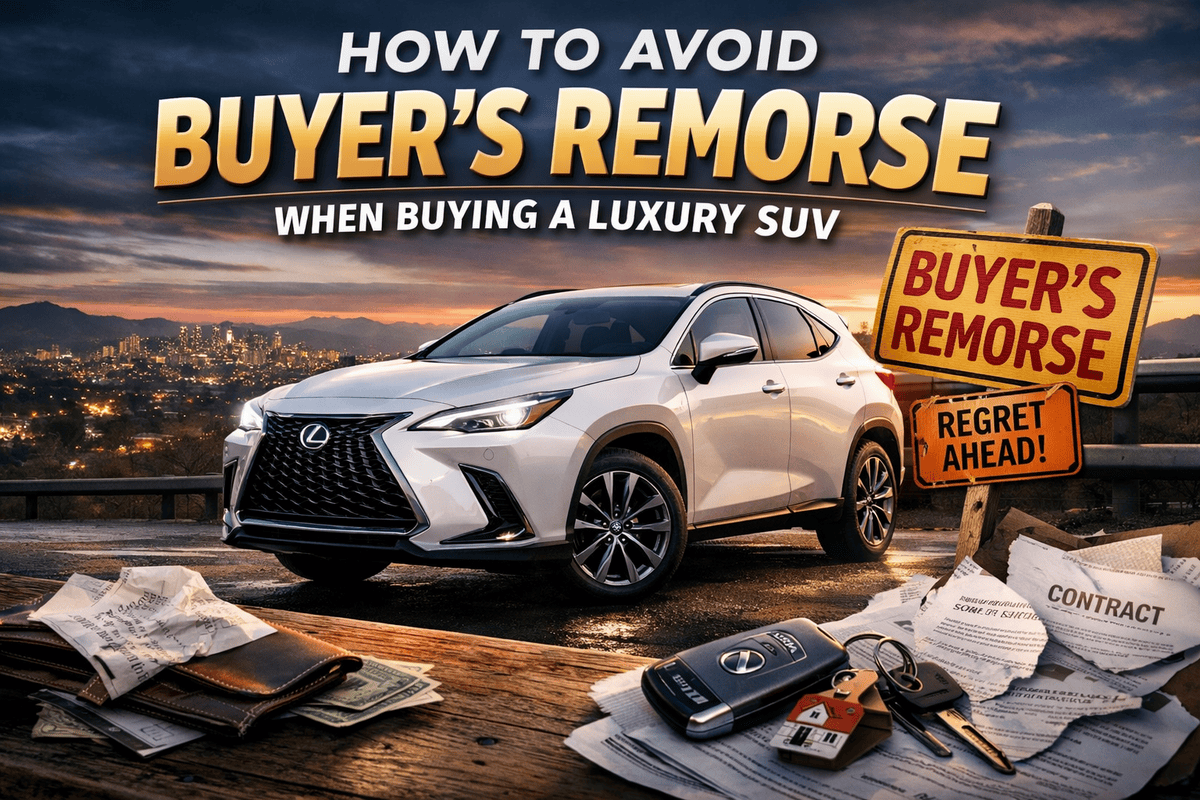
Luxury SUV buying checklist helps you test daily-life friction points, pick the right powertrain, and avoid regret after month three.
If you’re buying your first luxury SUV, you’re not just paying for nicer materials. You’re paying for fewer daily annoyances. Here’s how to make sure you actually get them.
The fastest way to trigger buyer’s remorse in a luxury SUV is to focus on the badge and ignore the boring moments. You don’t live in the brochure. You live in the small stuff: the screen you tap 12 times a day, the cupholders you fight with, the rear seat you climb into once and then regret for three years, and the parking lot turns that expose whether an SUV is confident or clumsy.
To keep this grounded, we’ll use the Lexus NX family as our measuring stick because it’s a common entry-luxury shortlist, and it offers three powertrain paths that mirror the real decisions shoppers make. The Lexus NX 350h hybrid makes 240 combined horsepower and carries an EPA-estimated 39 mpg combined rating, while the turbocharged NX 350 makes 275 horsepower and 317 lb-ft of torque. The NX 450h+ plug-in hybrid targets an EPA-estimated 37 miles of electric-only driving and can be fully charged in about three hours under ideal conditions with 240V and the standard onboard charger.
You may also enjoy this: 2026 Mazda CX-5 Review: More Space, Smarter Tech

Why does this matter right now?
Luxury SUVs are more expensive than they’ve ever been, and that makes regret sharper. When you pay extra, you expect relief: less friction, more ease, and a calmer day-to-day experience. So when the vehicle adds friction, you don’t just feel annoyed. You feel like you paid for the opposite of what you received.
Right now, the smartest buyers are not trying to “win” the showroom. They are trying to win ownership. That means testing the things you will do a thousand times, not the things you will do twice.
Start with a simple rule: if it irritates you in the showroom, it will haunt you at home. That is not cynicism. It is pattern recognition.
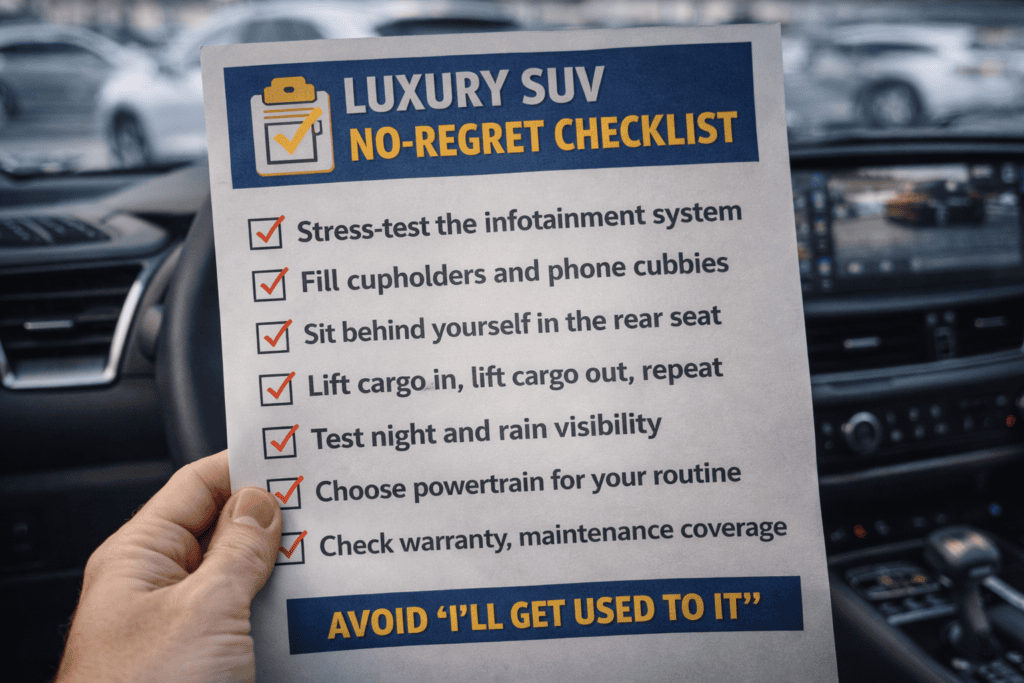
To avoid remorse, run five tests that capture most of the daily-life regret people mistakenly blame on “the wrong brand.” These tests work on every entry-luxury SUV, whether you are comparing the NX to an Audi Q5, BMW X1, Mercedes-Benz GLC, Acura RDX, or Genesis GV70.

Test 1: Infotainment speed and sanity. Pair your phone, set navigation, change cabin temperature, and find audio presets. You are checking lag, menu depth, and logic. Bigger screens do not automatically reduce frustration. They only help when the software is fast and the workflow is intuitive. If basic tasks take too many taps, you will spend years arguing with the screen instead of enjoying the car.
Test 2: Cabin life. Bring a large water bottle, a coffee cup, and your phone. Put them where you would actually use them. Plug in. Unplug. Try to open the console and use storage spaces while the cups are in place. The cabin can be beautiful and still be an expensive irritation if it’s impractical.
Test 3: Rear-seat truth. Set the driver seat to your position, then sit behind yourself. Check knee room, foot space, and headroom. Then imagine a car seat behind the passenger seat. “It fits” is not the same as “it works every day.” Door opening shape and seat height matter more than people admit, especially for kids, parents, and dogs.
Test 4: Cargo loading ergonomics. Cargo remorse is rarely about raw volume. It’s about loading. Do a suitcase test: lift in, lift out, repeat. Check lift-over height, tailgate speed, and whether you have to twist awkwardly. If it’s annoying in the showroom, it’s miserable in a rainy parking lot.
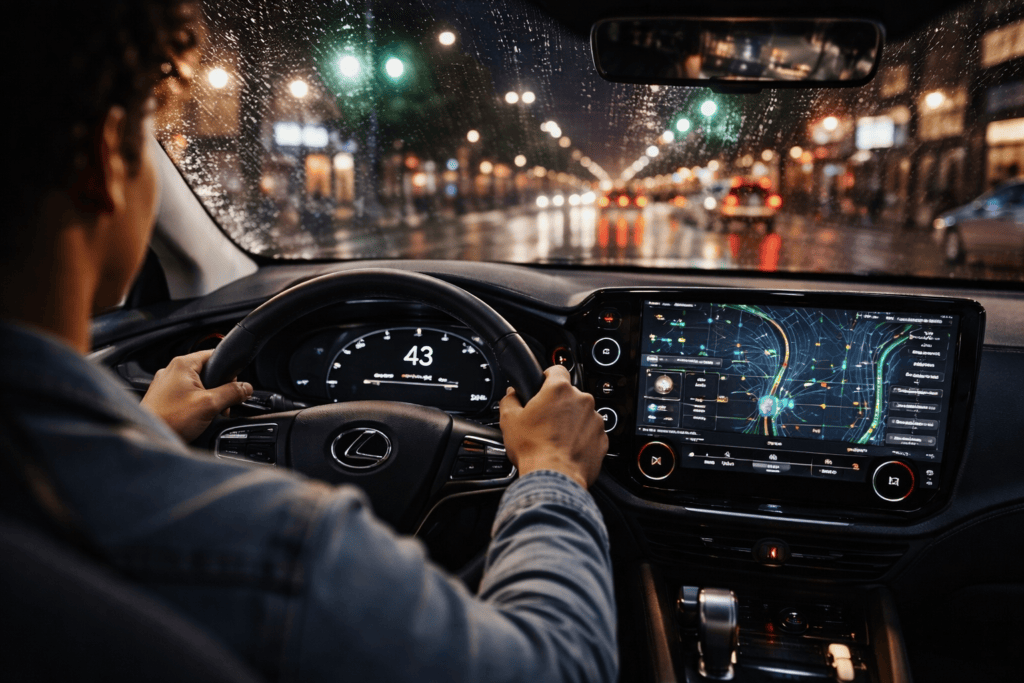
Test 5: Night and rain visibility. The silent regret. Look at A-pillars, mirror view, camera clarity, and wiper sweep. If you feel boxed-in or stressed, you will drive tense. And tense driving is the opposite of luxury no matter how nice the stitching is.
For fuel economy verification when you’re cross-shopping trims and powertrains, use FuelEconomy.gov as the baseline, because your long-term satisfaction is often tied to the cost patterns you repeat every week.
You may also enjoy this: The 2026 Jeep Grand Cherokee Simplifies on Purpose
How does it compare to rivals or alternatives?
The Lexus NX is useful here because it illustrates three common paths buyers face in the compact luxury SUV segment: turbo power for response, hybrid efficiency with no lifestyle change, and plug-in electric capability for those who can actually charge consistently.
If you’re looking at rivals, the trap is thinking the comparison is mostly about performance numbers or which cabin looks most expensive under showroom lights. In real life, it’s about friction. The right SUV is the one that makes your routine easier, not the one that wins a parking lot beauty contest.
Turbo vs hybrid in the same lineup is the cleanest comparison. The NX 350 turbo is quicker on paper and feels stronger in passing, while the NX 350h prioritizes efficiency and smooth, quiet progress. The better choice depends on your daily pattern. If most of your driving is commuting and errands, hybrid efficiency can reduce weekly stress and keep costs predictable. If your driving is heavy on highway merges, steep grades, or you simply value the stronger shove, turbo response may feel more satisfying.
Plug-in hybrids only win when charging is real. If you can charge at home or work, a plug-in can cover many short trips on electric power and still operate like a hybrid when the battery is depleted. If you cannot charge reliably, you are paying for capability you won’t consistently use, which is a classic buyer’s remorse setup.
When you are comparing safety confidence across alternatives, don’t rely on vibes. Check objective results like IIHS ratings so you understand whether the vehicle you like also performs in the tests that matter when life gets messy.
You may also enjoy this: Trump State of the Union Gas Price Claim: What It Means for Car Buyers in 2026
Who is this for and who should skip it?
This checklist is for the buyer who wants a luxury SUV to feel like relief, not like homework. It’s for the smart, busy, mildly skeptical person who cares less about bragging rights and more about whether the vehicle quietly improves daily life.
This is for you if:
- You want to avoid “I’ll get used to it” ownership.
- You care about calm routines: commuting, errands, family shuttling, and weekend trips.
- You want to choose the right drivetrain based on how you actually live.
- You want to stress-test usability before you sign anything.
You should skip this approach only if: you are buying purely as a short-term lease with minimal personal use and you genuinely do not care about friction. Most people think that’s them. Most people are wrong by month three.
One more practical filter: if you are considering a plug-in hybrid, be brutally honest about charging. Do you have a reliable place to plug in, with predictable access, and the patience to make it a habit? If not, skip the plug-in and choose the hybrid or turbo variant that matches your routine. The goal is to avoid paying for “potential” that becomes resentment.
Also do not ignore ownership math. Buyer’s remorse often arrives with the first unexpected service bill, not the first road trip. Before you fall for ambient lighting like it’s a personality trait, confirm what your coverage actually is. Lexus publishes this clearly in its Warranty guide, including basic coverage and hybrid battery terms.
You may also enjoy this: Polestar updatePolestar 4 Gets Rear Window and More Space in Big Update
What is the long-term significance?
The long-term significance of buying your first luxury SUV the right way is simple: you stop paying premium money for premium irritation.
When shoppers get this purchase wrong, they often blame the brand, the dealer, or the segment. But the pattern is usually the same: they skipped the tests that reveal friction, and then they lived with that friction every day. Over time, the annoyance becomes a story they tell themselves about making a “bad luxury choice,” when the real issue was buying a daily-use product without stress-testing daily use.
This checklist also future-proofs your decision because the market is moving toward more screen-driven controls, more connected features, and more subscription-adjacent convenience. Asking “what works forever, what’s a trial, and what costs money later?” is not being difficult. It is being realistic about modern ownership.
Finally, ownership confidence includes safety accountability. Even great vehicles can have recalls, and ignoring that reality is another way regret sneaks in. Make it a habit to check NHTSA recalls with the VIN of any vehicle you’re seriously considering, because the calmest ownership experience is the one where surprises are minimized.
You may also enjoy this: Toyota C-HR 2026 EV: 287 Miles, 338 HP, Real Cargo
Calm closing thought: the smartest luxury SUV purchase is not the one that impresses people in the driveway. It is the one that still feels like a good decision when you are tired, late, and loading groceries in the rain. If you run these five tests, match the drivetrain to your real routine, and verify the ownership details before you sign, you dramatically cut the odds of buyer’s remorse. Luxury should feel like relief. Buy the SUV that delivers it.