Honda’s Next Move: Hybrids, EVs, and Supply

In a candid conversation with Honda sales leader Lance Woelfer, the brand’s near-term priorities come into focus: build more of what people buy, keep hybrids central, and keep EV development moving on a realistic timeline.
There’s a specific tone you hear when an automaker is done talking about recovery and ready to talk about the next lap. It’s less “big announcement,” more “here’s what we can actually deliver.” That’s the tone that came through when I sat down with Lance Woelfer, vice president of Automobile Sales within the Auto Business Center at American Honda Motor Co., Inc., to talk through Honda’s 2025 performance and what the company is lining up for 2026 and beyond.
Honda’s story right now isn’t a single hero model or a one-line slogan. It’s a practical, layered plan: stabilize supply, keep production running hard, double down on hybrids where buyers are already saying “yes,” and keep its next-generation EV program moving even while the U.S. market debates how quickly it wants to change.
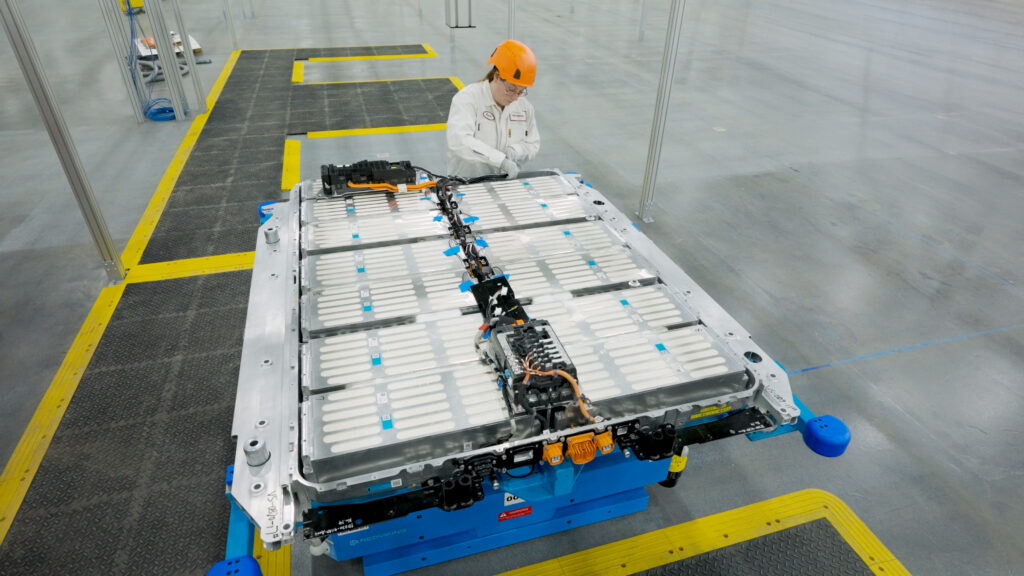
Lance framed it in a way that will feel familiar if you’ve been shopping recently. From a pure “can I get the car?” standpoint, the worst of the supply chain chaos is easing. But the after-effects of the COVID era still show up in ways most people don’t think about until they’re staring at pricing and inventory. As he put it, “during COVID we just sold fewer cars.” That matters because fewer sales back then means fewer vehicles cycling back into the market now—especially through leases. Honda leases a meaningful share of its business, and Lance said it plainly: “we lease it like 30ish percent.” When the pipeline narrows, the market doesn’t just snap back to the old normal overnight.
That’s the context for Honda’s “moving forward” moment. The interesting part isn’t whether Honda believes in the future. Of course it does. The interesting part is what it chooses to build first, how it chooses to pace electrification, and what it thinks shoppers actually want when they say they want “value,” “capability,” or “something that feels safe.”
You may also enjoy this: Deals Didn’t Disappear. They Just Got Weird. Here’s the Fix.
Why does this matter right now?
Because 2026 is where the industry’s “we’re getting back to normal” talk either becomes reality for buyers—or it doesn’t. Honda is betting it will, and Lance was unusually specific about what that looks like on the ground.
He acknowledged that supply is better overall, but he didn’t pretend it’s been flawless. “We recently had a supply issue that impacted us in November and December,” he said. The more important part was what followed: “We are really fully utilizing production in this year,” and heading into the season, Honda is sitting at “30, 35 day supply,” which “puts us in a good position as we head into the winter months and then ultimately spring.”
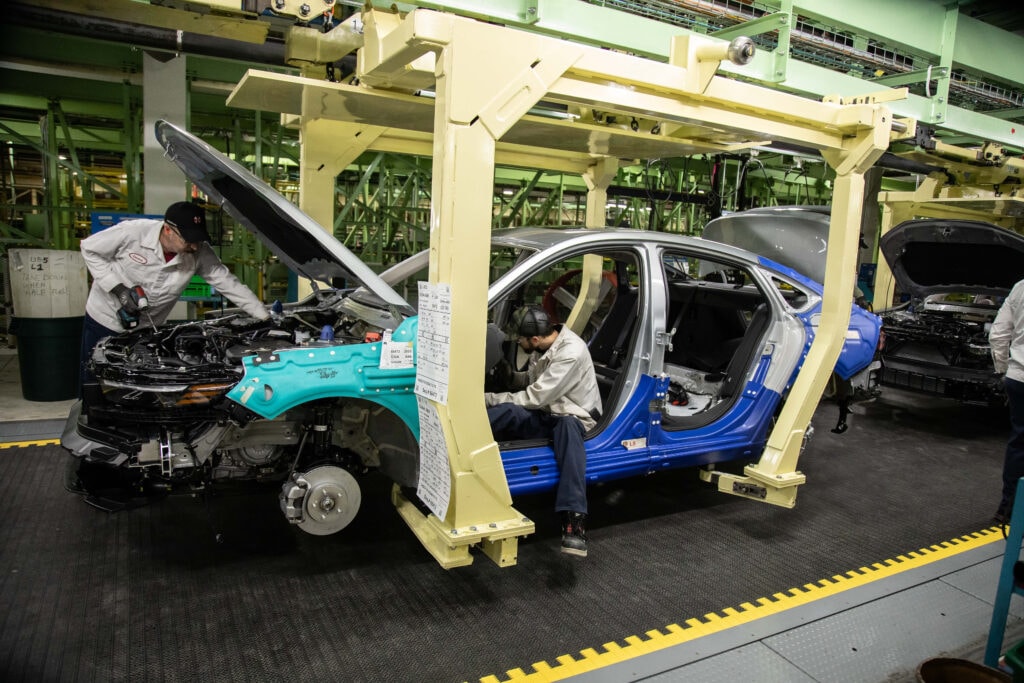
That kind of day-supply matters because it’s the difference between shopping a model and shopping whatever happens to be on a lot. When inventory is thin, you end up with odd trim mixes, fewer color choices, and that quiet pressure to compromise. When inventory normalizes, you get something more basic but more valuable: options. You can choose the powertrain you want. You can choose the trim that actually fits your life. You can walk away without feeling like you just forfeited your one chance to buy a normal car at a normal time.
Honda’s other immediate priority is staying aligned with what people are actually buying, not what looks good in a concept-car spotlight. Lance described Honda’s lineup as “one of the freshest lineups in the industry,” and he tied growth expectations to product fit: “this year we expect further growth, and it has a lot to do with us making sure that we’ve got the right products for the market, meet their needs.”
That “meet their needs” line sounds simple, but it’s doing heavy lifting. For Honda, it means two things at once. First: keep the core models (Civic, Accord, CR-V) available and affordable enough to remain default choices. Second: keep the light truck lineup emotionally appealing—because buyers don’t just buy utility anymore, they buy a feeling.
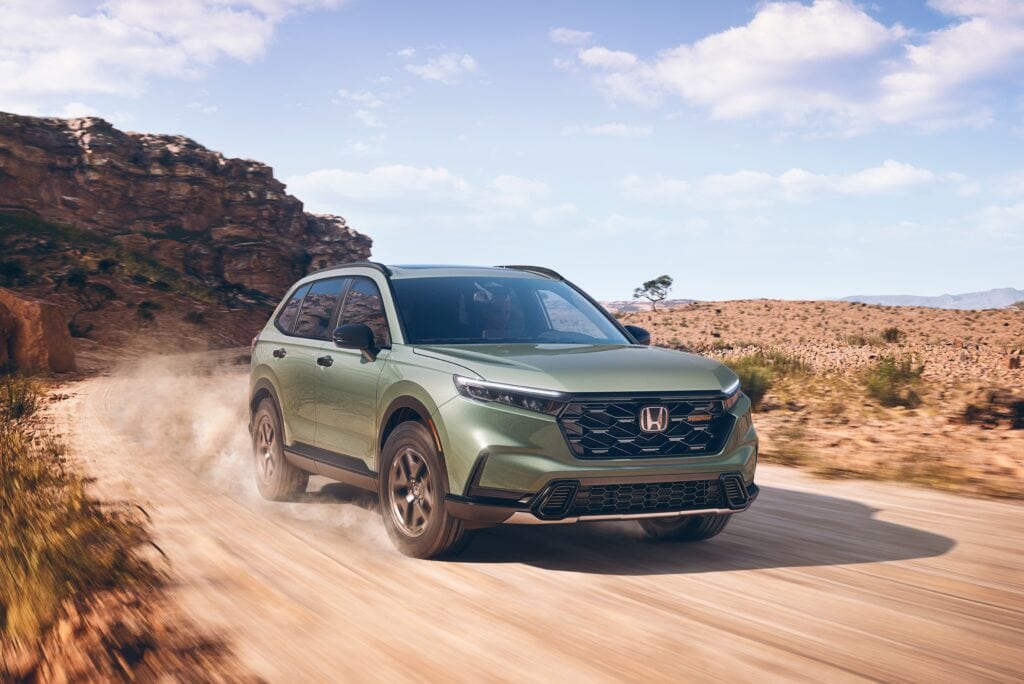
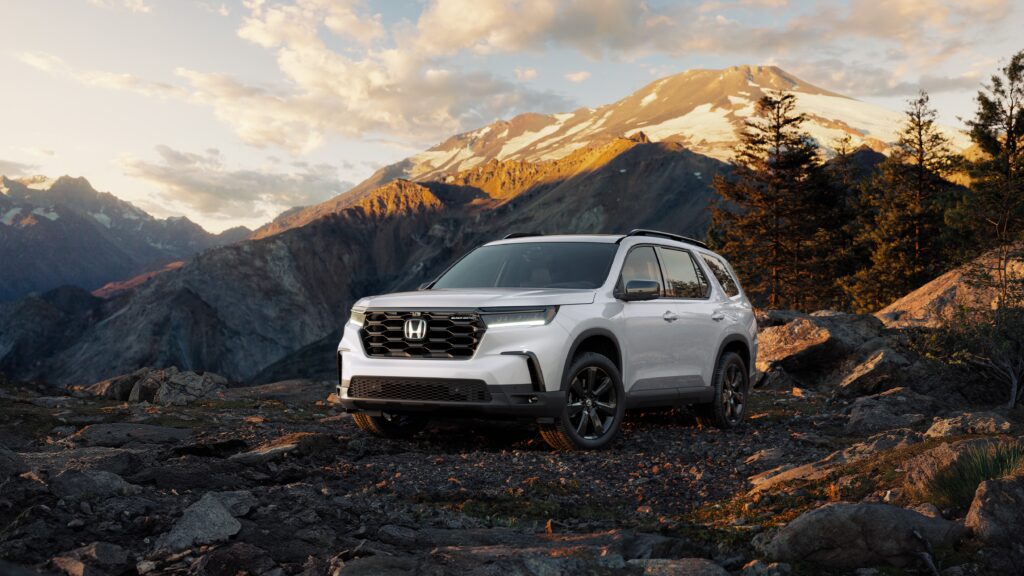
TrailSport is a good example. When I raised the idea that plenty of Americans may never take these vehicles off-road but like the confidence that comes with the look and stance, Lance didn’t argue. He smiled right into it: “Well, I think it’s fun too, right?” He then expanded it in a way that feels honest about modern shopping: whether it’s “about the appearance,” “the drivability,” or the people who genuinely “do take them off road,” Honda sees the appeal as real—and broad.
Finally, this moment matters because policy and production location are back in the conversation. Honda’s footprint gives it flexibility, and when tariffs come up, clarity matters more than hot takes. If you want the cleanest baseline for the sourcing rules Honda referenced, the agreement text is publicly available through the U.S. Trade Representative’s USMCA page.
That’s why this year isn’t just about new models. It’s about fewer gaps between what shoppers want and what an automaker can realistically supply—and Honda is clearly trying to narrow that gap.
Agreement between the United States, Mexico, and Canada (USMCA) text
You may also enjoy this: Volkswagen cost-cutting plans: what that means for buyers
How does it compare to rivals or alternatives?
Honda’s approach right now looks like a deliberate middle path: treat hybrids as a mainstream solution today, treat EVs as a serious long-term commitment, and keep the product cadence anchored in what people can actually use.
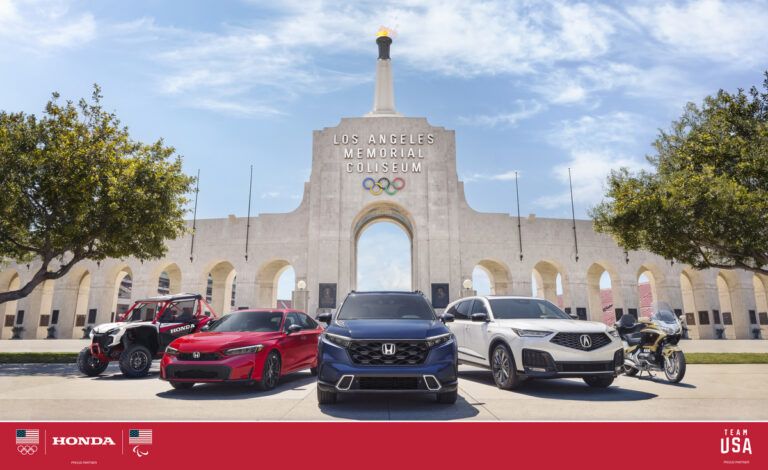
Let’s start with hybrids, because this is where Honda sounds the most confident. Lance didn’t describe hybrid demand like a niche trend. He described it like a settled preference in key models. “It’s been a really great vehicle for us,” he said, citing take rates that would have sounded wild a few years ago: “the Accord at 50% ish, CR-V at 50% of the lineup.” In other words: in the models that matter to everyday buyers, hybrids aren’t the alternative. They’re half the business.
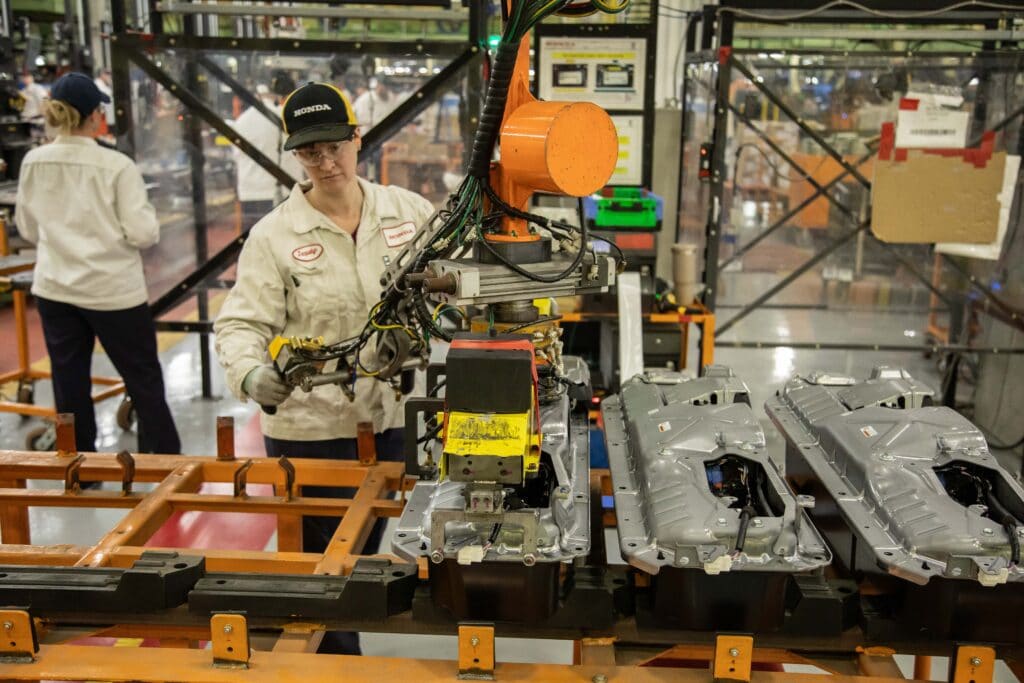
Compared with rivals, that matters because it changes how an automaker thinks about investment. If half your customers are choosing hybrid variants, you design your lineup around that reality—pricing, allocation, marketing, dealer training, service support. The buyer experience becomes less about “should I try this?” and more about “which version of this makes sense for my routine?”
Honda is also using hybrid technology as a story-telling tool, not just a fuel-savings claim. Lance called the returning Prelude “super exciting,” and framed it as a way to “showcase some of the technology that we have in our hybrids.” He also mentioned bringing that technology into Civic Hybrid next with “the S Shift,” which signals Honda is thinking about hybrids as something that can feel engaging—not just efficient.
Then there’s the question every family shopper asks the minute hybrid take rates surge: what about the bigger vehicles? I put the public question directly: are there plans for a hybrid Odyssey or Pilot? Lance’s answer was careful, but it contained a meaningful breadcrumb. He recapped the current hybrid lineup—“Civic Accord CR V and on the Prelude”—and then added: “we did recently announce that we are developing a V6 Hybrid 2 motor hybrid system… that will be for larger platform vehicles and could certainly cascade to products.” He immediately set the boundary as well: “we’re not making any product announcements today.”
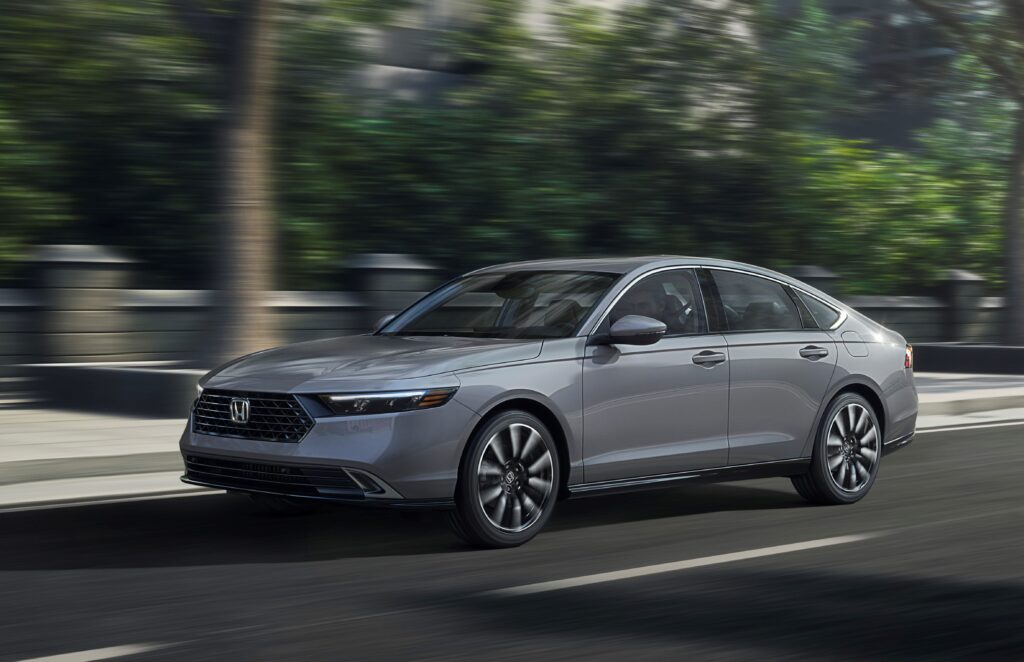
That balance—signal the engineering direction while refusing to promise a launch—feels like Honda trying to manage expectations responsibly. It also reflects a practical constraint: these vehicles already sell strongly. Lance noted that for Pilot and Odyssey, “our sales have been near capacity,” and “currently we’re selling all the Odysseys pilots that we can make.” When a product is already constrained by production, adding complexity can be a short-term risk even if it’s a long-term win.
On the EV side, Honda is essentially saying: we’re not pretending the market is where people expected it to be, but we’re still building. Lance put it plainly: “the Zero Series is still coming.” He laid out the sequence and timing: “The first Honda fully developed large production… EV will be the RSX that begins production later this year, the second half of this year… SUV will come next and then the saloon probably 2027.”
That compares to rivals in two ways. First, if you’re looking at brands already deep into EV volume, Honda can look “later.” Second, if you’re looking at brands whose EV plans keep shifting, Honda can look steadier. The real question is what the U.S. EV market looks like by 2027—because Honda is building for a market that hasn’t fully arrived yet, but may not stay small.
If you want a straightforward, non-hype primer on the difference between EVs and plug-in hybrids (and why they fit different routines), the EPA’s explainer is a clean reference.
EPA: Electric & Plug-In Hybrid Electric Vehicles
You may also enjoy this: Lamborghini 2025 Deliveries Hit Record 10,747
Who is this for and who should skip it?
This is for you if you’re a normal buyer who wants normal shopping conditions again. Lance’s inventory comment—“30, 35 day supply”—is the kind of inside-baseball detail that turns into real relief for buyers. More stable inventory doesn’t guarantee bargains, but it usually restores choice and reduces the pressure to “buy what exists.”
This is for you if you’re hybrid-curious but not interested in a lifestyle lecture. Honda’s hybrid story is rooted in actual consumer behavior. Half of Accord and CR-V buyers choosing hybrids suggests the technology is not a niche experiment anymore. It’s a mainstream answer for people who want better fuel economy and smooth driving without reorganizing their home life around charging.
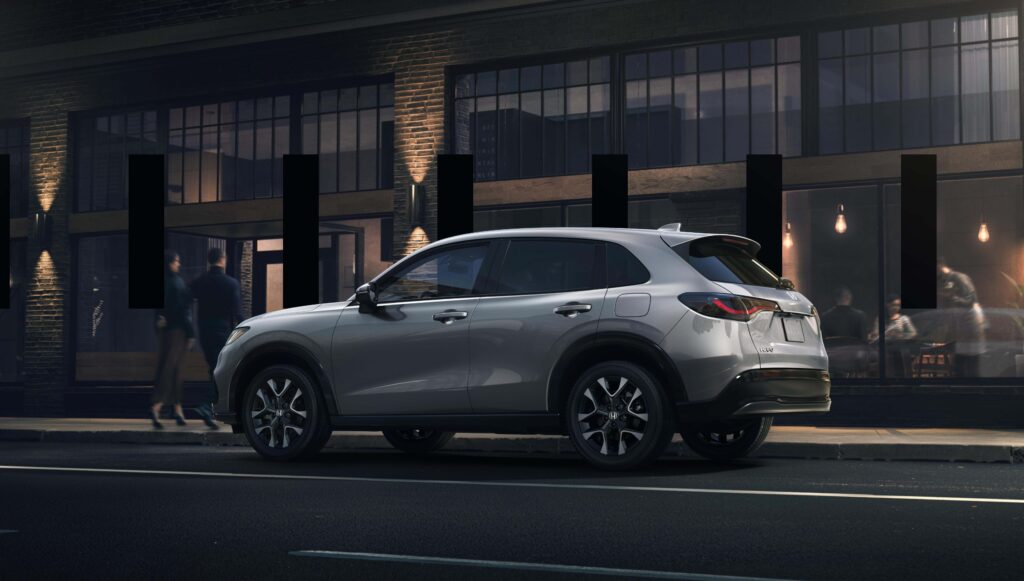
This is for you if you buy SUVs the way many Americans do: with your emotions on the front seat and your spreadsheet in the back. TrailSport is part capability, part identity. Lance captured it with a simple truth: “it’s fun too.” And fun matters. People want a vehicle that feels like it can handle life, even if “life” mostly means rain, road trips, and the occasional unplanned gravel turnout.
This is also for buyers who care about where vehicles are built and what that means for volatility. Lance said “over 60% of what we sell in the U.S. is built here,” and “about 99%… is built in North America,” making it “near 100%” USMCA compliant. If tariffs and sourcing debates stay loud, a manufacturing footprint like that can become a competitive advantage for keeping supply steadier.
You should probably skip this if you only care about buying a pure EV right now. Honda’s EV roadmap is real, but it’s also time-bound: RSX production in the second half of 2026, an SUV to follow, then the saloon around 2027. If you’re shopping this week, you’re better served by comparing what is already on the market rather than what is queued.
You should also skip this if you want definitive announcements about a hybrid Odyssey or Pilot today. Lance couldn’t have been clearer: “we’re not making any product announcements today.” There’s engineering smoke, but no product fire you can order yet.
If safety is part of your decision—especially when you’re comparing mainstream family vehicles—the most useful baseline is still the government ratings database, not a marketing brochure.
You may also enjoy this: Buying A New Car? Don’t Waste Your Money on These Features
What is the long-term significance?
Honda’s longer-term significance is that it’s building a bridge strategy that doesn’t require buyers to change their lives overnight—while still preparing for a future that almost certainly looks more electrified than today.
Start with the “boring” part that ends up being the most important: production capacity. Lance said Honda is “increasing production of some of those more affordable vehicles like the Civic Accord crv.” That’s meaningful because it’s where Honda’s brand strength lives. If you keep the everyday cars available, you keep the loyalty engine running. He added, “There’s definitely opportunity for growth for us there,” and projected “potential growth about 4% this year.”
Then there’s the EV commitment, which Honda is framing as long-term and intentional even while acknowledging the market’s pace. Lance called U.S. EV sales “still an opportunity,” and even though “the market is maybe not what we originally would have thought,” he did the math in a way that cuts through opinion: “it’s still 5% of the market and 16 million vehicles, that’s 800,000 opportunities.” That’s a lot of buyers to ignore—and a lot of future owners who may already have “a Honda in their driveway.”
He also made the philosophical point: “we do think EV is a great option for zero emissions for the long term future.” The key phrase there is “long term.” Honda is building for 2027 as much as it’s selling for 2026.
If you want broader, data-led context for how EV adoption is changing worldwide (and why the trendline can still move even when one region slows), the IEA’s Global EV Outlook is a strong reference.
And then there’s the most revealing part of the interview: Lance’s answer to what keeps him up at night. It wasn’t one competitor or one technology. It was uncertainty. “I used to… go to sleep with confidence that everything would be the same in the morning,” he said, but now he’s “realizing that it’s a super dynamic market” and worrying about whether Honda is “in the right position for the marketplace and what changes are going to come tomorrow.”
That’s the long-term significance in one sentence: Honda is planning for whiplash. Supply shocks, demand swings, policy shifts, technology cycles—none of it is stable the way it used to be. The brands that win are the ones that can keep their core products available, keep their powertrain strategy flexible, and keep developing future platforms without betting the company on a single timing assumption.
Even Lance’s personal excitement points to how Honda wants to feel again. He’s currently driving “a passport,” but said the vehicle he’s “most excited about… would probably be the… prelude for my California driver.” He also sounded genuinely nostalgic about the “prototype base station” camper concept, remembering childhood travel: “we drove to Alaska in a VW camper… It was a two week trip. It was amazing.” That’s not just a cute story. It’s a reminder that Honda doesn’t only sell transportation—it sells the promise that a practical vehicle can still be part of a fun life.
If Honda executes the plan Lance described, the next chapter isn’t a sudden reinvention. It’s something better for buyers: steadier supply, hybrids where buyers already want them, and EVs arriving on a roadmap that respects how long it takes to build a real product at real volume. Quietly competent can be a strategy—and in 2026, it might be the one more people are ready for.
If you want Honda’s own reference point on its next-generation electrified technologies for the second half of the decade, the Honda Global newsroom summary is a useful anchor.
Honda Global: Next-generation technologies for electrified models
You may also enjoy this: Audi Revolut F1 Team reveals R26 livery in Berlin