Robotaxis in 2026: Are We Ready for Driverless Cities?

Robotaxis in 2026 are expanding city by city. Learn what’s real, what’s limited, and how to judge safety, rules, and value.
Robotaxis are becoming normal in a few places and controversial in others. Here’s a practical guide to what’s changing in 2026 and why it matters.
Robotaxis used to feel like something you tried once for the story: a short loop, a careful operator, a sense that you were witnessing a preview rather than using a service. In 2026, that framing is getting harder to defend. Not because every city is suddenly full of driverless cars, but because the companies leading this space are talking—and acting—like transportation operators, not research labs.
If you’re busy and mildly skeptical (a sensible posture, honestly), the simplest question is not “Is autonomous driving real?” It’s “Is it becoming normal enough that I should pay attention?” That’s what I want to answer here, without hype, without doom, and without pretending the future arrives evenly.
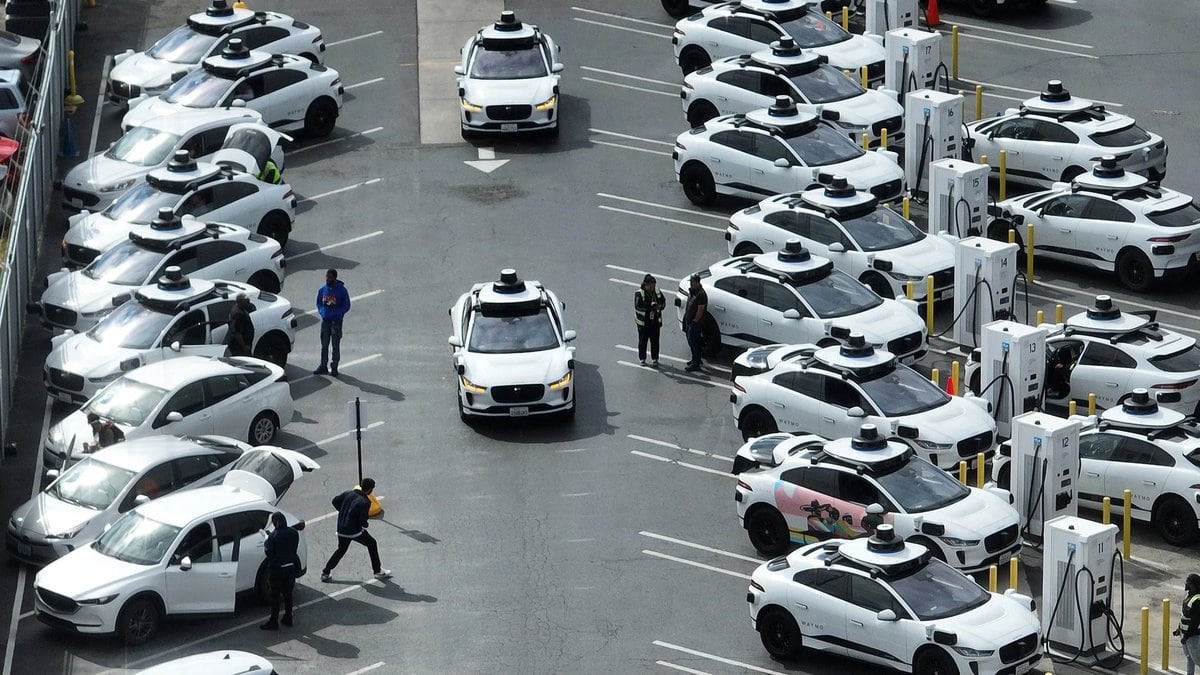
A useful starting point is to look at how the best-known U.S. operator describes its own expansion. Waymo has publicly outlined staged introductions of fully autonomous driving in five new cities—Miami, Dallas, Houston, San Antonio, and Orlando—with operations beginning in steps ahead of opening to riders in 2026. You can read the company’s wording directly in Waymo’s announcement about autonomous driving in five new cities. The key idea is “city by city” and “ahead of opening to riders,” which is another way of saying: controlled boundaries first, broader access later.
That patchwork is the real 2026 robotaxi story. It’s not a nationwide takeover. It’s selective normalization. And selective normalization still matters, because it changes what people expect from mobility—especially when it works quietly and consistently.
You may also like: https://www.testmiles.com/teslas-bad-week-robotaxis-lawsuits-sliding-sales/
Why does this matter right now?
Because mobility is changing shape at the same time car ownership is becoming more complicated. Payments are high, insurance is unpredictable, and in many cities the simple act of parking has turned into a daily negotiation. That is why the “robotaxi” idea has moved from novelty to potential utility: it promises a version of ride-hailing that does not depend on driver availability and does not fluctuate the same way human supply does.
This is also happening alongside a broader shift toward software-defined vehicles. If you’ve been following how cars are becoming rolling connected devices, you’ve already seen the direction of travel. A recent Test Miles piece, Cars Are Now on Faster Networks Than Their Drivers, captures the basic reality: vehicles are increasingly built around connectivity, updates, and remote diagnostics. Robotaxi fleets push that logic to its extreme, because the “product” is not a car you buy—it’s a ride you request, supported by constant iteration.
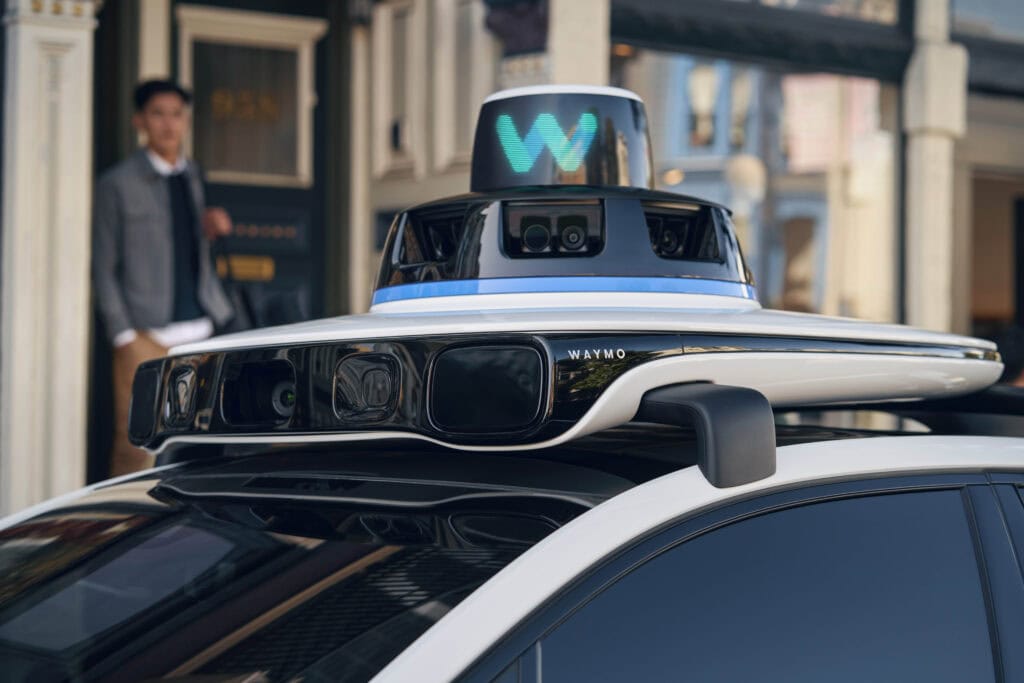
The hardware is changing too. Waymo’s current and next-generation systems emphasize a full sensor suite—cameras, radar, and lidar—designed to perceive the driving environment with redundancy. If you want the technical overview from the operator itself, Waymo’s sixth-generation Waymo Driver explains how it thinks about sensors, cost, and performance. You don’t need to be an engineer to understand the practical implication: as sensor suites become more optimized and more standardized, the economics of scaling a fleet become less punishing.
Regulation is also maturing into something that looks like a lasting framework. In the U.S., the National Highway Traffic Safety Administration has a standing requirement for certain manufacturers and operators to report specific crashes involving vehicles equipped with automated driving systems and certain advanced driver-assistance systems. That’s not the whole safety story, but it is a sign that reporting and accountability are being formalized. The policy background is available on NHTSA’s Standing General Order on crash reporting.
And at the state level, data reporting is increasingly part of the public record. California, for instance, requires annual submissions describing how often autonomous test vehicles disengage from autonomous mode. That doesn’t automatically tell you which company is “best,” but it does indicate testing activity and operational stability under real conditions. The public entry point is California DMV’s autonomous vehicle disengagement reports.
Finally, there’s public trust—still the most fragile ingredient. A system can be statistically strong and still feel unsettling if it hesitates awkwardly, blocks traffic, or behaves in a way that passengers interpret as uncertainty. In 2026, the winners will be the operators that manage not only safety, but the experience of safety: clear rules, calm behavior, and transparent responses when something goes wrong.
You may also like: https://www.testmiles.com/cars-faster-networks-than-drivers/
How does it compare to rivals or alternatives?
It’s tempting to frame robotaxis as a straight substitute for your own car, but that isn’t the most useful comparison. Most people will choose between robotaxis and the alternatives they already use: ride-hailing with a human driver, public transit, walking plus micro-mobility, or driving themselves. Robotaxis can be excellent at predictable urban trips in defined areas. They can be less satisfying when conditions get messy.
Human-driven ride-hailing still wins on adaptability. A human driver can interpret a chaotic pickup zone, respond to a police officer directing traffic, or take a detour that is obvious to a local but not reflected in the mapping layer. Public transit wins on capacity and, in well-run systems, reliability. Your own car wins on flexibility—especially outside dense city cores where robotaxi service may not operate at all.
Robotaxis win when they remove friction from a very specific type of trip: short-to-medium urban rides where parking is a hassle and driving is stressful. When the operational area is clear and the system is confident, the experience can feel surprisingly ordinary. That ordinariness is exactly what changes behavior over time.
There’s also a second comparison people make, sometimes without realizing it: robotaxis versus advanced driver-assistance in privately owned cars. Many consumer vehicles now offer highway-centered systems that reduce fatigue and can perform lane-centering and speed control for long stretches. Those systems still require active supervision. They can make driving easier, but they do not convert your car into a driverless taxi. The difference matters because it affects accountability. If you’re supervising, you’re still the fallback. If the vehicle is driverless, the operator must design for a wider set of contingencies and provide support structures when the world gets weird.
Another way to stay grounded is to look at adjacent “tech race” stories that show how automakers choose different paths toward credibility. For example, Test Miles recently explored performance credibility and long-term strategy in From Formula One to Family Driveways: Why GM’s Global Racing Bet Matters. The details are different, but the theme is familiar: technology only matters when it can be repeated reliably under constraints, whether that constraint is racing regulation or real-world traffic.
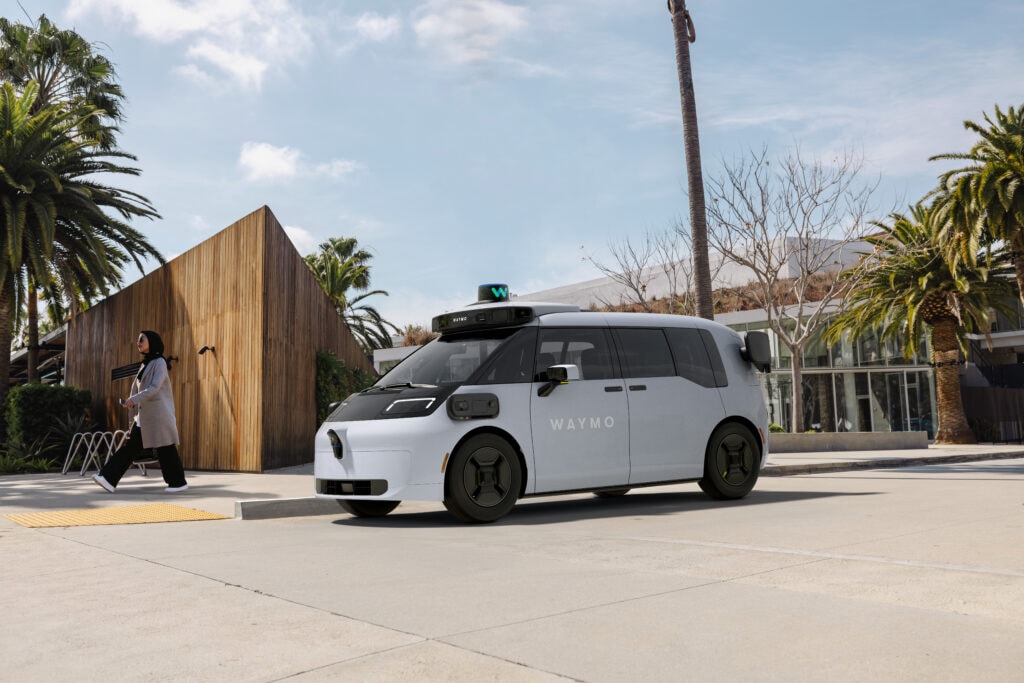
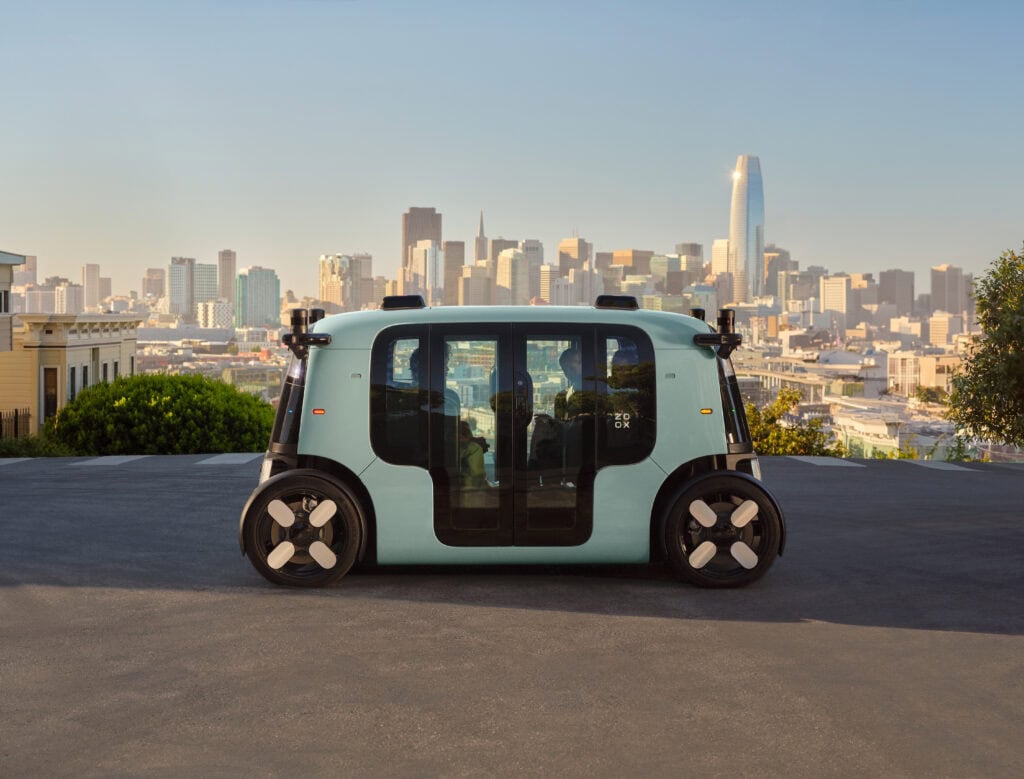
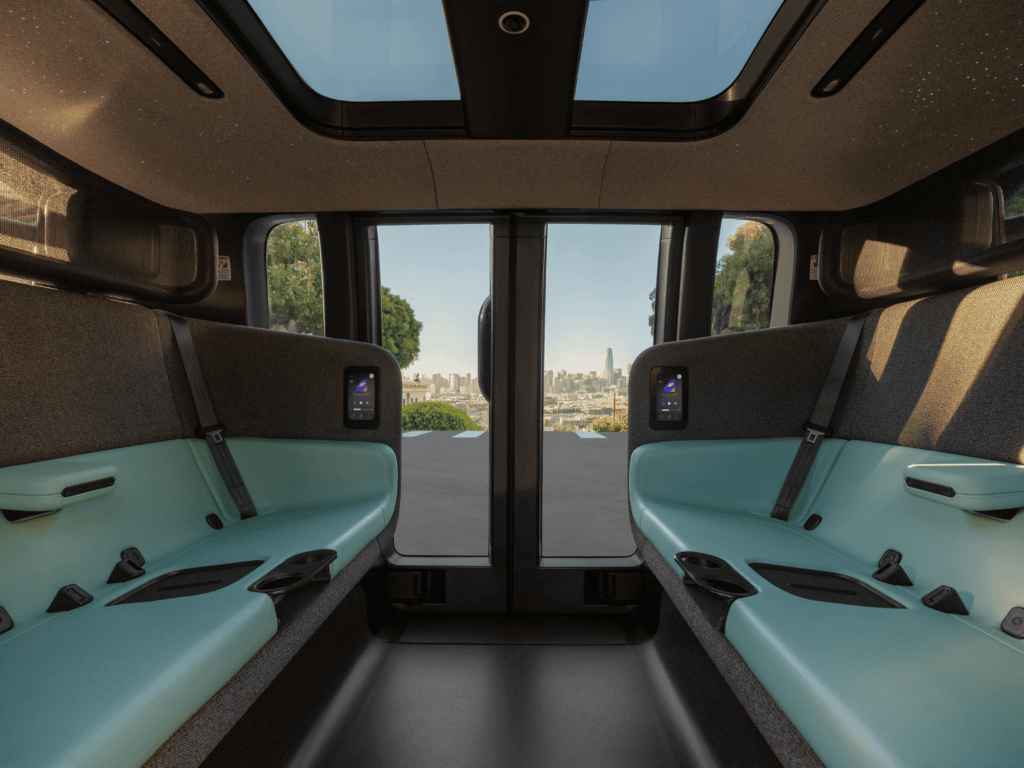
Robotaxis also vary by operator philosophy. Some companies retrofit existing vehicles; others build purpose-designed platforms optimized for fleet duty, passenger comfort, and simplified operations. Zoox, for example, positions its service around a purpose-built robotaxi experience and is operating publicly in Las Vegas within a defined footprint. You can see how it presents the service on Zoox’s Las Vegas service page. The practical takeaway is not that one approach is automatically superior, but that the rider experience and operational rules can differ substantially depending on the platform.
You may also like: https://www.testmiles.com/toyota-waymo-self-driving-taxis/
Who is this for and who should skip it?
Robotaxis are for people who want fewer small frictions in city travel—especially if you already use ride-hailing and you’re comfortable learning a new pickup routine. They make the most sense when your trips are predictable and happen inside the service’s operational boundary: hotel corridors, business districts, airport-adjacent routes, and dense neighborhoods where parking is the true enemy.
They’re also for people who value consistency. Human drivers vary. Some are excellent, some are distracted, and some are simply having a bad day. A well-run driverless service can feel steady, calm, and repeatable, which is a meaningful quality-of-life feature even if it sounds unglamorous.
Who should skip it, at least for now? If you are easily anxious in cars or you interpret hesitation as danger, early robotaxi behavior can feel stressful even when it’s cautious for safety reasons. If your travel often involves messy scenarios—construction zones, event traffic, confusing pickup locations, or destinations outside the operating zone—you may find the limitations frustrating. And if you live outside the small number of markets with real service, robotaxis are still mostly a story rather than a practical option.
There is also an economic and lifestyle angle. If you already own a car and your day-to-day travel is mostly suburban errands, robotaxis may not change your life soon. But if you’re the kind of person quietly rethinking ownership—because of cost, hassle, or changing commute patterns—robotaxis are one more signal that mobility is diversifying. A related Test Miles piece, The Winners and Losers of 2025: What Americans Really Bought, underscores how consumer preferences swing under pressure. Robotaxis won’t replace the market, but they can influence what “value” feels like in certain cities.
You may also like: https://www.testmiles.com/ultimate-car-lovers-vacation-yellowstone-amg/
For readers who love cars as objects—design, feel, control—robotaxis can feel like the opposite of romance. That’s a real reaction, and it deserves respect. But even if you personally prefer driving, robotaxis can still matter because they affect traffic patterns, curb space, and the expectations cities build around future mobility.
What is the long-term significance?
Robotaxis are not merely a new category of ride-hailing. They represent a shift in what a vehicle is: from a privately owned object to a managed asset in a fleet. That changes how vehicles are designed, maintained, cleaned, and updated. It also changes how cities think about curb access, pickup zones, and the invisible logistics of moving people efficiently.
In the longer run, robotaxis push the auto industry toward durability and serviceability. A privately owned car can sit unused most of the day. A robotaxi fleet vehicle is expected to be used far more intensively. That means interiors designed for repeated passenger turnover, hardware designed for rapid service, and software designed for continuous improvement.
Regulatory structures will continue to shape the pace and geography of deployment. Reporting requirements, permitting, and public accountability are not side stories—they are the main route to scale. When safety reporting becomes standardized, the conversation shifts away from marketing claims and toward documented performance under real conditions. That is why national reporting requirements and state-level data submissions matter even if you never read a single spreadsheet.
There is also a cultural shift buried in the everyday experience. If robotaxis work well in a few places, those places reset expectations. People begin to ask why some trips ever required a human driver. That does not mean robotaxis will dominate everywhere. It means that “normal” becomes more plural: sometimes you drive, sometimes you ride with a driver, sometimes you ride without one, and sometimes you choose something else entirely.
One of the overlooked impacts is how robotaxis interact with tourism and lifestyle travel. If driverless rides become routine in certain corridors, cities can feel more navigable to visitors who don’t want to rent a car. And if you’re already thinking about mobility as part of lifestyle planning—where you travel, how you explore—this connects to a broader shift in what “car culture” even means. Test Miles touched that theme recently in The Ultimate Car Lover’s Vacation Isn’t Europe Anymore, which reflects how experiences and routes can matter as much as horsepower.
So, are we ready in 2026? In a limited sense, yes: some cities are ready for some use cases, within defined operating areas, under growing regulatory oversight. In the universal sense—robotaxis as a replacement for most driving—no, not yet. That gap is not failure. It is what scaling looks like when the “product” is safety, reliability, and public trust in messy real-world environments.
If you’re skeptical, stay skeptical—but keep it practical. Watch where services operate, how clearly they define their boundaries, how consistently they behave, and how openly they handle the rare moments when things go wrong. That’s where readiness is proven, not in a staged demo, but in ordinary days when the technology is expected to behave like a normal part of the city.
You may also like: https://www.testmiles.com/lucid-hands-free-driving-dreamdrive-pro/